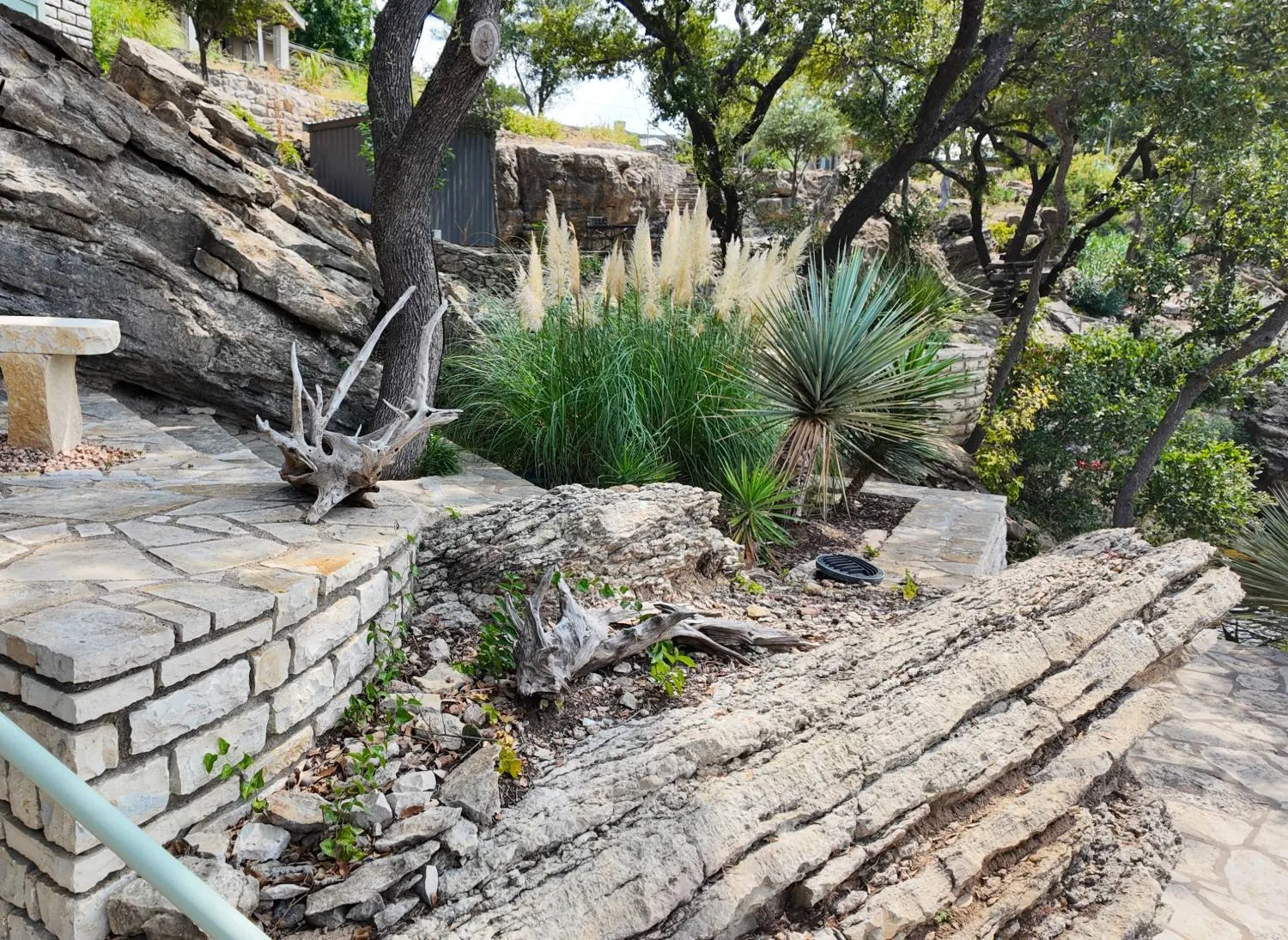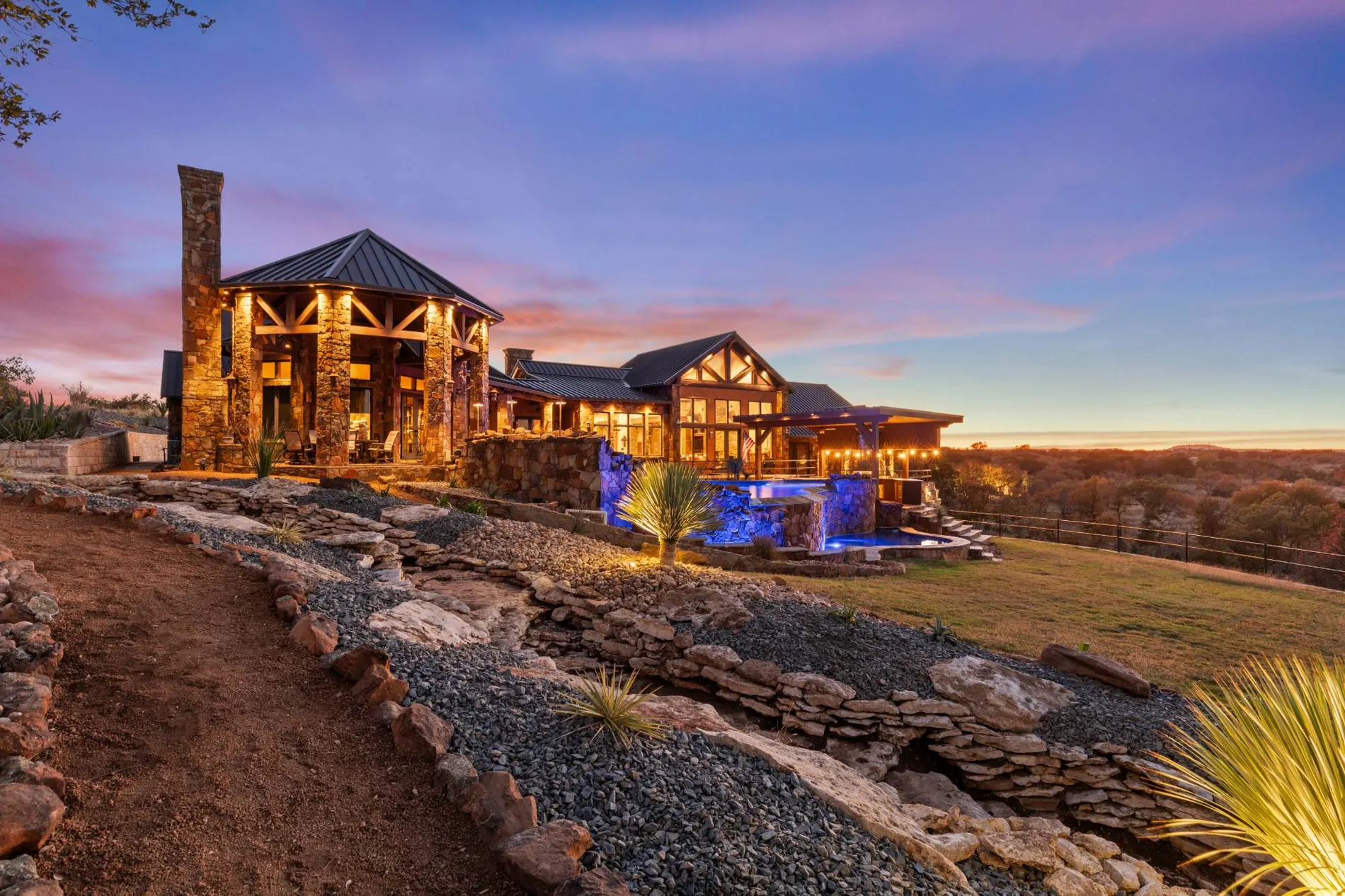
Possum Kingdom is not a lake with hills around it. It is a limestone canyon that was flooded, and almost every problem a PK property has comes from that one fact: the rock is right there, the slope is real, and everything wants to move downhill toward the water.
There is often no soil to speak of
On a lot of these lots you are two or three inches from solid limestone. Augering a hole and hoping is not a plan; it is how a five-hundred-dollar tree dies in its first August. The work here is building planting pockets, terracing with native stone so there is somewhere for roots to actually be, and importing soil where that is the honest answer.
It is also why a plan drawn from a plat rather than from standing on the ground fails here. Two lots on the same street can have completely different depth to rock.
Defensible space, because of what happened in 2011
The PK Complex Fire burned through here in April 2011 and took more than a hundred and fifty homes. Anybody who was around remembers it, and it changed how we plant on this lake.
The first five feet
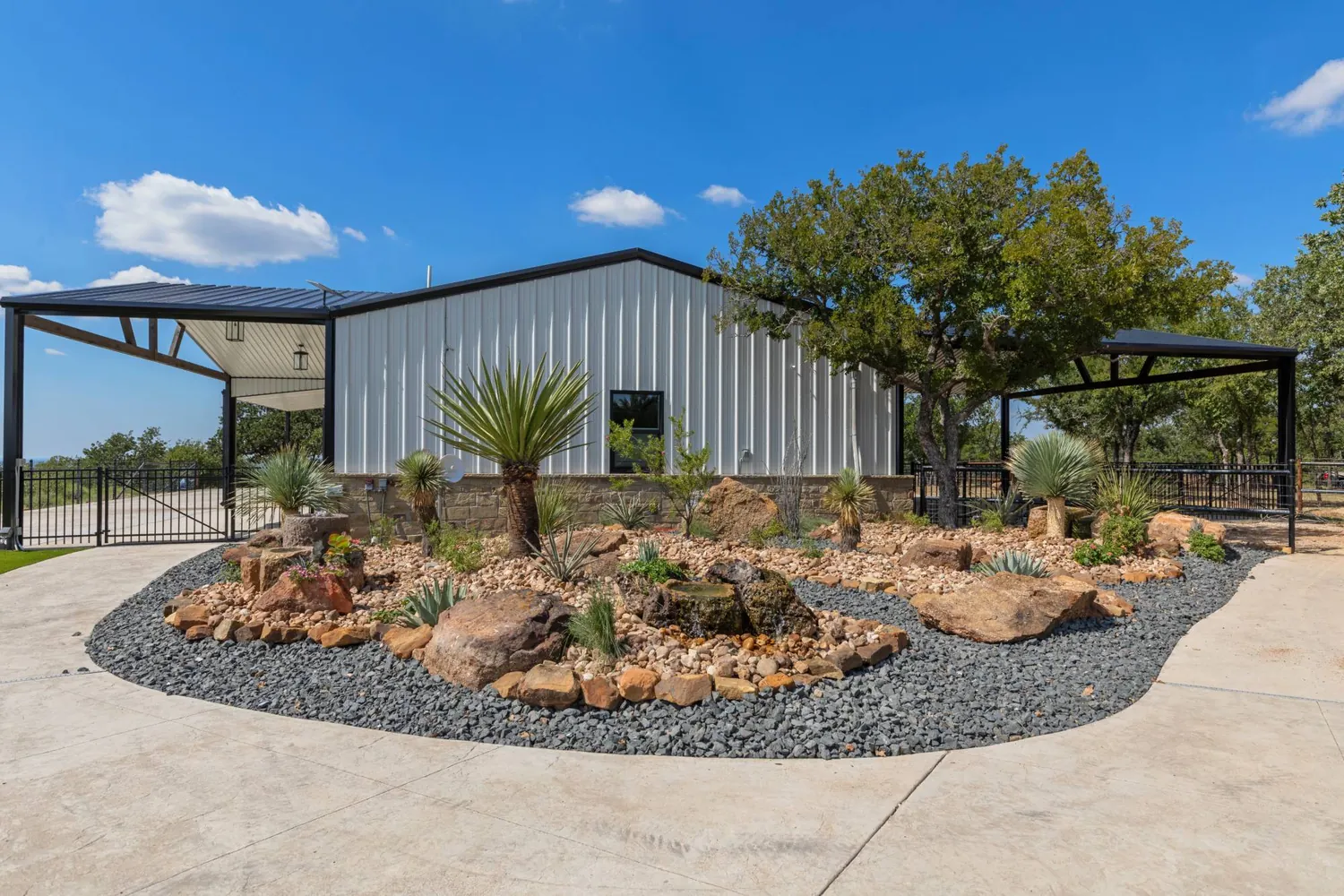
Stone, hardscape and irrigated low planting against the structure — not a mulch bed banked up against the siding, which is a wick.
Break up the cedar
No continuous line of juniper running up to the house. Cedar is the fuel that carried the 2011 fire, and an unbroken stand from the slope to the eaves is a path for it.
Clear the ladder fuel below the house
Fire runs uphill fastest, so the slope below a structure is the side that matters most. Limbing up and thinning beats letting a dense stand grow into the canopy.
None of that has to look like a firebreak. Done properly it reads as a well-kept property and it is the single most valuable thing we do out here.
The shoreline is leased, and that changes what you may build
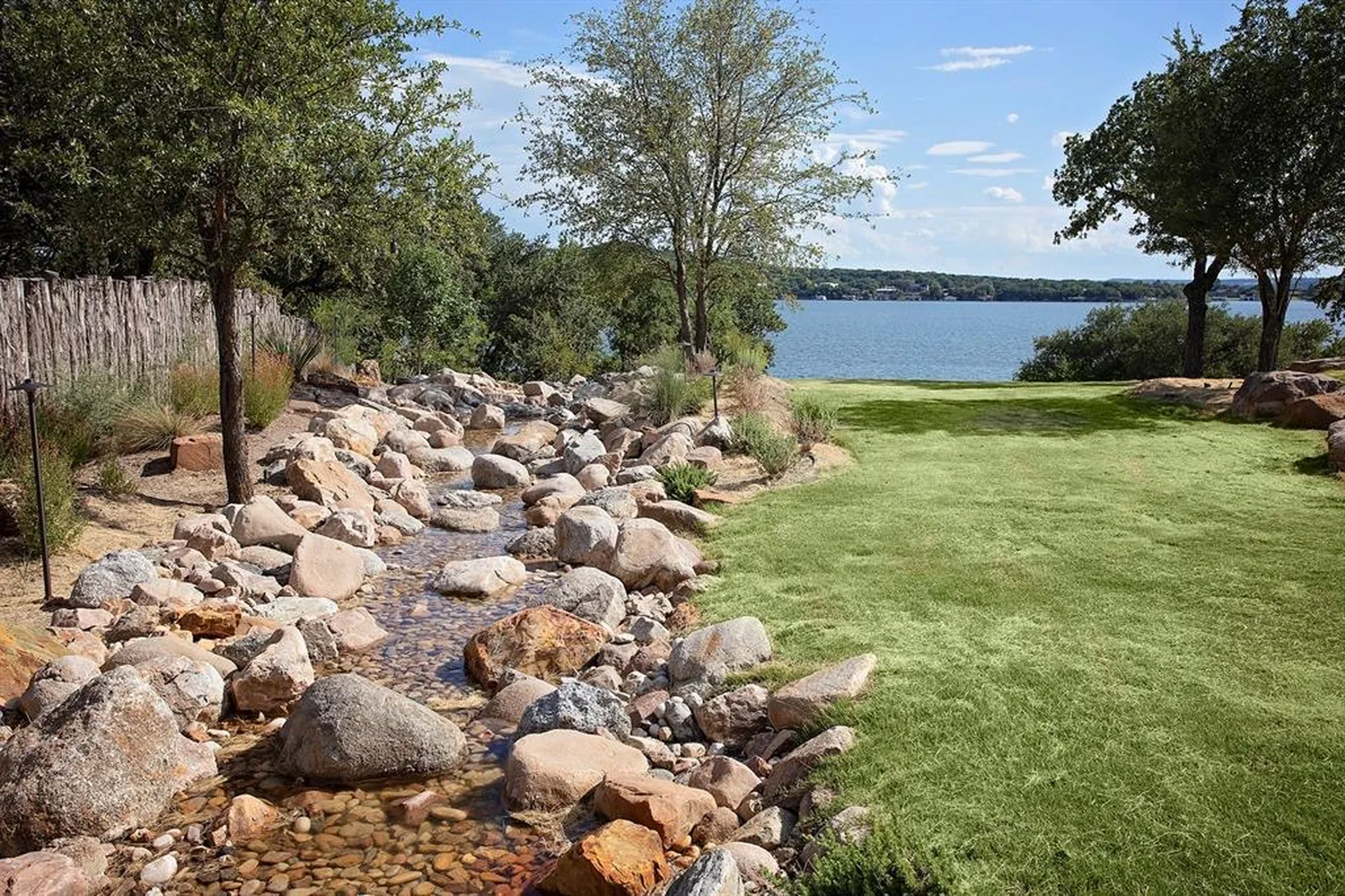
Much of the land between a PK lot and the water is Brazos River Authority shoreline, held under lease rather than owned. What can be cleared, built, planted or left in place down there is governed by that lease, not by what the homeowner would prefer. Terracing, steps down to a dock and any clearing near the water get checked against it before anything is drawn.
That is not a reason to do nothing near the water. It is a reason to know where the line is, because the expensive version of this conversation is the one that happens after the work.
Erosion is constant and it only runs one direction
Every rain moves material toward the lake unless something is designed to stop it above the drop. Terracing, native stone walls, interception drainage uphill of the fall, and deep-rooted planting that actually holds ground rather than sitting on it. A PK slope that is only planted is a PK slope that is still moving.
Reflected heat, wind, and a plant list that is tighter than in town
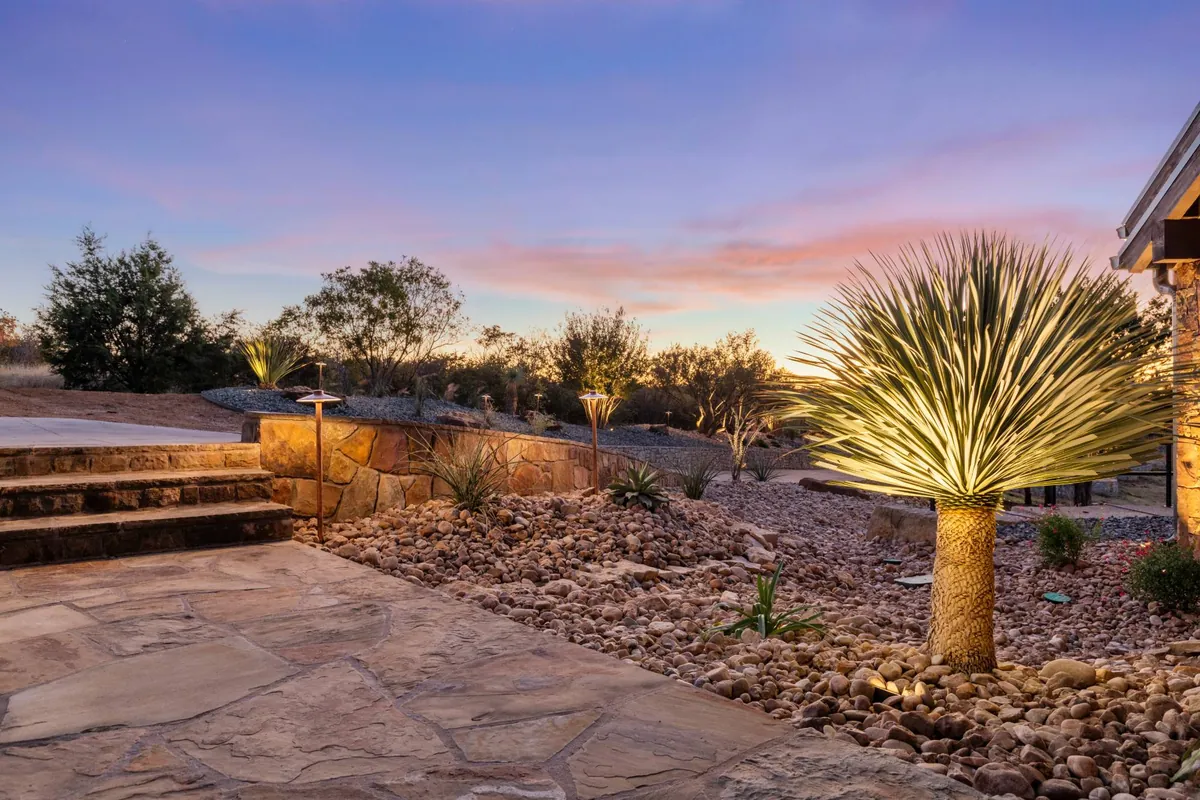
Open water throws light and heat back up at a property and there is no shelter from the wind on these points. Material that is perfectly happy two miles inland cooks here. The palette is narrower than most people expect, and the xeriscape stock we grow at the nursery is a large part of the answer because it is already acclimated to this exact exposure.
Most of these are weekend houses
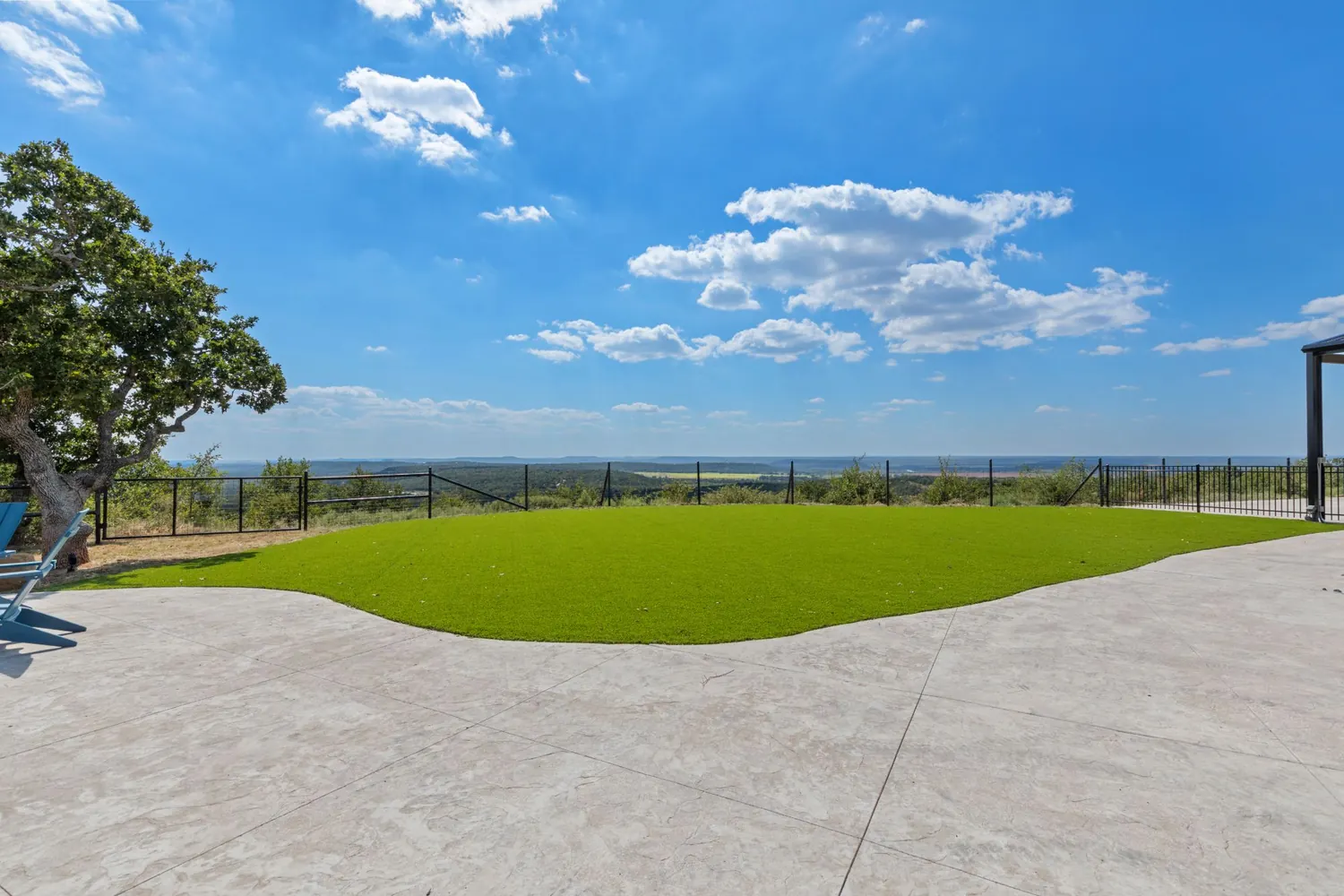
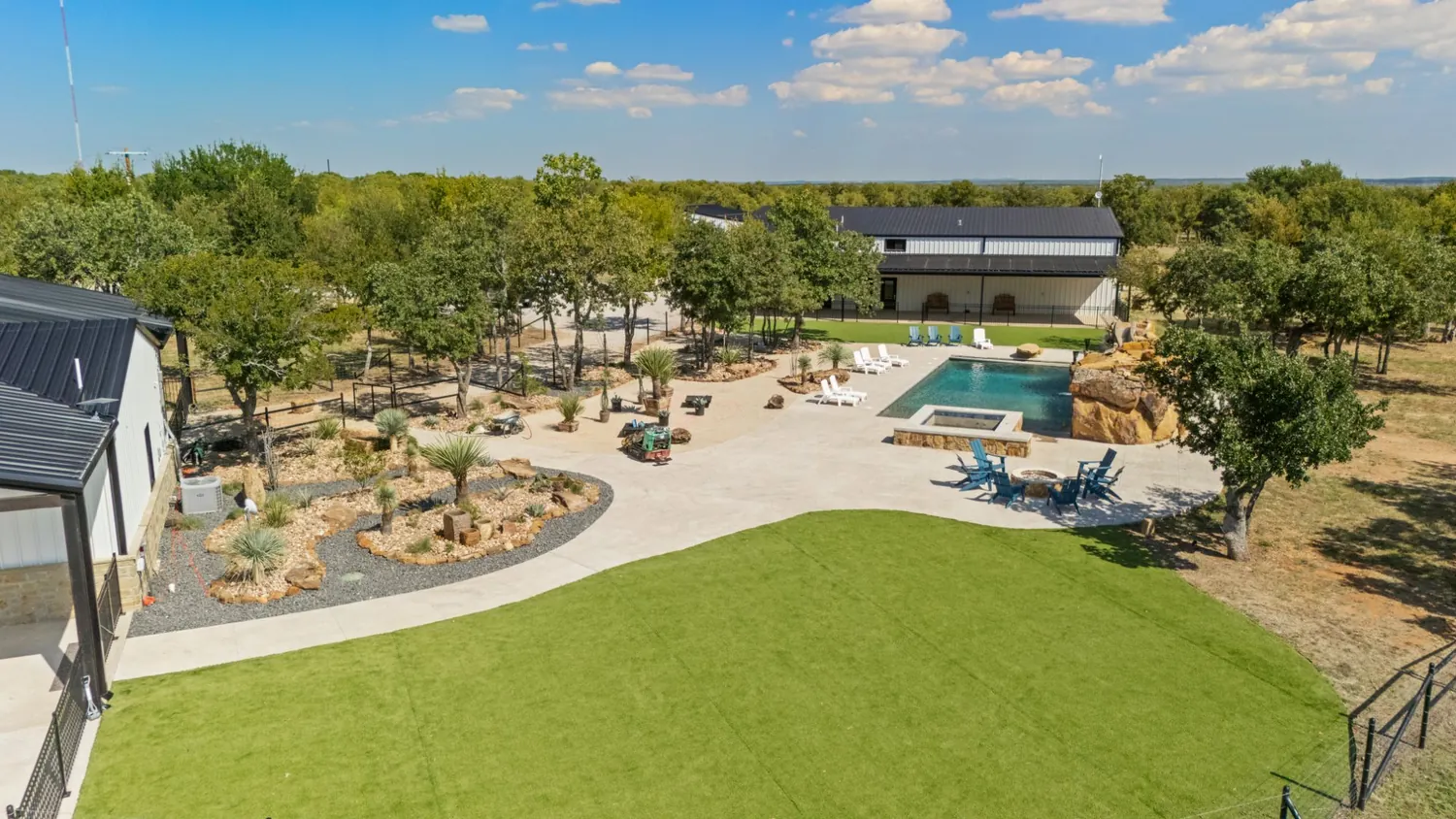
Which argues for a landscape that does not need somebody on it every Saturday: xeriscape planting, turf where a lawn is wanted but nobody is here to mow it, a controller you can reach from your phone in Fort Worth, and lighting placed after dark because the evening is when the property actually gets used.
We are on FM 2353, minutes from the south shore. Call (940) 779-4001.