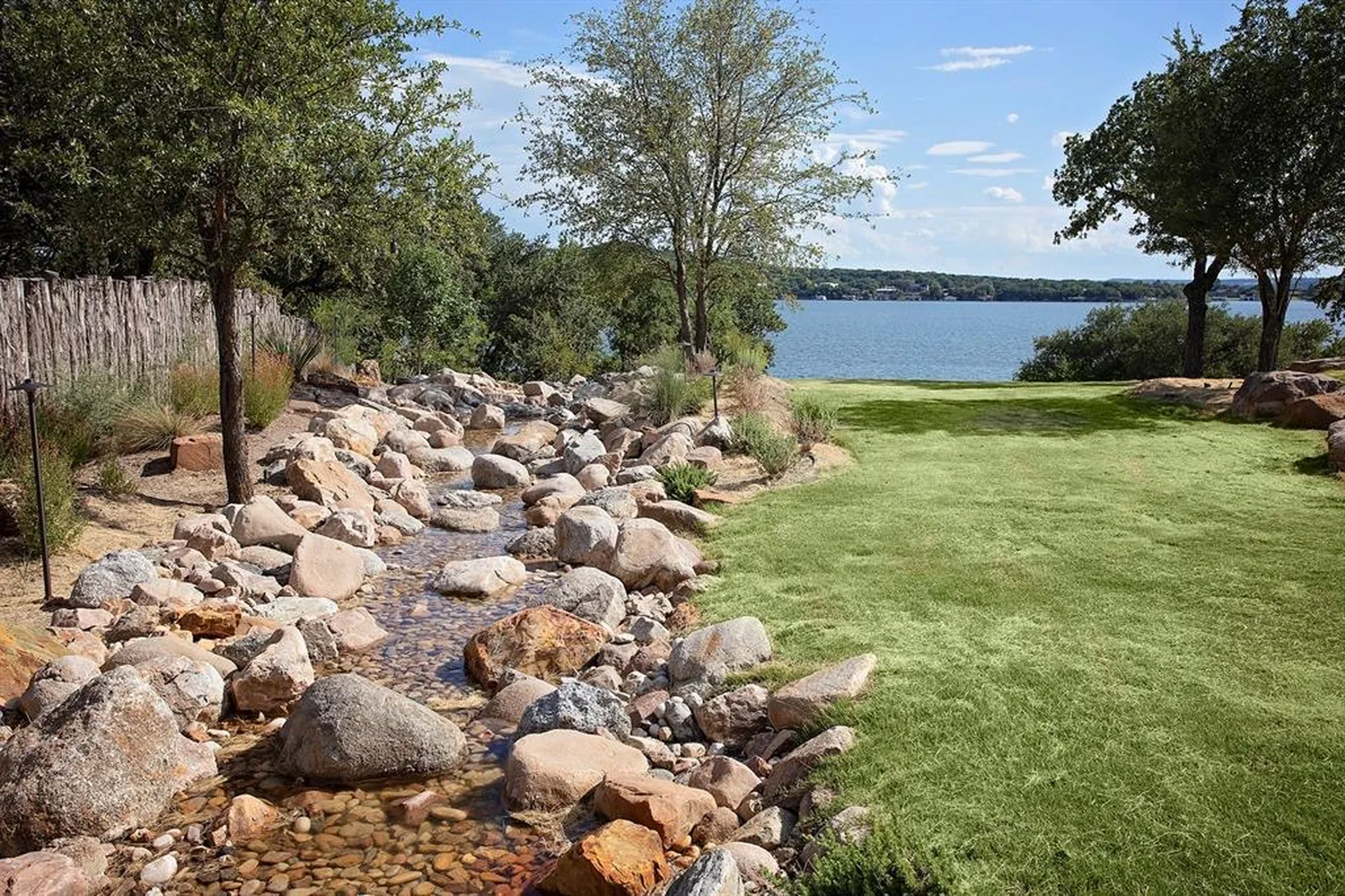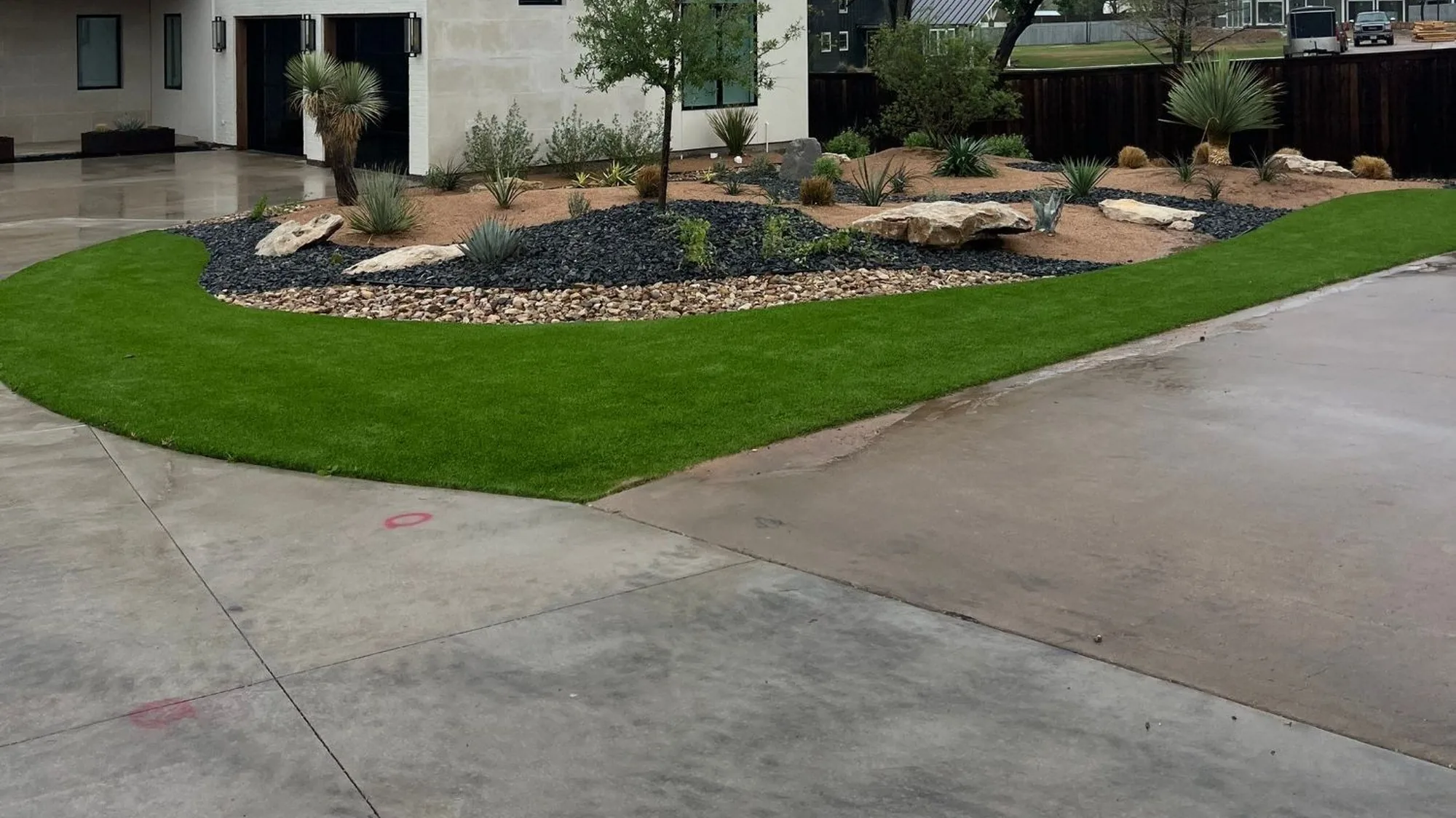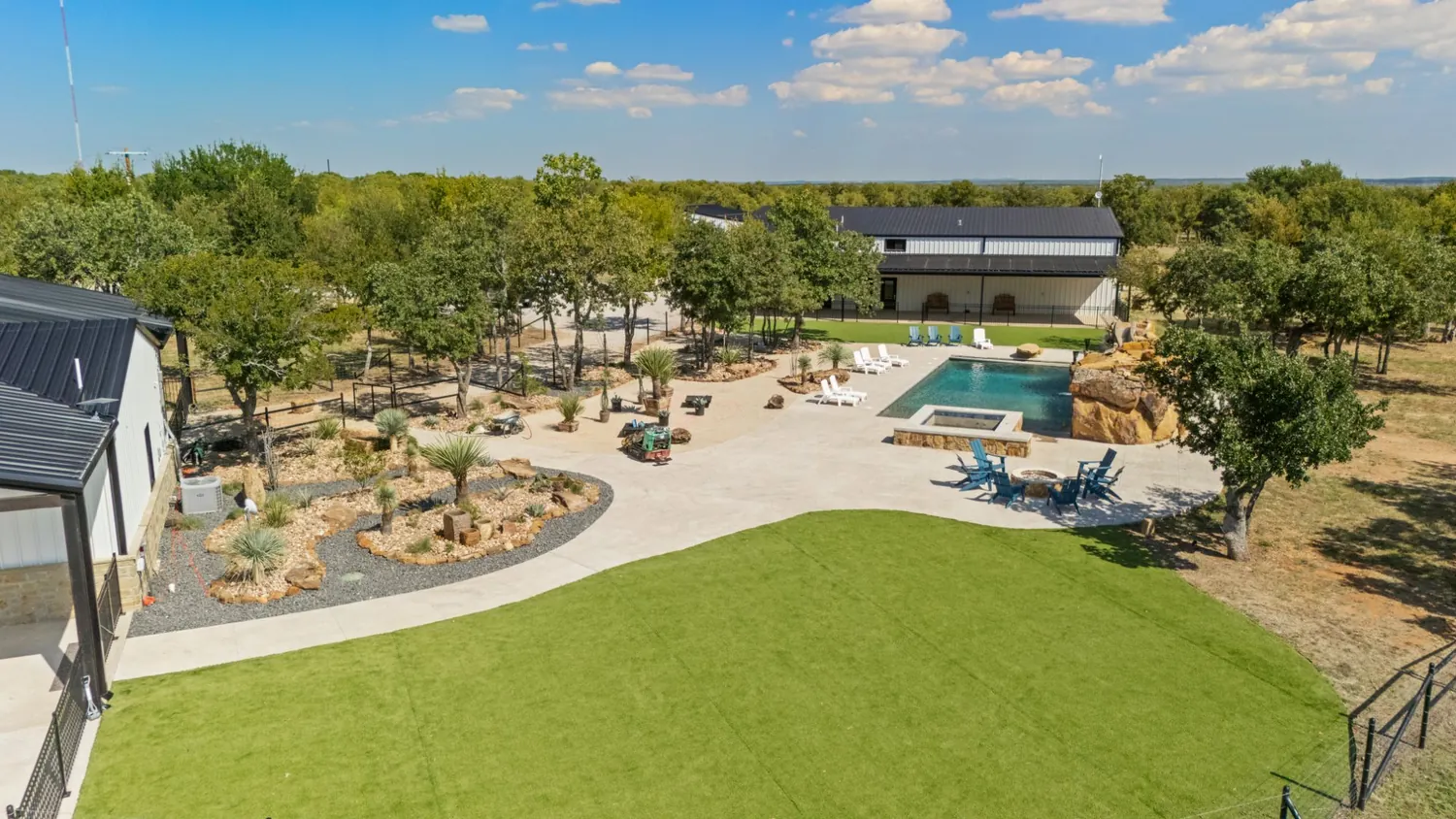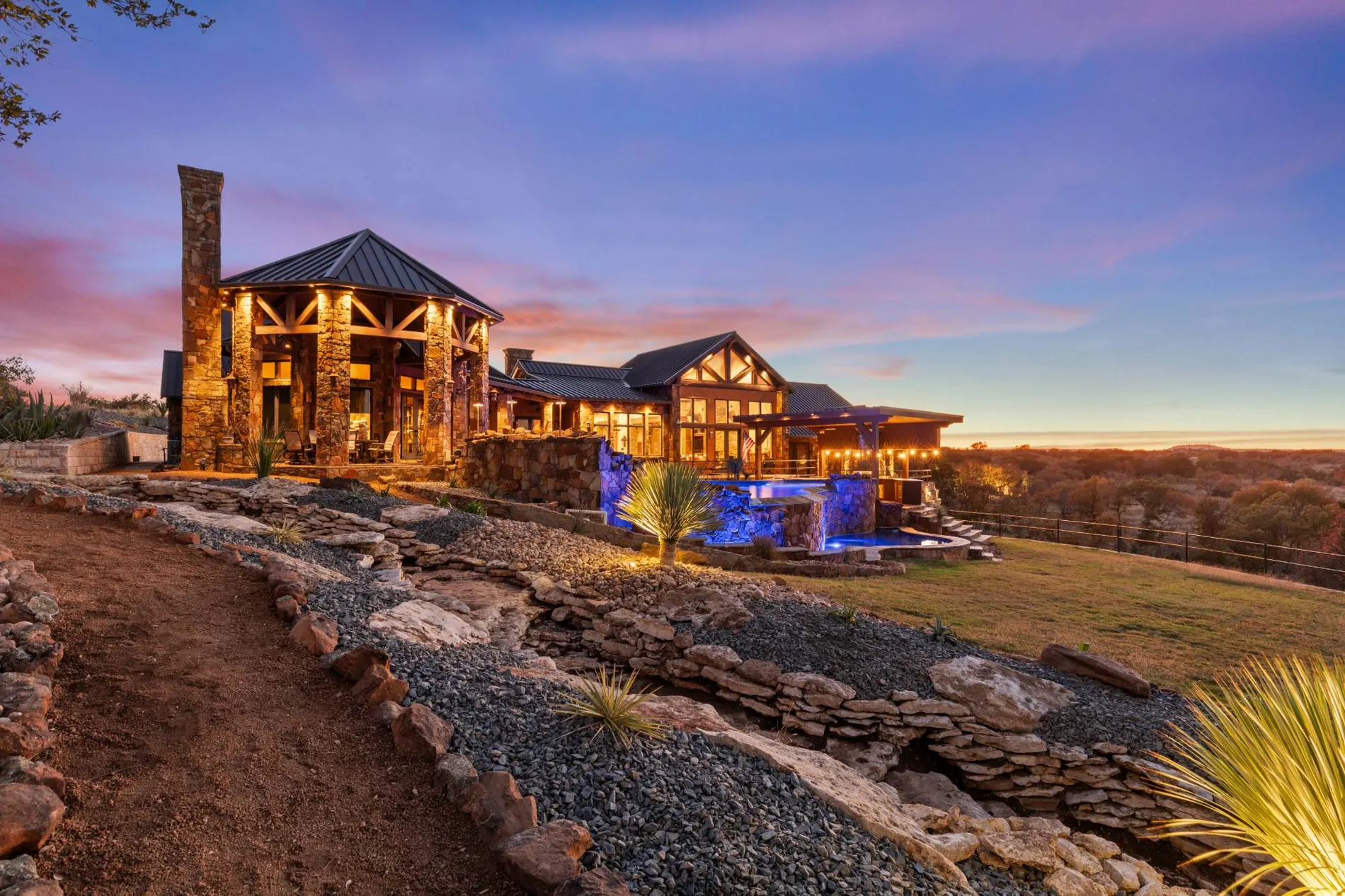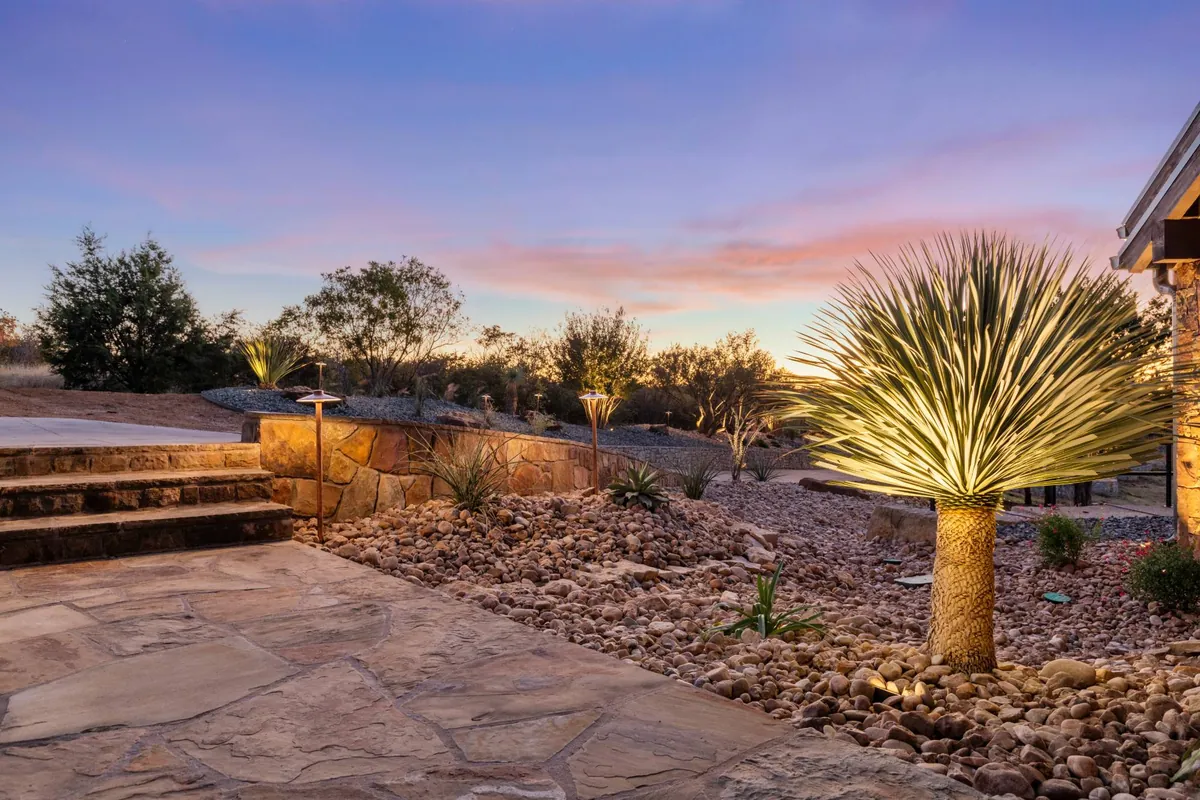
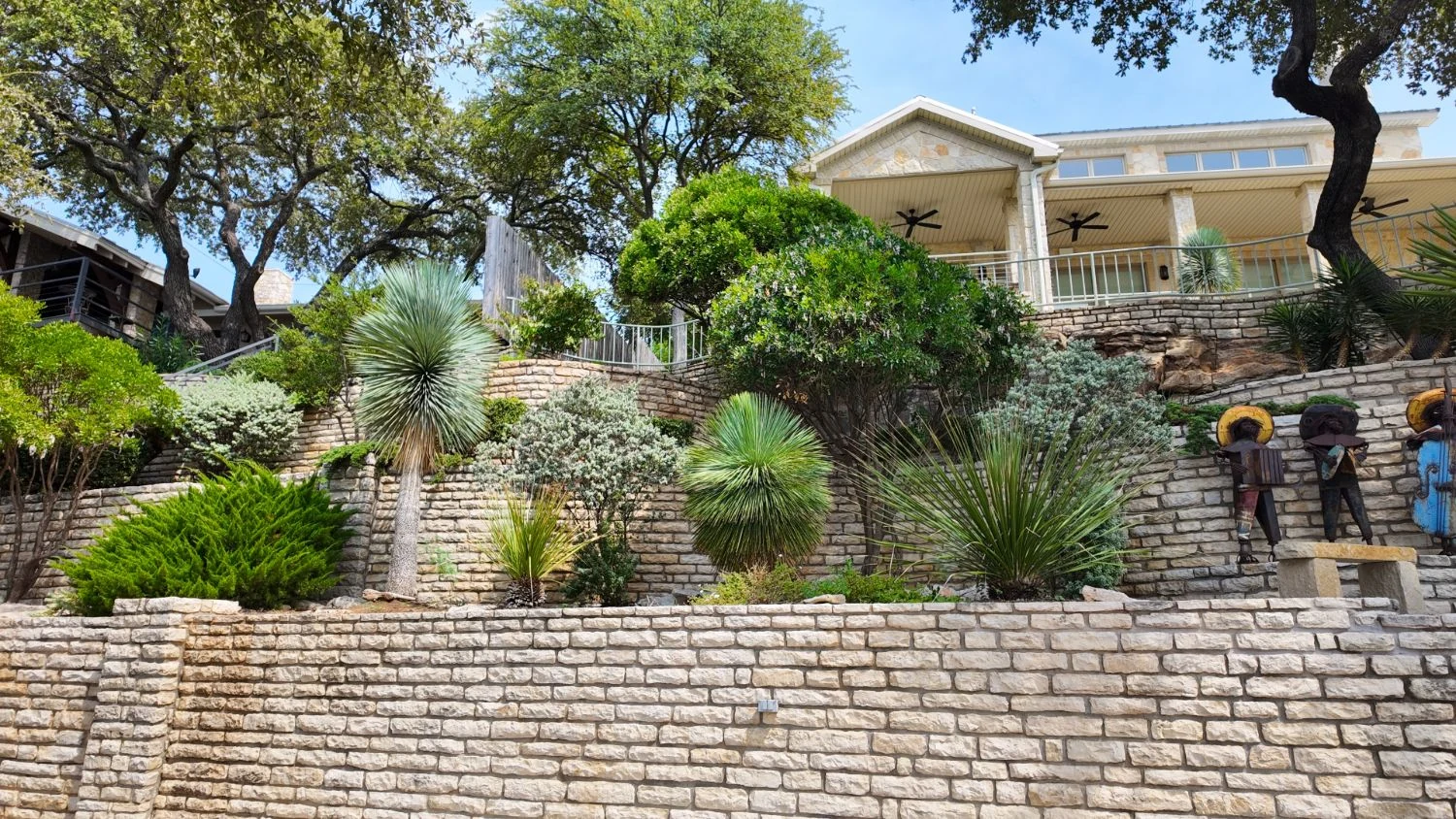
Full-property plans for ranch entrances, headquarters and homesites — drawn, staked and planted by the same people.
Drawn for the land you have
A plan that ignores grade, soil depth and where the water goes is a picture, not a design. We walk and shoot the site first: where it falls, where it holds water, how deep the soil runs before rock, what the well actually delivers.
Installed by the people who drew it
The crew that installs is the crew that planned it, so nothing is interpreted secondhand. Irrigation, drainage, hardscape and planting are sequenced in the right order — drainage before hardscape, irrigation before planting, lighting placed after dark.
How a job actually runs
The walk
First conversation is on the property, not over a price sheet. What we are reading is grade, where water arrives and leaves, soil depth to rock, existing trees worth building around, and how you actually use the place — which is usually different from how the house was designed to be used.
The plan
Drawn to the survey where there is one and to our own shots where there is not, with the things you never see decided first: where the water goes, what the well delivers, what has to be trenched before anything is paved. A planting plan laid over an unresolved grade is a picture.
Staking
Beds painted and specimen positions staked on the ground before a shovel moves, and walked with you. Lines that look right on paper regularly look wrong at full size, and moving paint is free.
Sequence
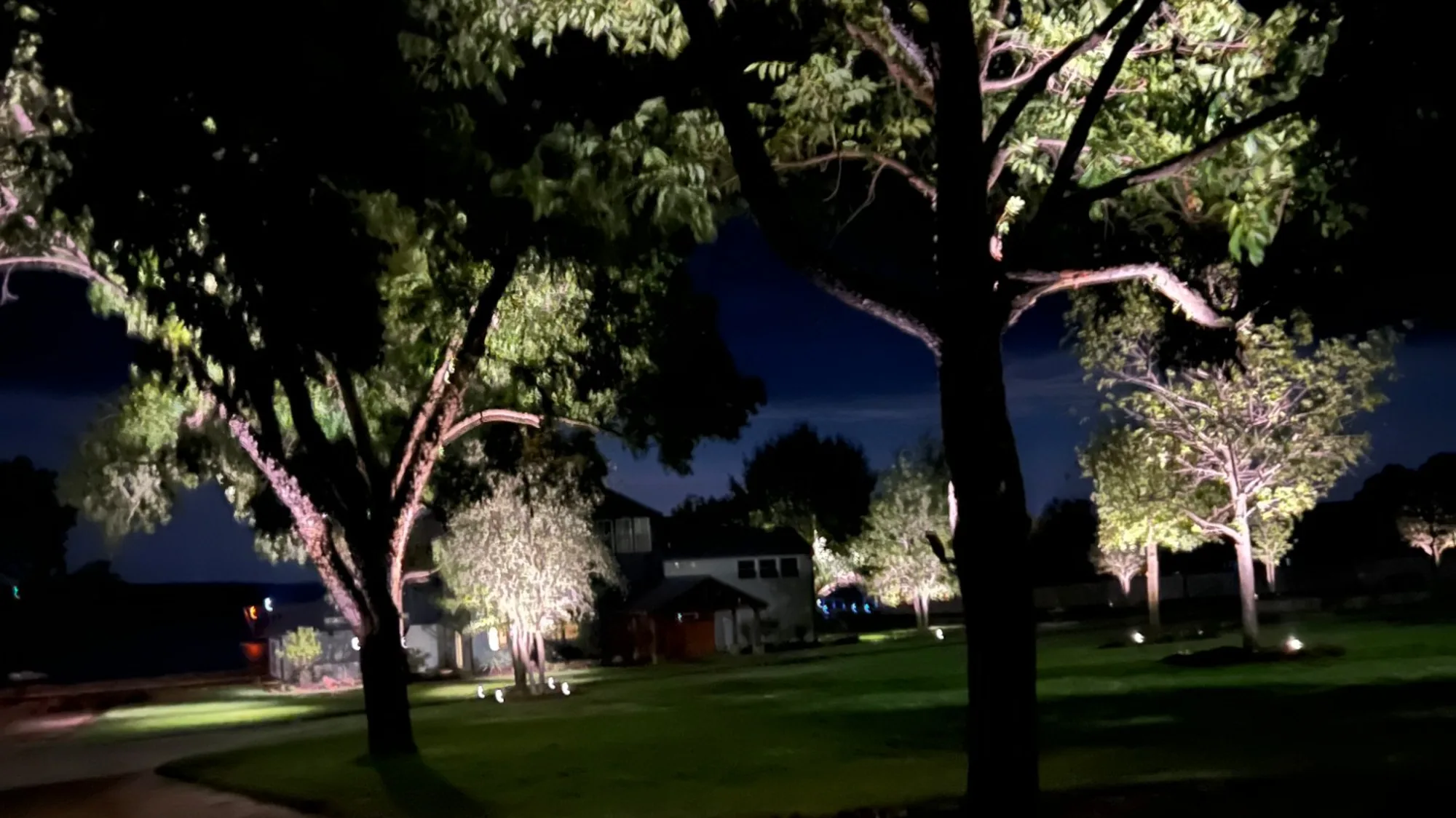
Drainage, then hardscape, then irrigation, then soil, then planting, then lighting after dark. Out of order costs money: irrigation trenched after the terrace means cutting the terrace, and lighting aimed before the plants are in is aimed at nothing.
Soil is the part that gets skipped
Most of what fails in the first two years fails in the ground, not above it. Beds here are frequently a few inches of soil over caliche, and a plant put into a hole cut in caliche sits in a clay bowl that fills with water and does not drain — a bathtub with a plant in it. Beds get broken up and built up rather than back-filled with what came out of the hole.
The water is alkaline too. That rules out a whole catalogue of plants that would be fine two hundred miles east, and it is the reason an ericaceous shrub somebody bought at a big-box store turns yellow in its second season no matter how it is fed.
Phasing, because most properties are not done in one go
A large property does not have to be built at once, but it does have to be planned at once. Sleeves under drives, conduit to where lighting will one day go, a mainline sized for the zones that come in year three — all cheap now and expensive later. We will draw the whole thing and build it in the order that suits your budget, as long as the buried work happens before the surfaces close over it.
What you get at the end
A plan you keep, an irrigation layout that shows what is buried and where, and a plant list with what each thing is and what it needs for the first two summers. Establishment is a real period with real requirements, and a landscape handed over without that information is one you are guessing at.
Plants from our own rows
Material comes from our nursery in Graford, already acclimated to this soil and heat. You tag the tree.