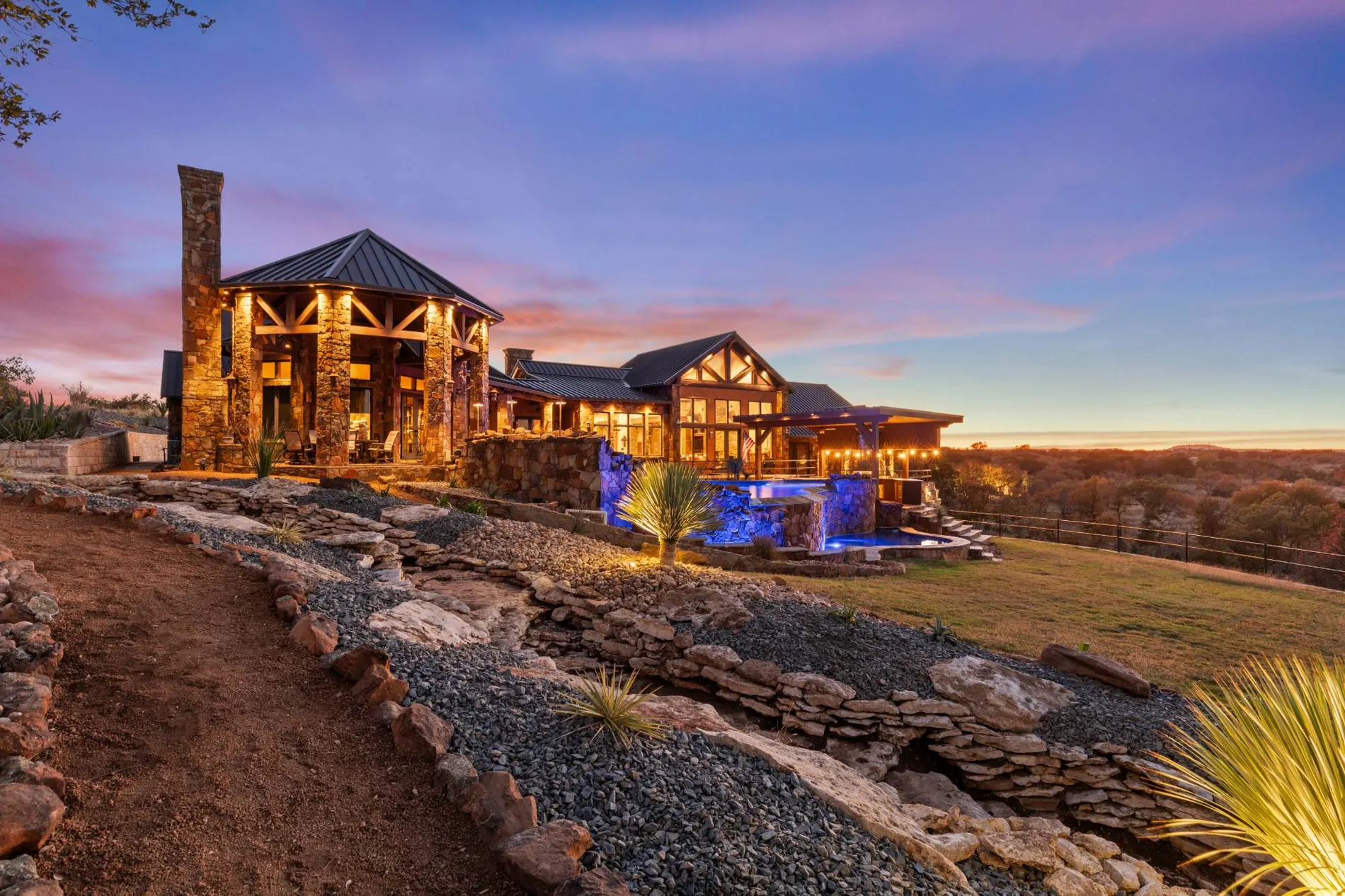
Moving water is the one thing in a landscape people stand and look at. It is also the one most likely to be built wrong, because almost everything that decides whether it works is buried before the first stone goes on.
Pond, or pondless?
A pondless waterfall is a spillway and a stream running into a gravel-filled reservoir underground. No standing water, no fish, far less maintenance, and nothing for a toddler to fall into — which on a lake house or a weekend property is usually the right answer.
A pond is the other thing entirely: fish, plants, a surface that reflects the sky, and a small ecosystem you are now responsible for. Worth it if you want it. Not worth it if what you actually wanted was the sound.
We will ask which one you are after before we quote either.
The parts nobody sees, which decide everything
Circulation. The pump is sized to turn the whole volume over about once an hour, and separately to feed the spillway — a sheet of water reads thin and sad under roughly a hundred gallons a minute per foot of weir. Undersize the pump and you have built a wet rock.
Biological filtration. A skimmer at one end, a biofalls at the other, and the whole body of water moving between them. That is what keeps a pond clear. A pond without it is a chemical habit you did not know you were signing up for, and it will be green by the second August.
The liner, and where leaks actually come from. EPDM over protective underlayment, and the rock set on top of it rather than holding it down at the edge. Almost no pond leak is a hole in the liner — it is water wicking out over a stream edge or behind a spillway where the liner was cut short and gravel bridged the gap.
Autofill. Not optional here. A running waterfall in a Palo Pinto July evaporates at a rate that will surprise you, and a pond that drops two inches a week is a pond somebody has to remember to top up.
Power. A dedicated GFCI circuit, and the conduit goes in before the hardscape, not chased through it afterward.
The rock is the whole craft
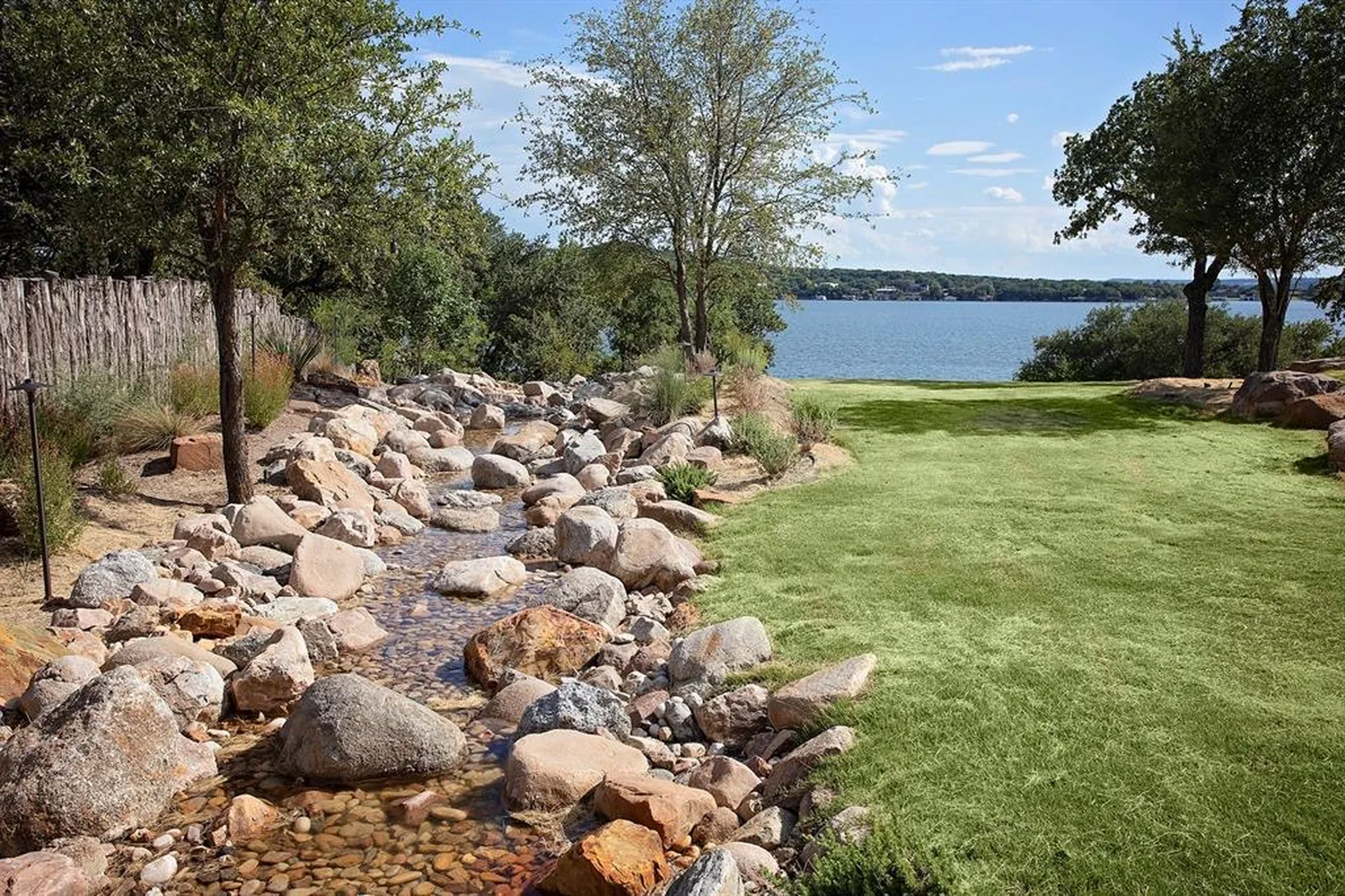
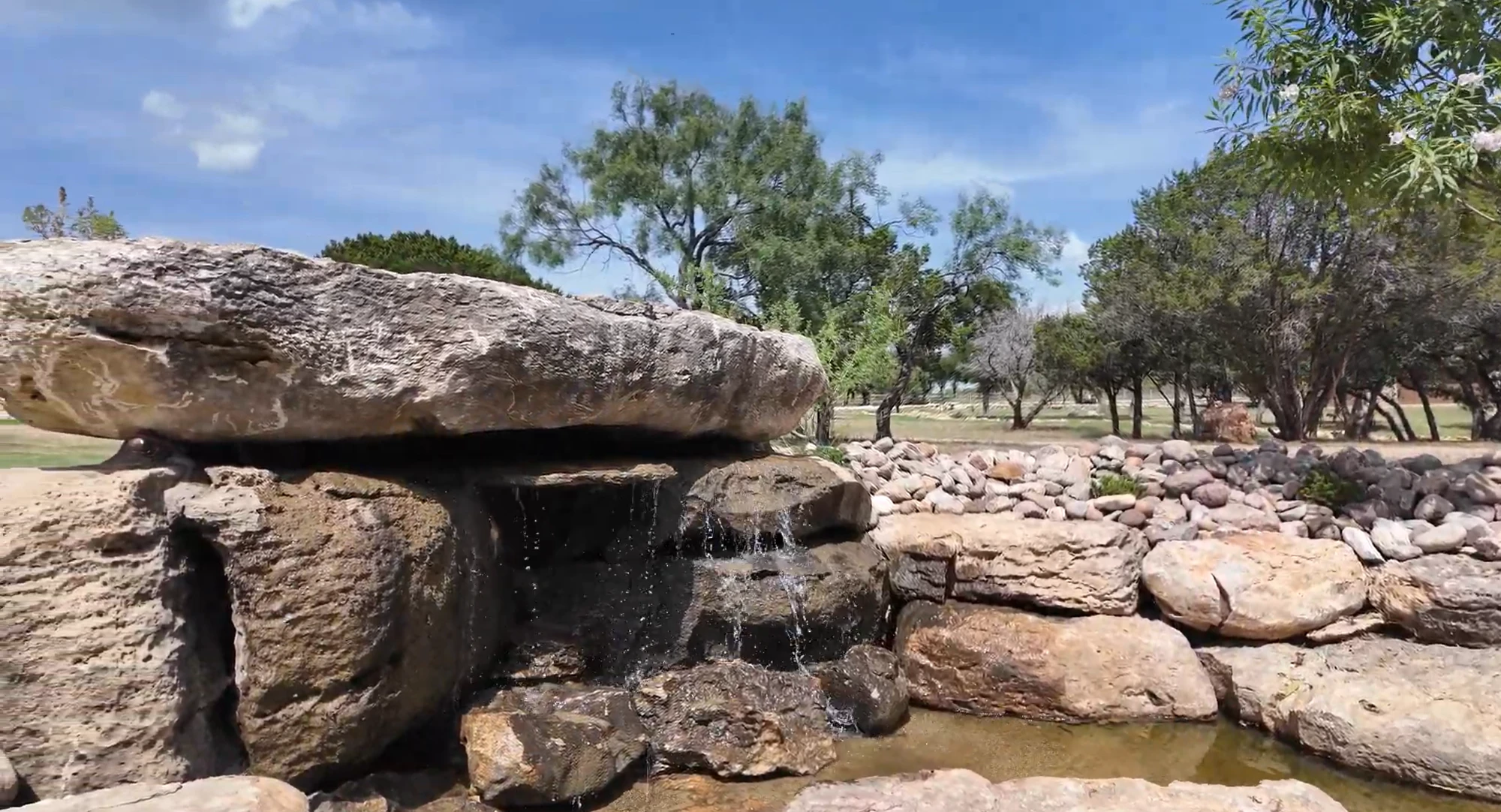
The difference between a water feature that looks like it was always there and one that looks like a garden-centre kit is entirely in how the stone is set. Moss rock and native limestone, sized in a range rather than all one grade, bedded so the water finds its own lines over and between them, and not one square inch of liner visible anywhere.
The failure mode has a name — the volcano: a conical mound of same-sized rock with a pipe in the top. Water does not do that anywhere in nature and everybody can tell.
Mosquitoes, herons and the things people ask
Moving water does not breed mosquitoes; still water does, and a Bti dunk handles what the movement does not. Herons are a real problem for koi on an open property and the answer is depth — a shelf they can stand on is an invitation, so part of the pond goes deeper than they will wade.
In a hard freeze the feature either runs or gets shut down properly. Half-running is what cracks plumbing.
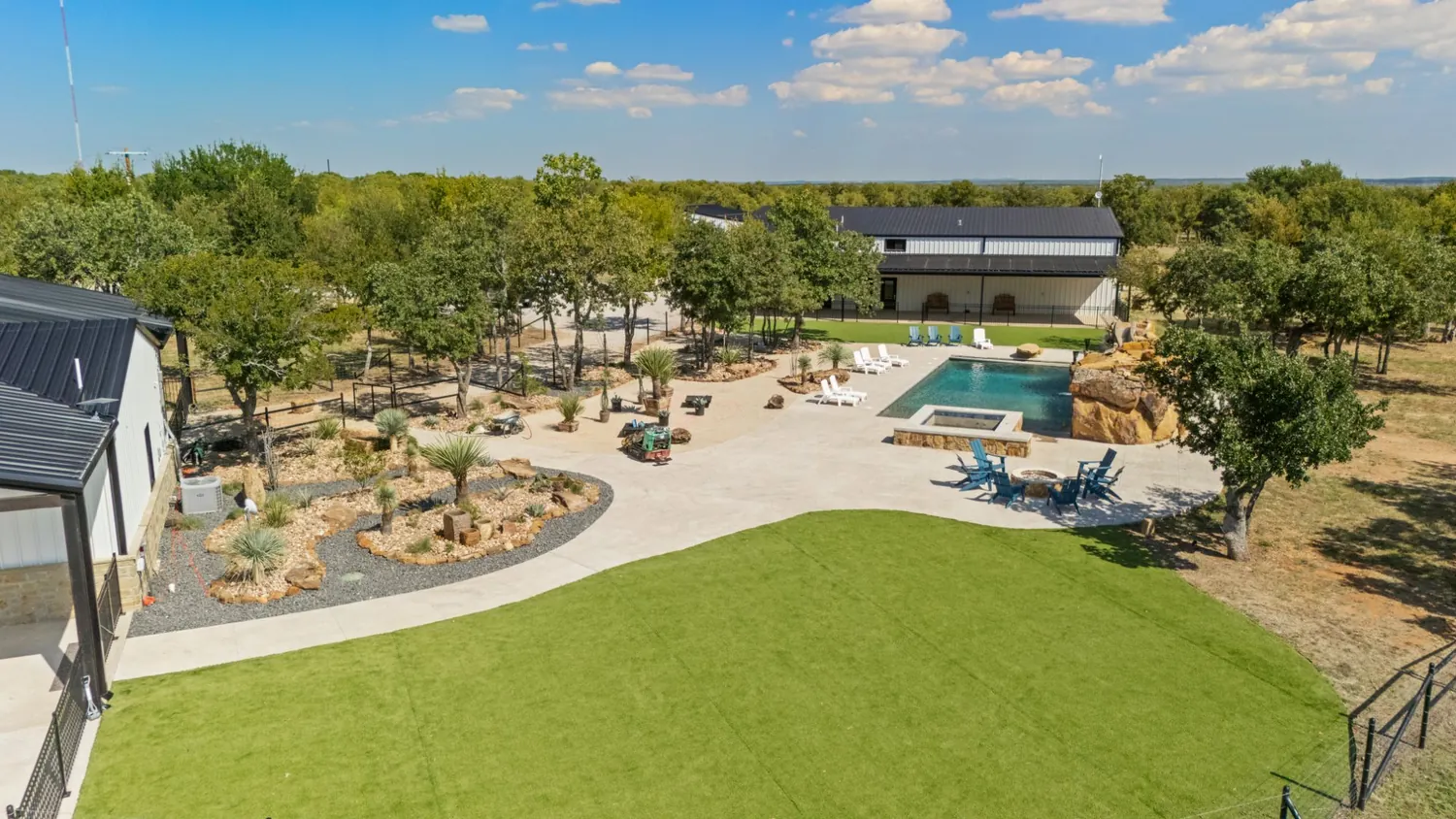
On a ranch, a pond is also infrastructure
Stock tanks, wildlife water and overflow from a feature are the same conversation as drainage — where the water goes in a six-inch rain is decided at design, not discovered afterward. We build the decorative feature and the practical one to the same standard.
Come look at one with us. Call (940) 779-4001.