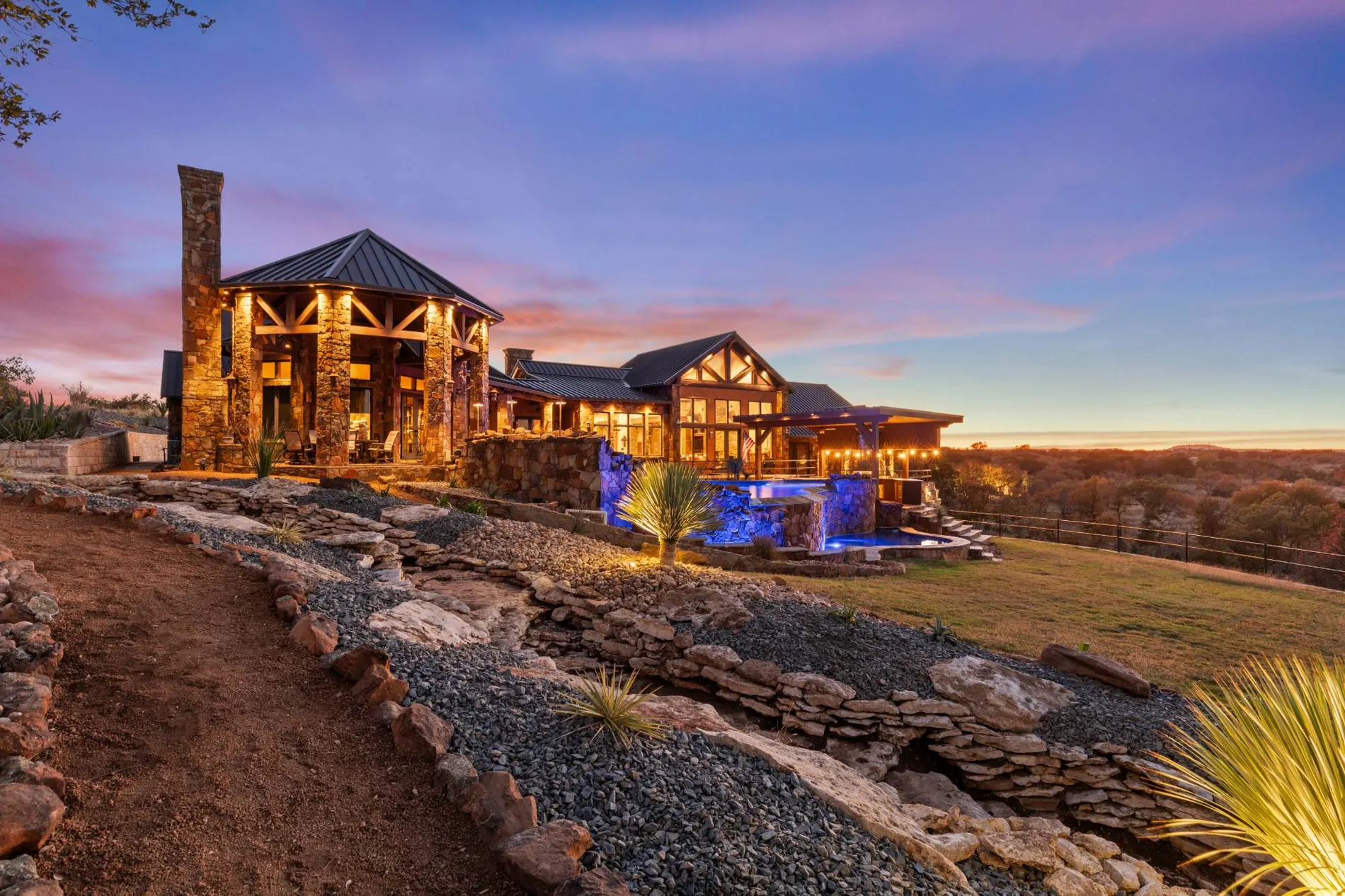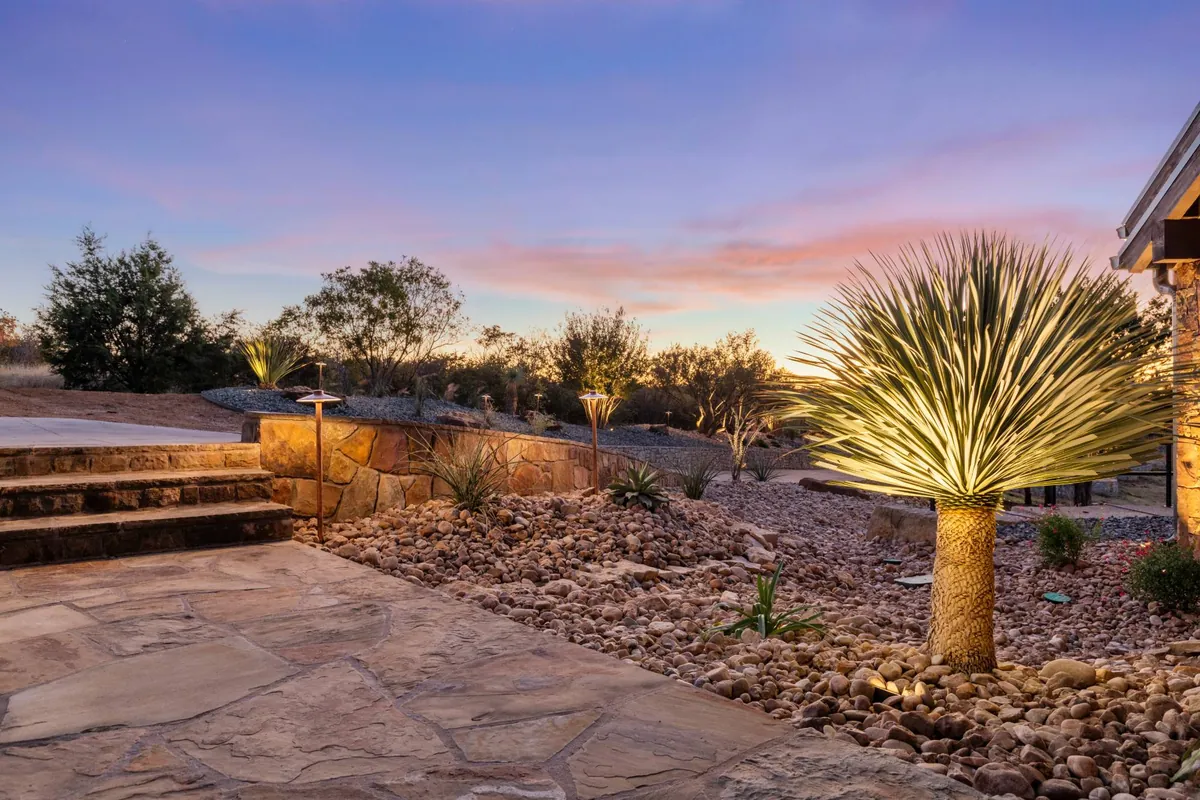
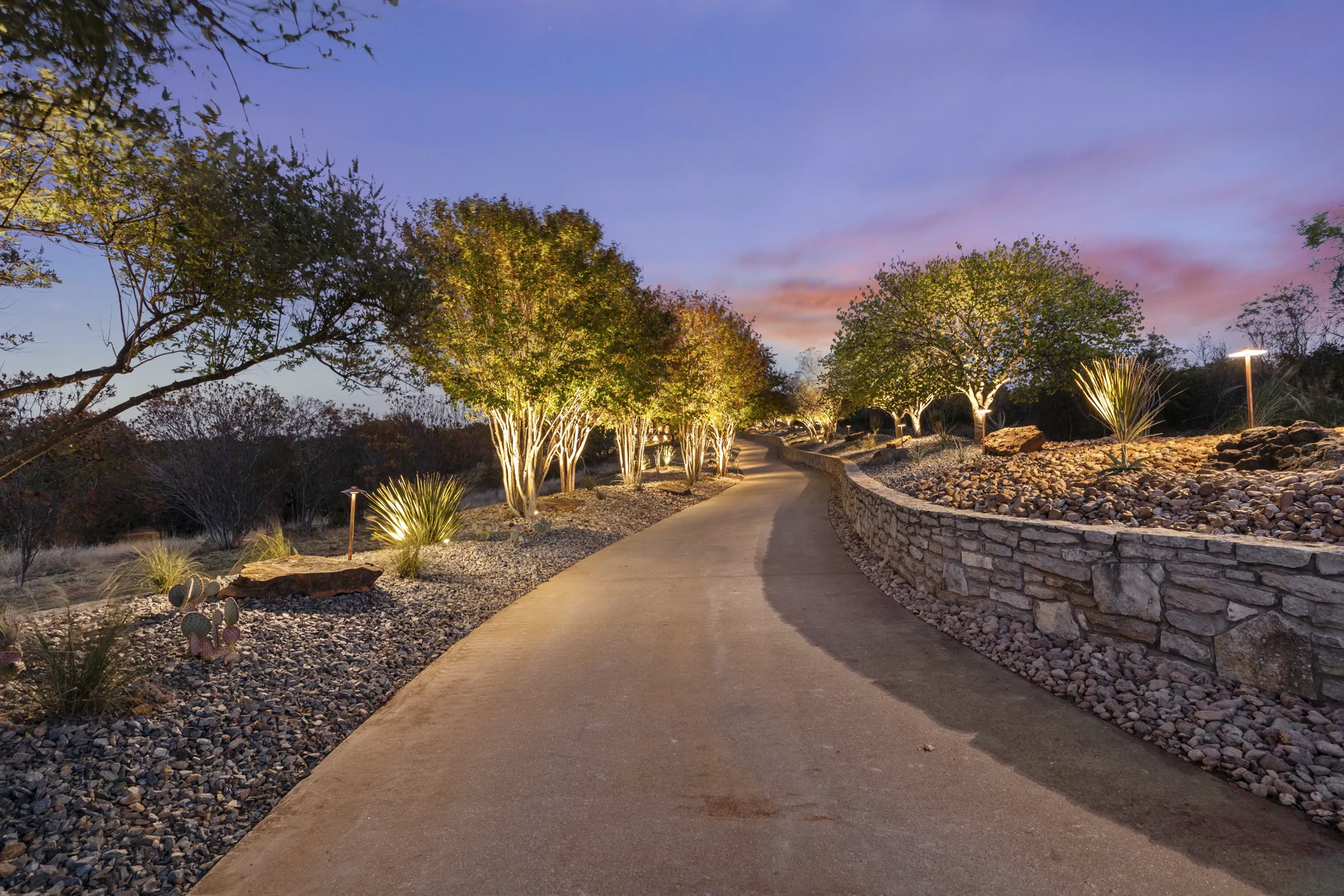
Low-voltage lighting for drives, entrances and specimen trees — placed after dark, where it is judged.
Aimed at night, not on a plan
Lighting is the one trade that cannot be finished in daylight. We rough it in, then come back after dark to aim and adjust every fixture. A plan drawn at noon is a starting point.
What gets lit
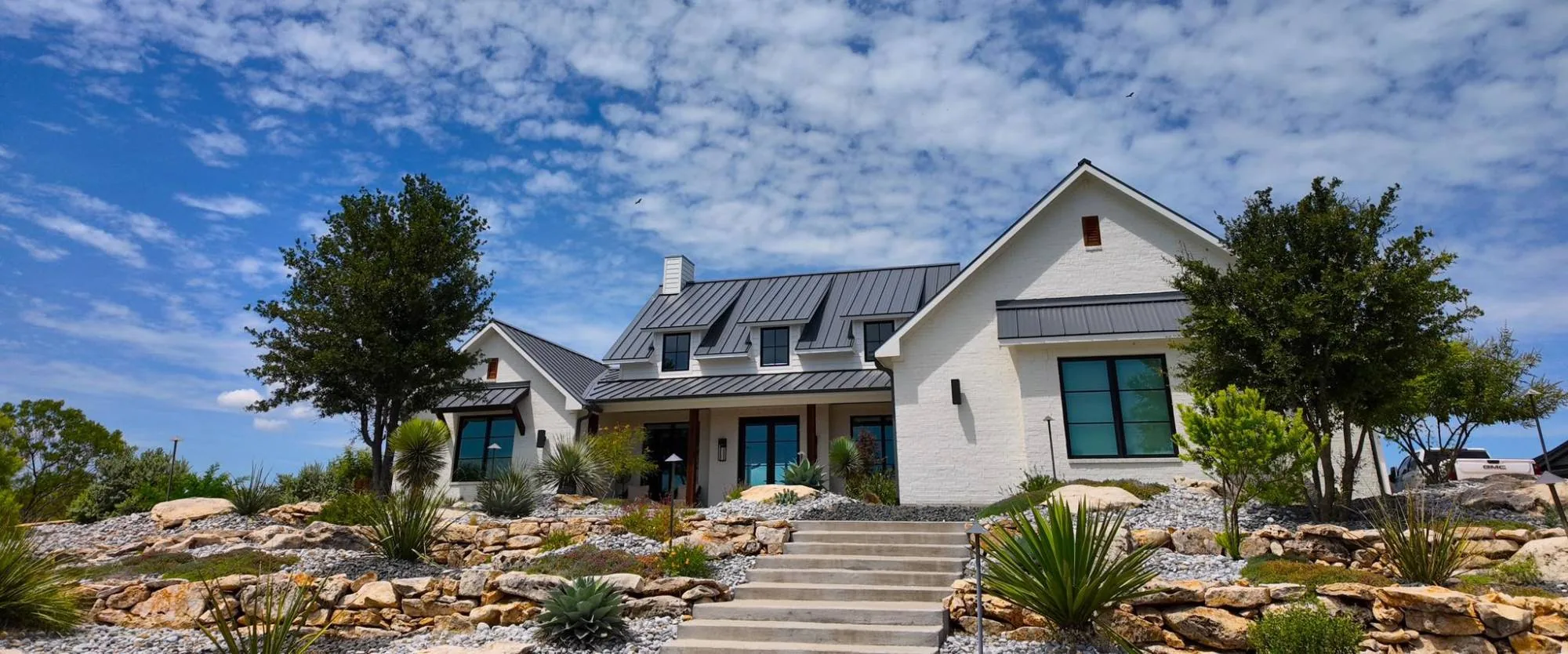
Entrance columns and gates, the ranch drive, specimen trees uplit from below, stone walls grazed to show texture, steps and grade changes for safety, and the house itself — lightly.
Restraint
The common failure is too much light and too many fixtures, which flattens everything and reads as a car lot. Dark between the lit things is what makes the lit things work.
What a low-voltage system is actually made of
Three parts, and the two nobody looks at are the two that decide whether it still works in five years.
The transformer
Sized with headroom rather than to the exact load, because a system that is full on the day it is commissioned cannot take the fixture you want next spring. Multi-tap secondaries matter on a property this size: a run of two hundred feet drops voltage, and tapping that run higher is how the far fixture matches the near one instead of going dim and orange.
The wire
Direct-burial cable, sized to the run and not to the reel that happened to be on the truck. Under-sized wire is the single most common fault we find in systems somebody else installed — it reads as ‘the bulbs are failing’ and it is actually voltage drop. Connections are made with waterproof silicone-filled connectors and buried below cultivation depth, not twisted and taped.
The fixtures
Brass and copper, which weather to a finish instead of failing to one. Painted aluminium is cheaper on the quote and it corrodes at the stake, usually just as the warranty ends.
Techniques, and when each one is wrong
Uplighting
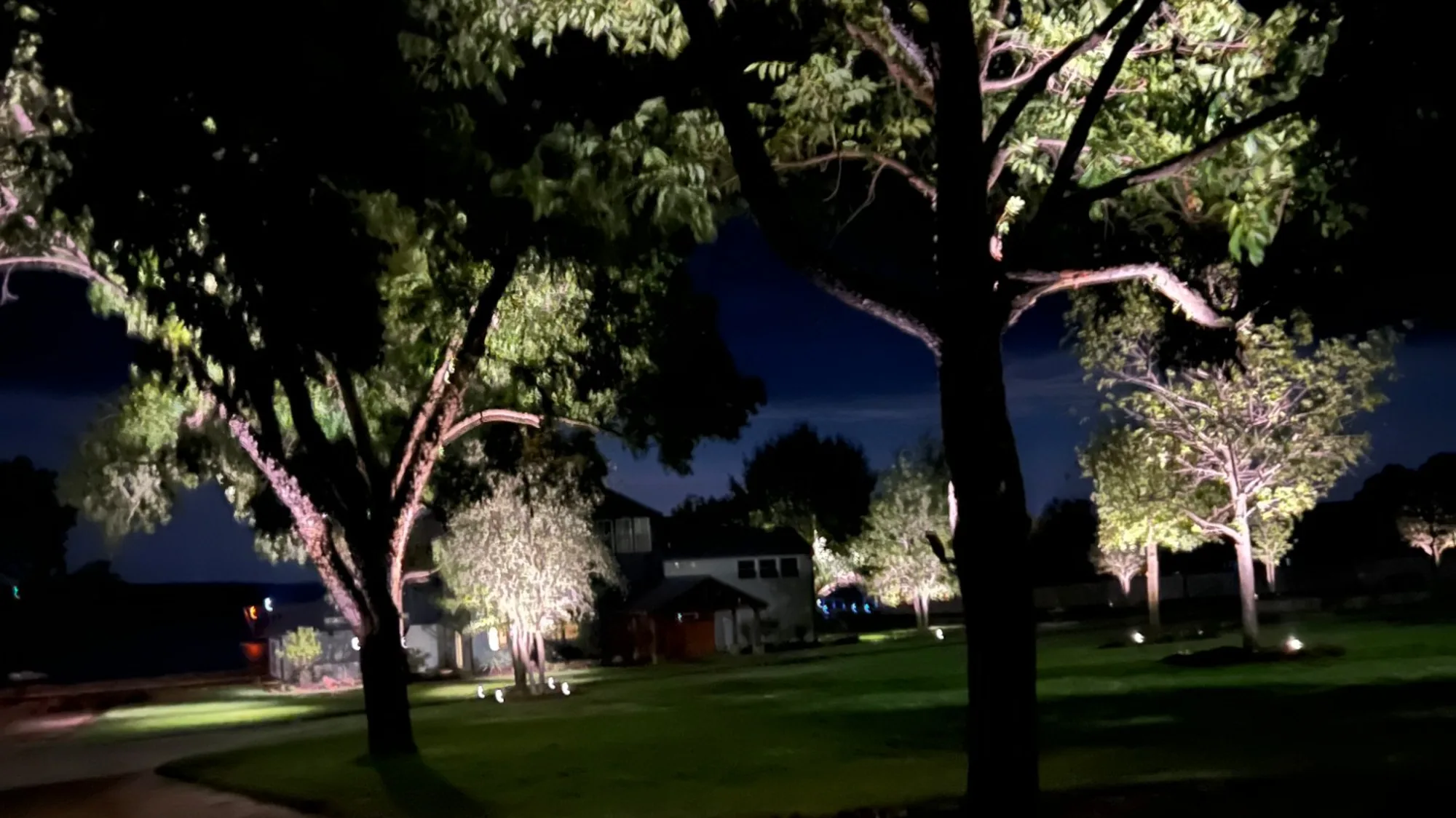
Two fixtures on a specimen tree, set back from the trunk and angled across the canopy rather than straight up it. Straight up flattens a live oak into a green ceiling. Set back and crossed, you get the branch structure, which is the thing worth looking at.
Grazing
A fixture close to a stone wall and aimed steeply along it, so the light rakes the face and the texture reads. Pull it away from the wall and the same fixture washes the stone flat and shows nothing.
Path lighting
Staggered, never lined up like a runway, and spaced so the pools of light overlap at ankle height rather than forming discs with darkness between them. Fewer fixtures placed properly beats more fixtures placed evenly.
Moonlighting
Fixtures mounted high in a mature tree and aimed down through the branches, so what lands on the ground is dappled shadow. It is the most expensive technique to install and the only one that looks like it was always there.
What it costs to run
An LED system is cheap to own. Modern fixtures draw a few watts each, so a large property with fifty of them is running on less than a couple of old floodlights, and the transformer only works between dusk and whenever you set it to stop. Lamps last years rather than seasons, which matters more than the electricity: the real cost of a halogen system was the ladder.
Keeping it aimed
Lighting drifts. Trees grow into it, mowers clip stakes, and a fixture that was perfect in March is aimed at the underside of a shrub by August. A system is worth a night visit once a year to re-aim, clear lenses and check connections — which is also when a failing run shows up, before it takes a zone with it.
Built to last outside
Brass and copper fixtures, not painted aluminium. Properly sized transformers, buried runs, and connections that survive a wet year.