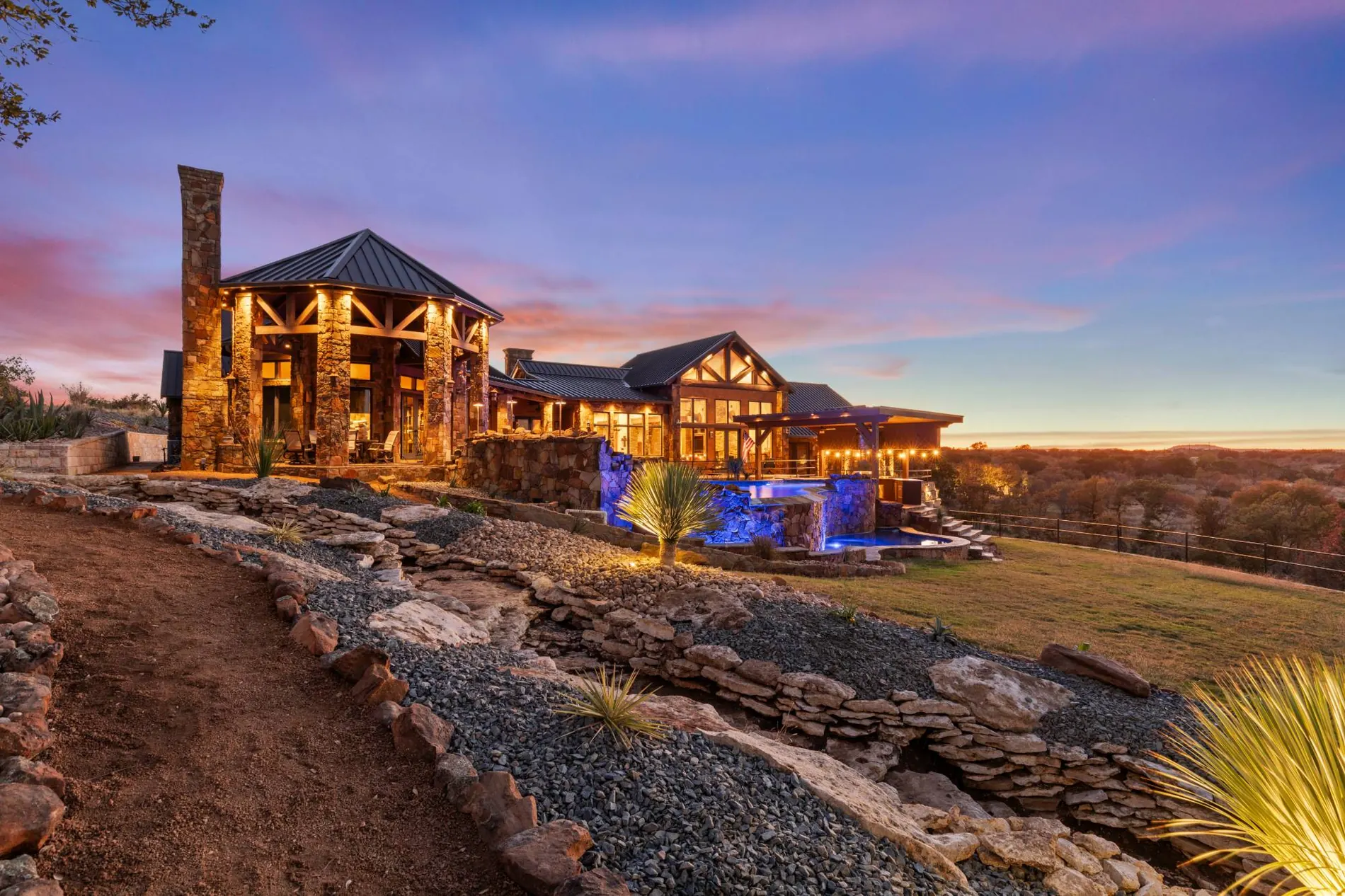
Almost everywhere else we work, the only people who have to approve a landscape are the ones paying for it. Aledo is the exception. Between the city’s year-round watering schedule and the architectural controls on the newer developments, a plan here has to satisfy two sets of rules before anybody breaks ground — and a design that ignores either one gets rejected or gets thirsty.
Two watering days a week, every week of the year
The City of Aledo runs a mandatory watering schedule that does not switch off in winter. Nobody waters on Monday. Addresses ending in an even number water Wednesday and Saturday; odd numbers water Thursday and Sunday. Nothing runs between 10am and 6pm, runoff onto a street or a drive is prohibited, and watering while it is raining is prohibited too. Hand-held hoses, drip and soaker lines are exempt from the time window.
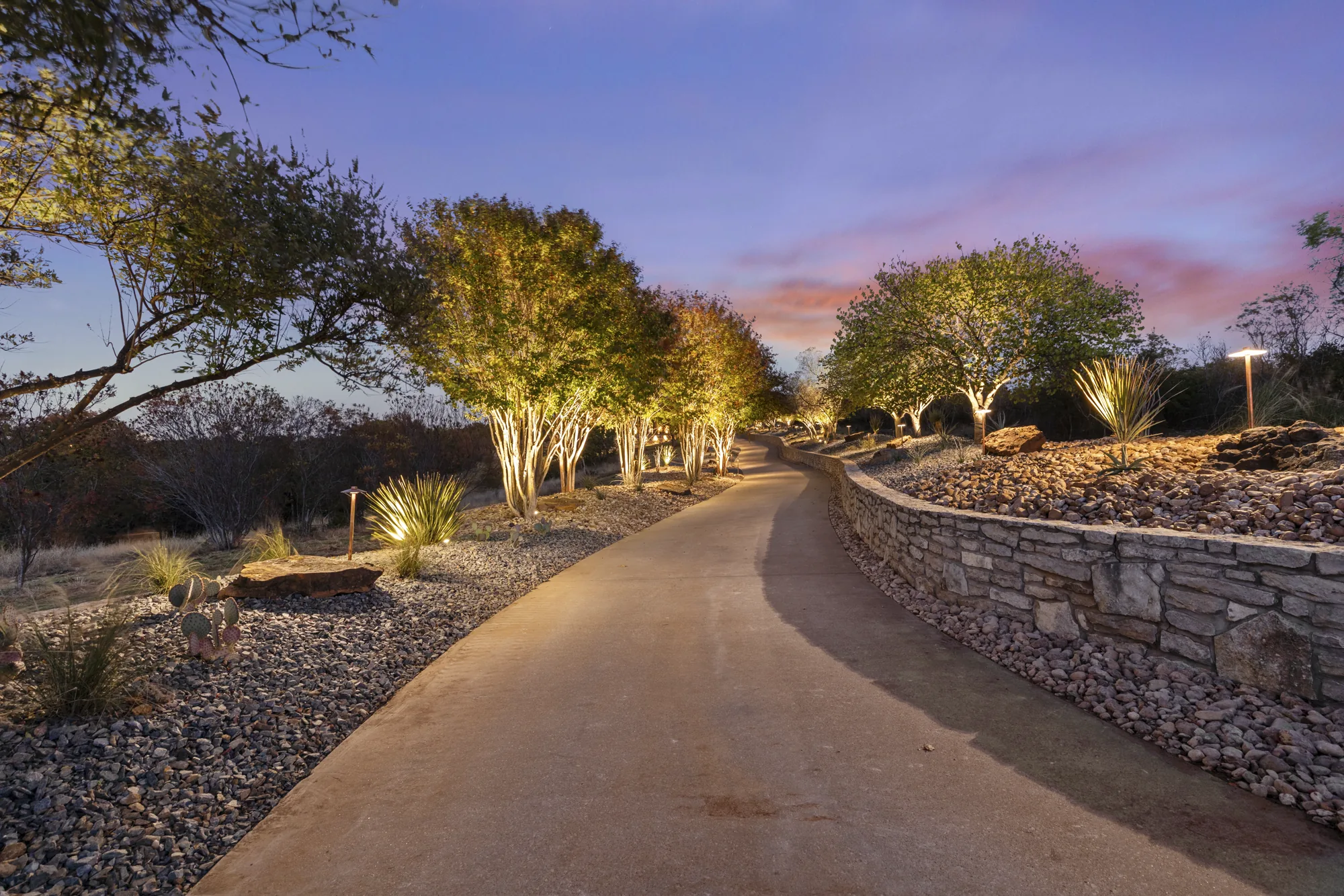
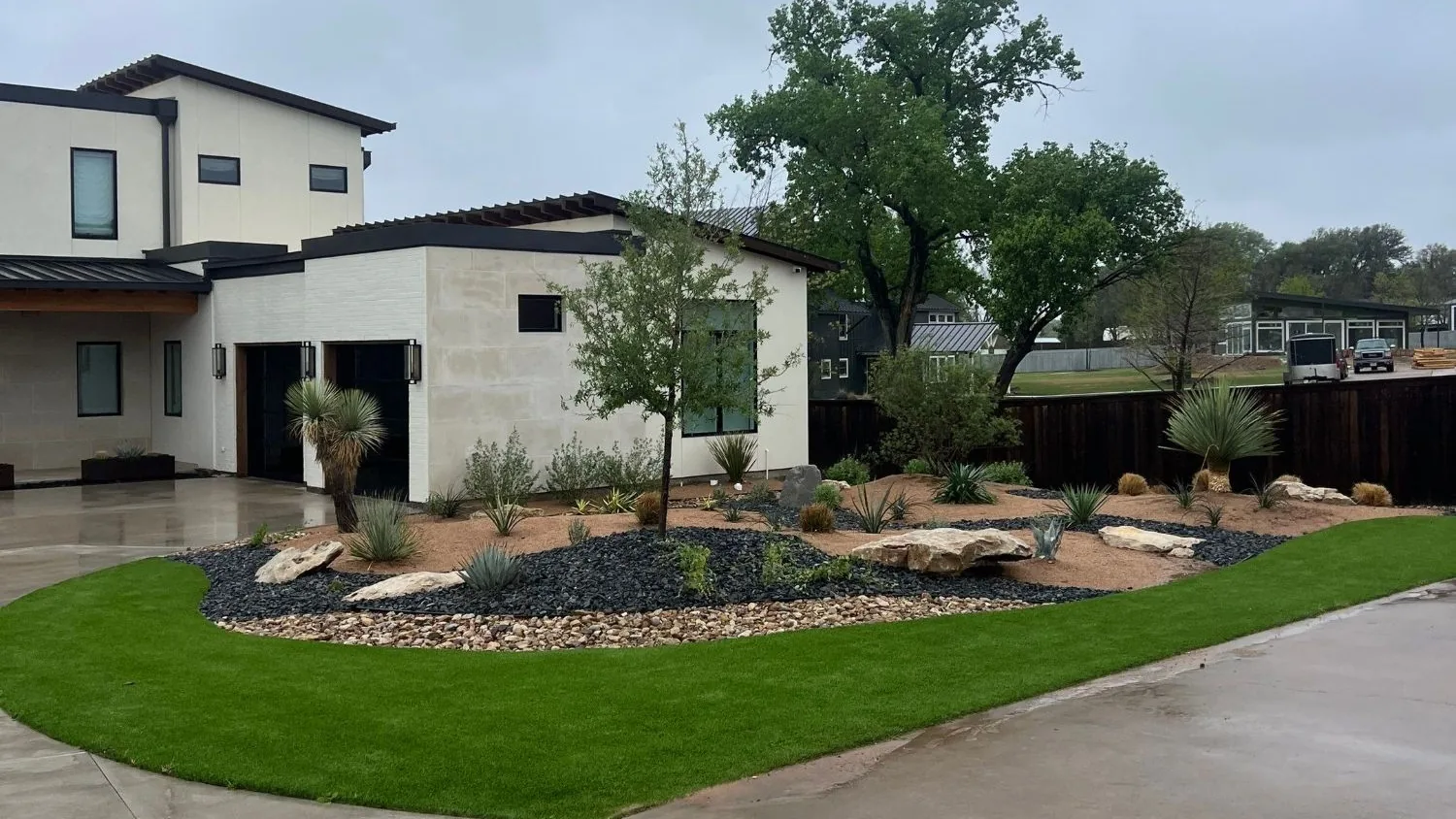
Read that as a designer and it tells you what to draw. A lawn that needs three waterings in August is not going to get them, legally. So the lawn gets smaller and better-used, drip goes under every bed because drip can run when spray cannot, and the zones get laid out so an even-numbered address can actually finish its cycle inside two mornings.
Which is why so much of our work here is turf and graded stone
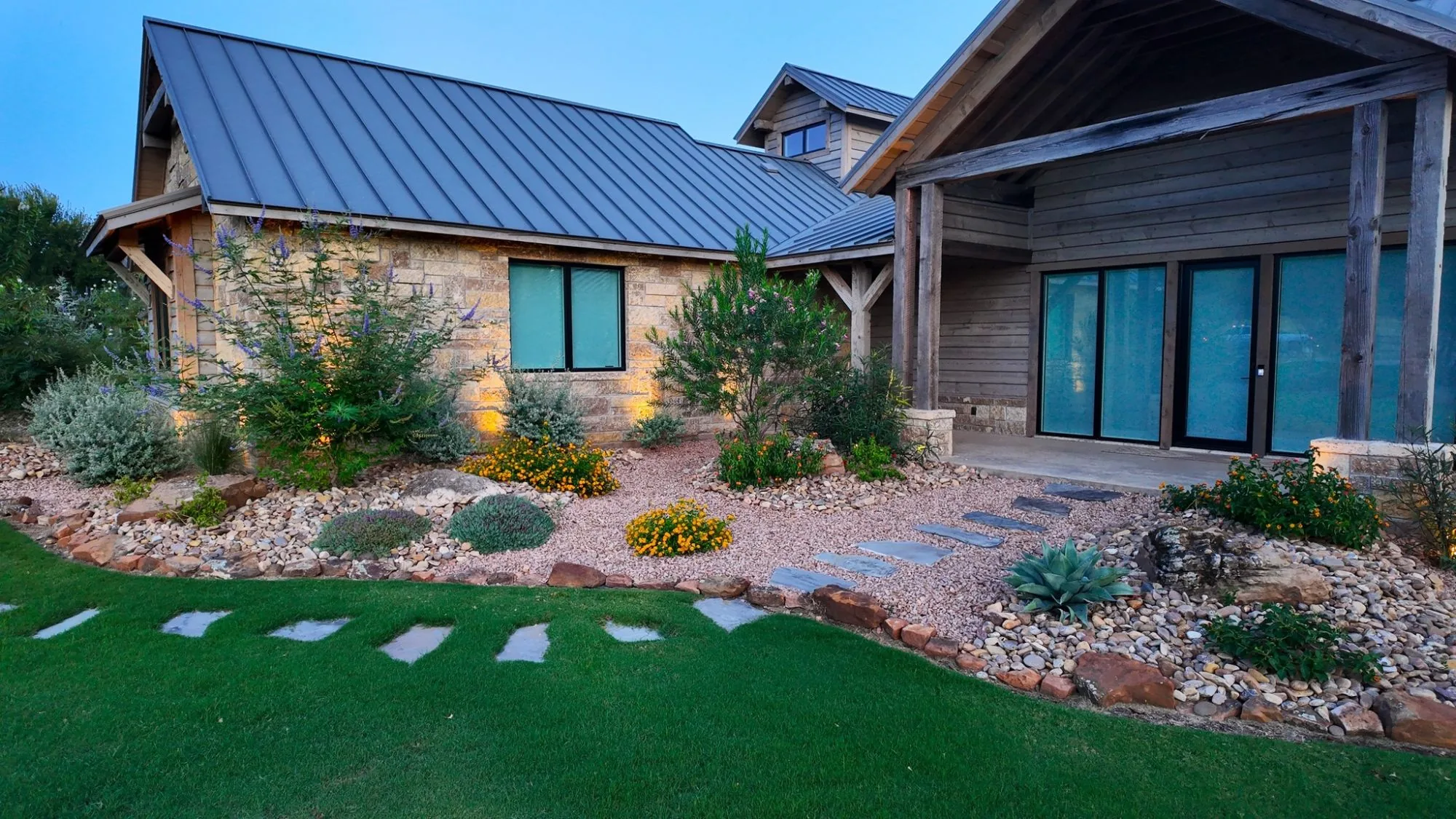
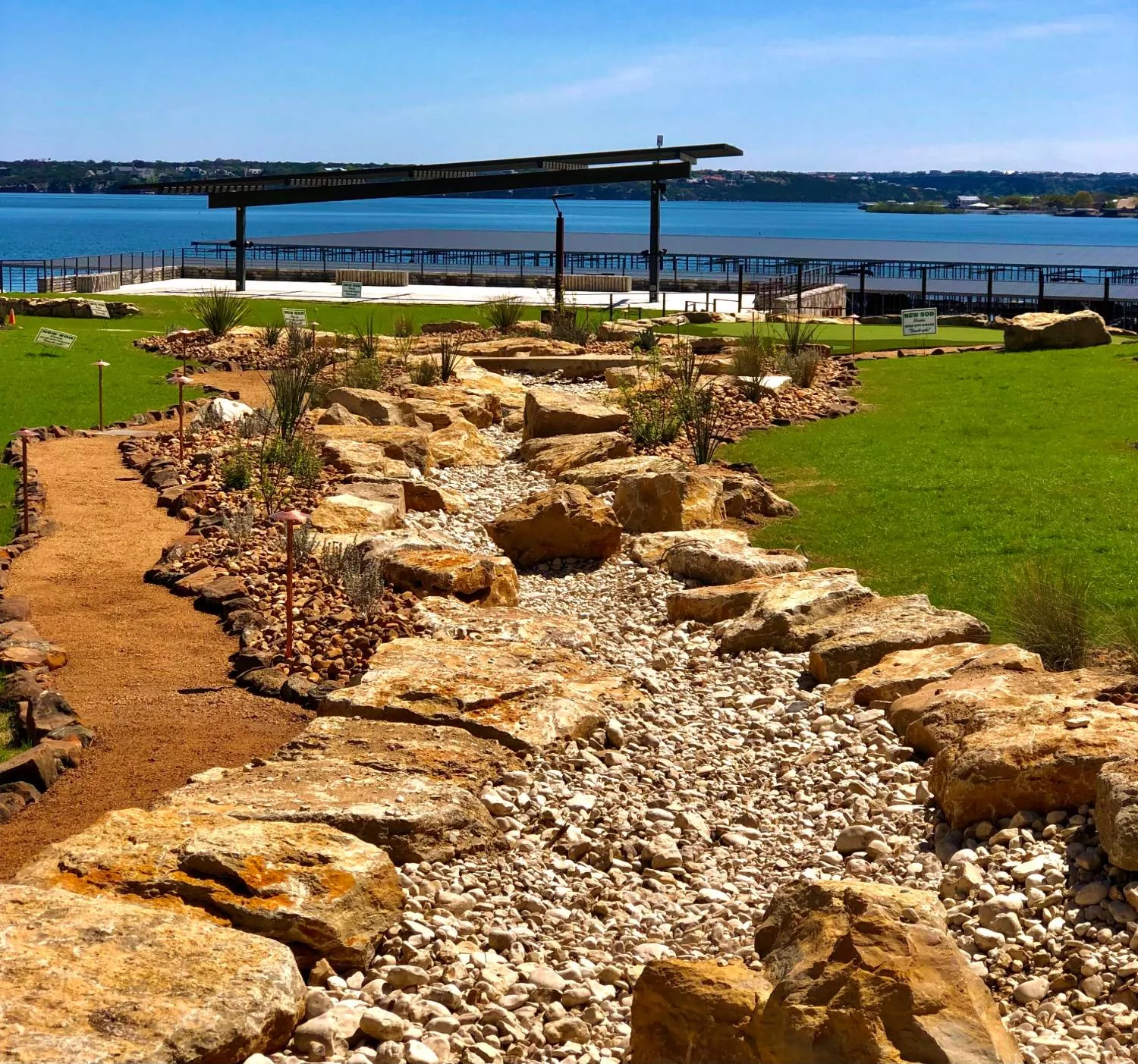
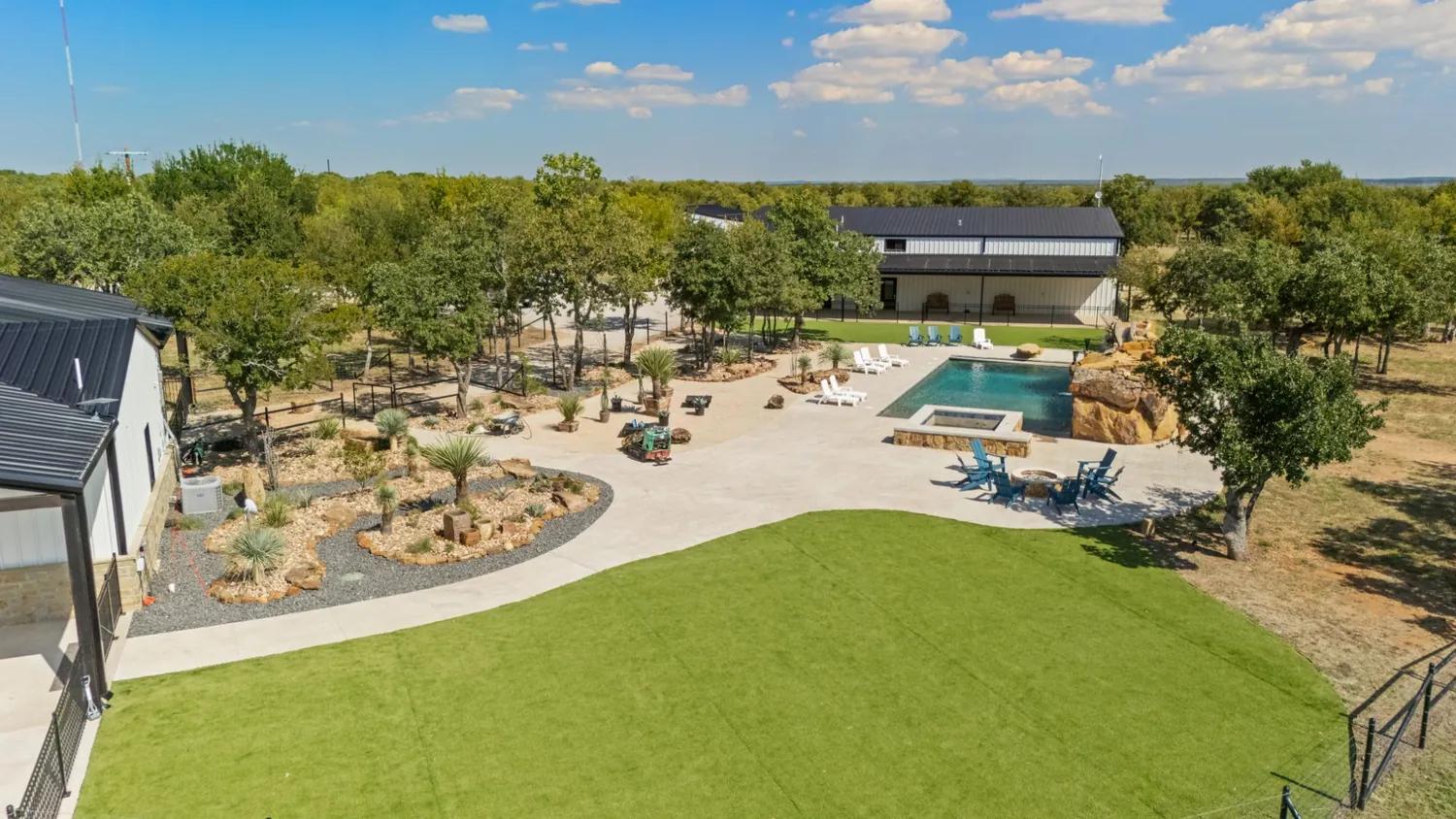
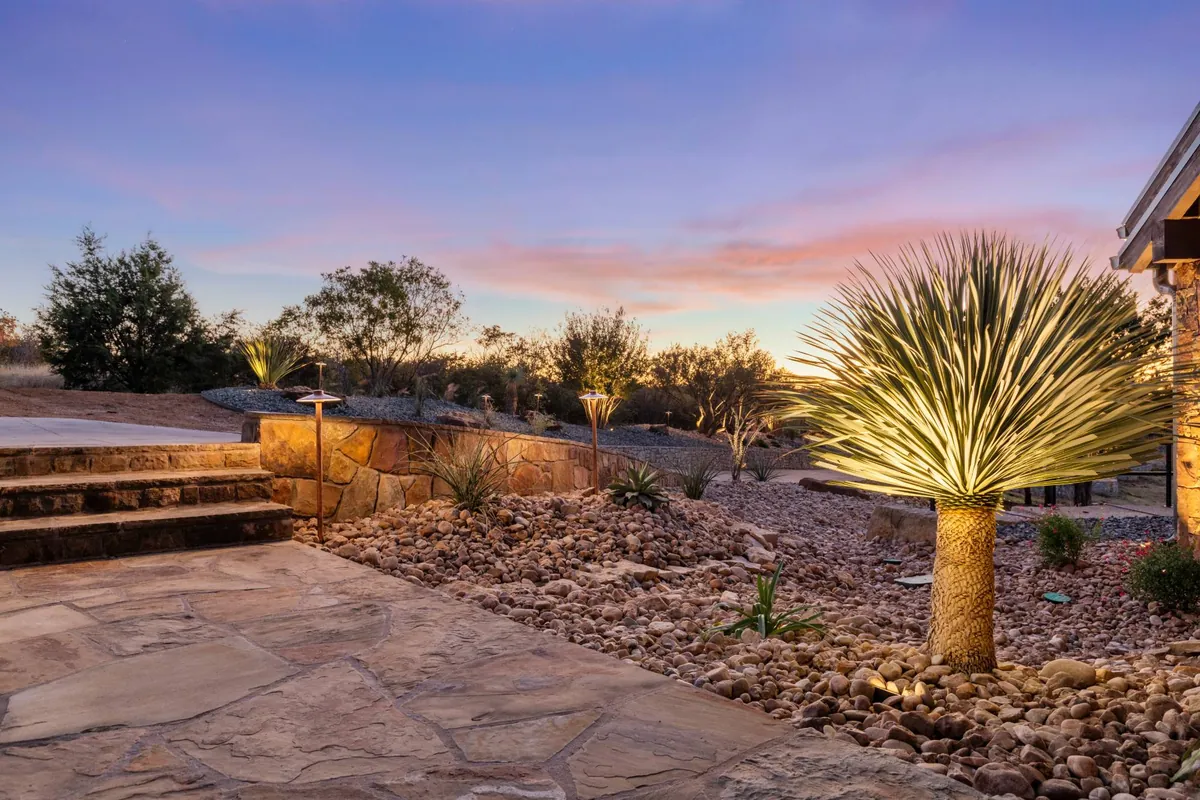
Synthetic turf is the honest answer to a two-day calendar on a frontage that is looked at more than it is used, and it is a large share of what we install in Aledo specifically. Properly done it is a drainage job as much as a surface job — base, fall and seams — which is a different trade from rolling out a mat. Around it, graded stone beds do the work a thirsty border used to.
The committee sees the plan before the crew does
The newer gated developments here carry real architectural controls. Bear Creek Ranch, to take one, requires HOA approval, sets a minimum of 3,500 square feet of living space, demands ninety per cent masonry on the exterior and allows only iron or masonry fencing — on two-acre-plus lots that are still on a private well and septic.
That shapes a landscape more than people expect. Masonry-heavy architecture wants hardscape that matches rather than competes, fencing rules remove the cheap screening options, and a two-acre lot on its own well means the irrigation gets sized to what the well actually delivers rather than to a template. We draw for submission — plant schedule, materials, elevations — because a rejected plan costs a month.
Walsh changed what the work looks like
The Walsh family ranch ran to about 7,200 acres before development began in 2017 with Republic Property Group, and roughly 1,600 acres of it is designated for some 3,500 homes out at the I-20 and I-30 junction. Fort Worth annexed another 400 acres on the Parker County side in 2025. That is a lot of new frontage arriving at once.
New construction brings a specific problem with it. The ground around a just-finished house is builder’s fill, compacted by everything that drove over it, with a thin skim of topsoil spread for the final grade. Planting into that without breaking it up produces a yard that sulks for three years. The first thing we do on a new Aledo lot is usually earthwork and drainage correction, not planting.
We are an hour west, and we will say so
Aledo is the far eastern edge of what we cover, and it is honest to say that we drive to it rather than live in it. What we bring over that hour is the thing a nearer contractor usually cannot: our own grown stock from Brazos Native Nursery, our own stone, and crews that are not subcontracted out. What that means in practice is that we are the right call for a full install or a frontage rebuild, and the wrong call for a ten-minute fix.
Send us the HOA packet and the plat and we will tell you what will clear it. Call (940) 779-4001.