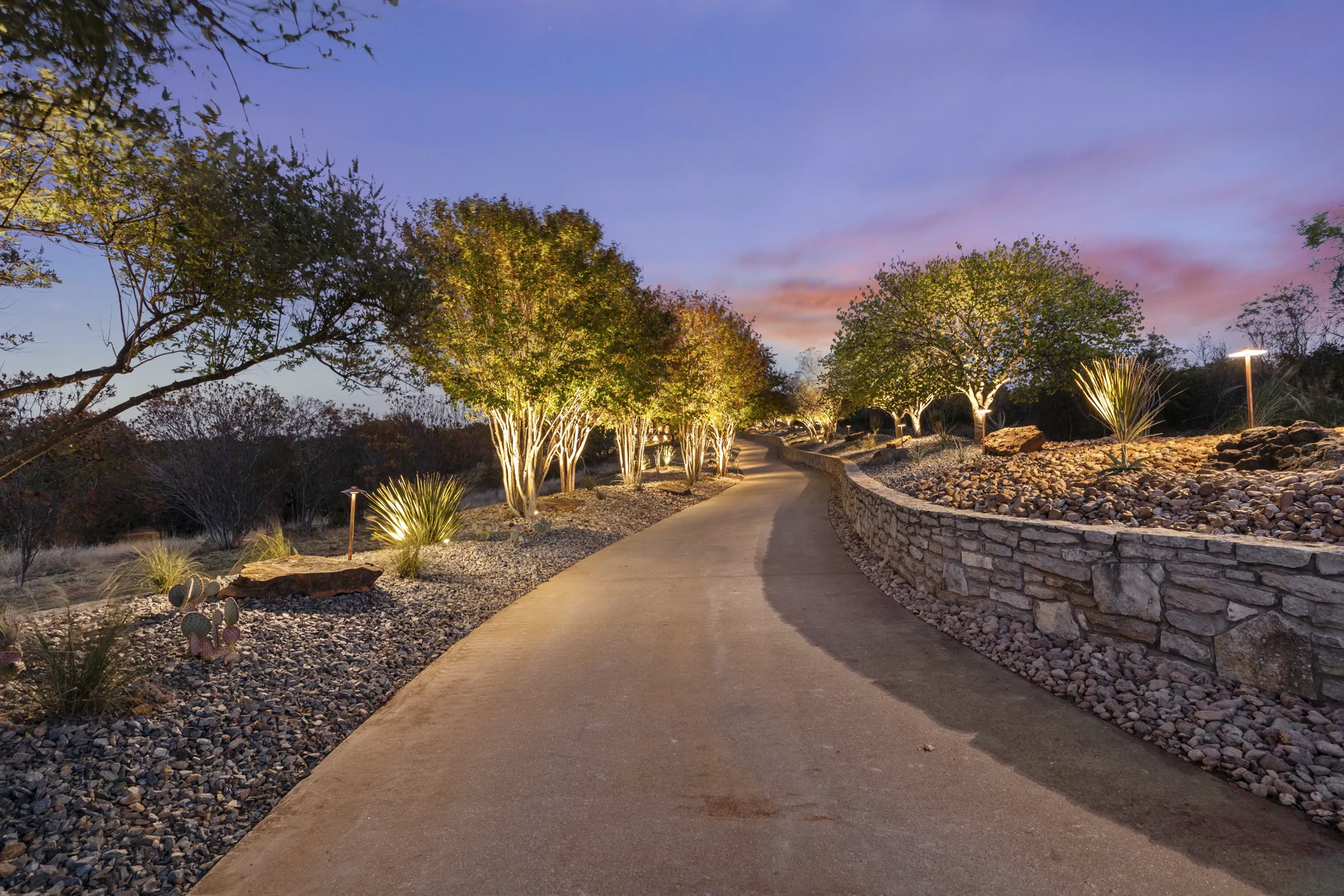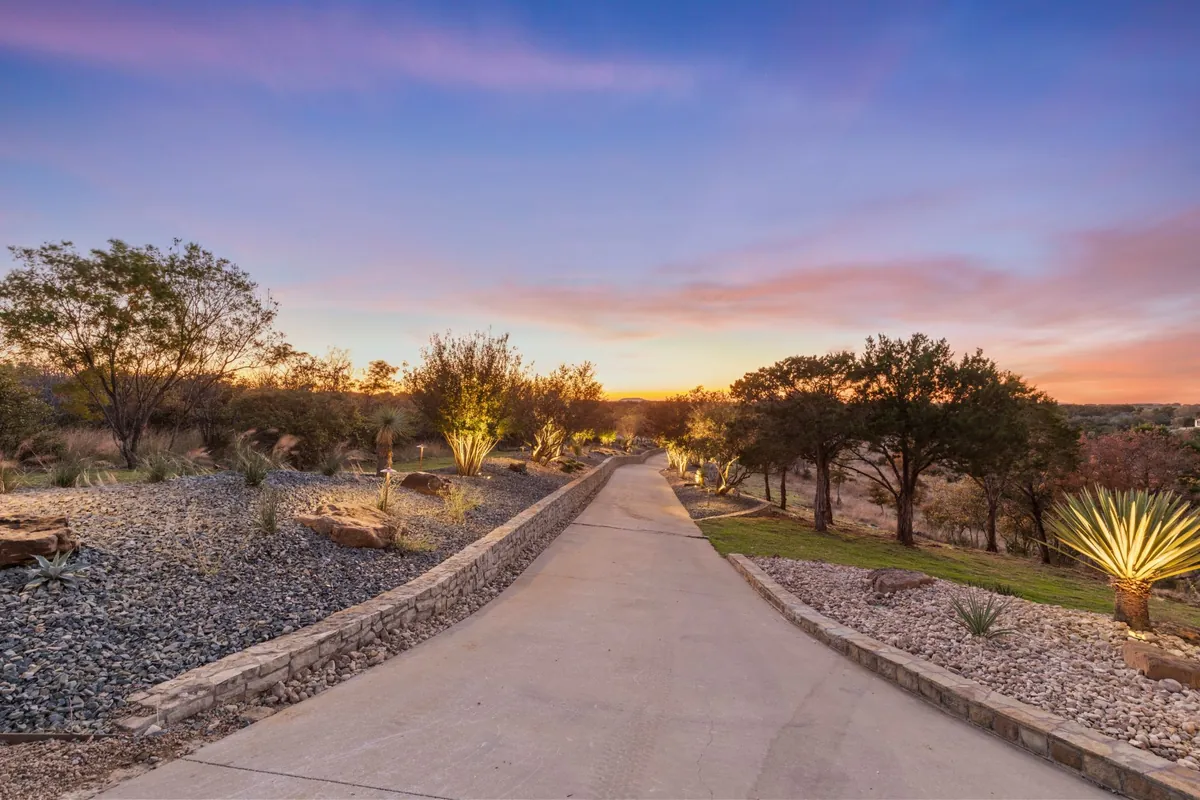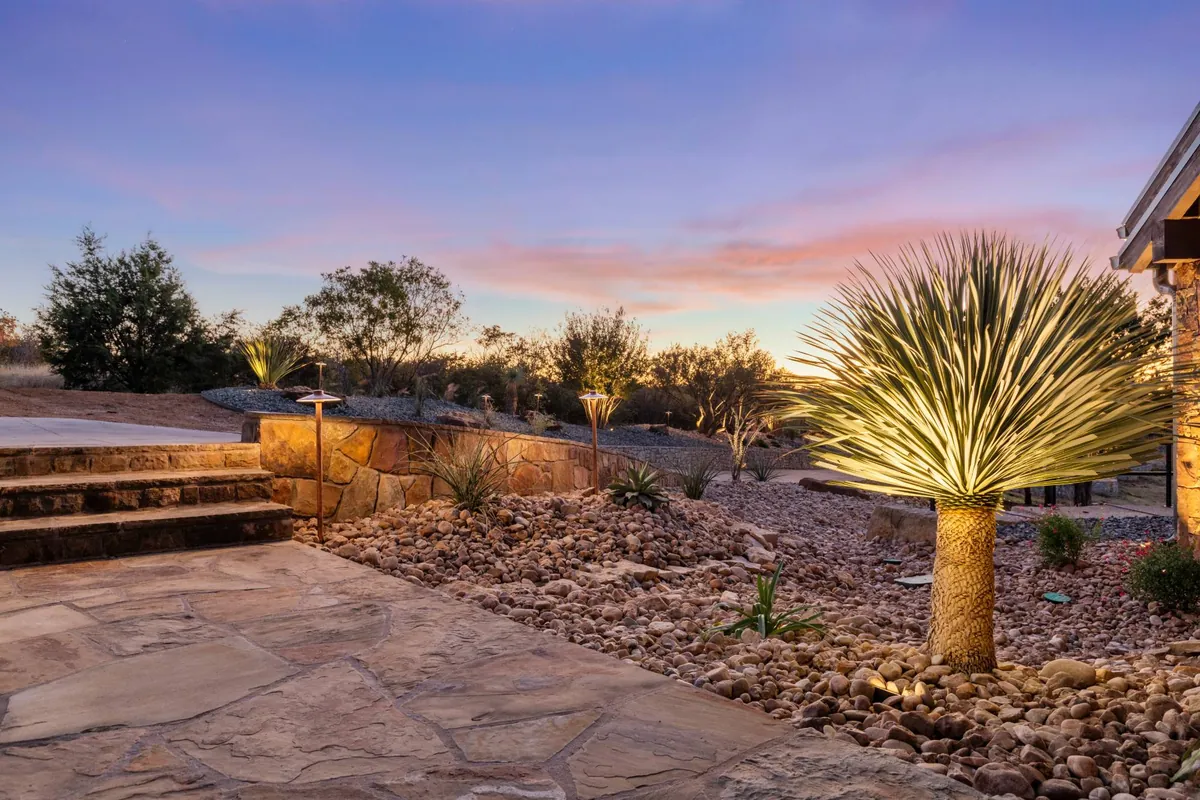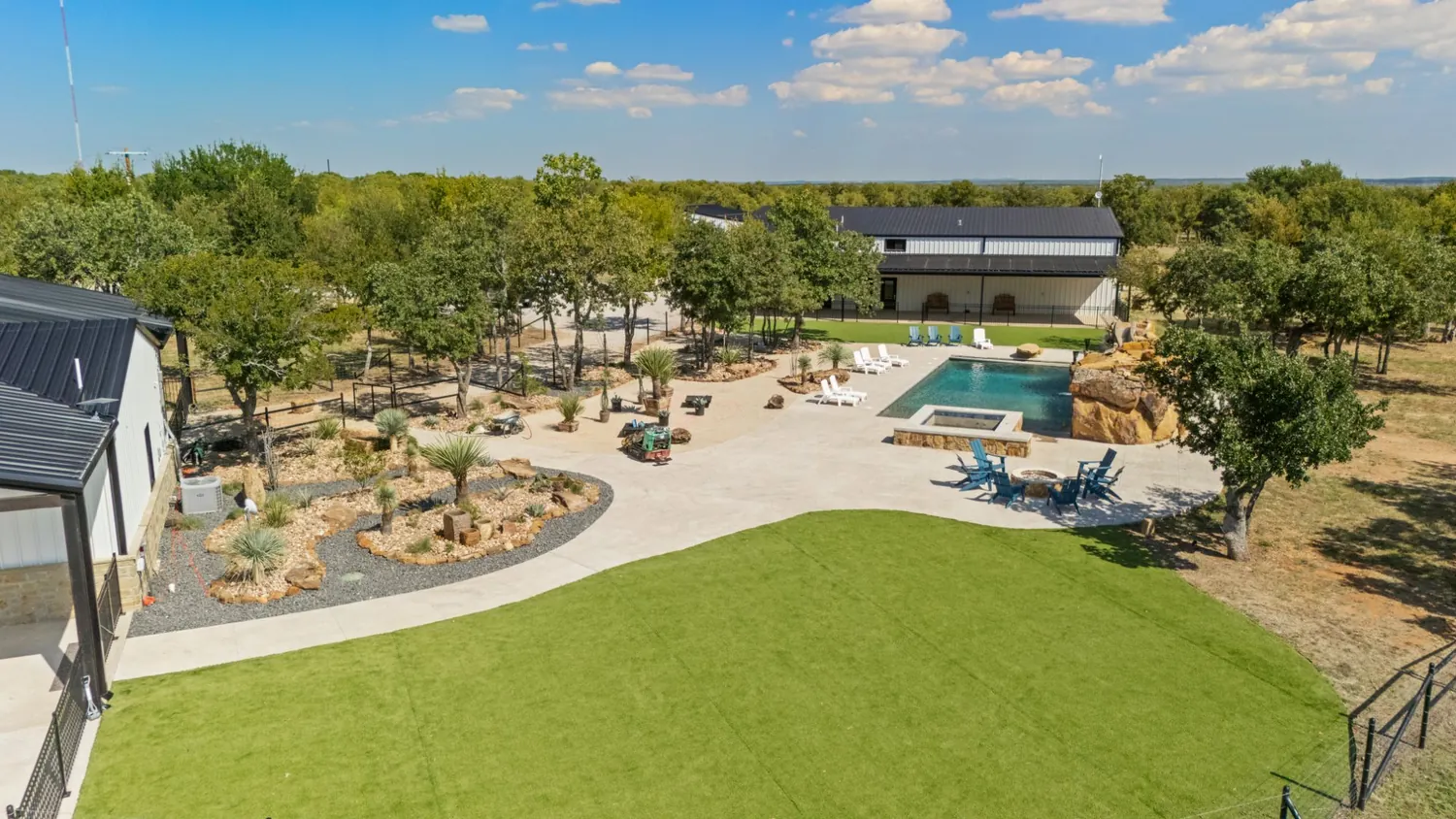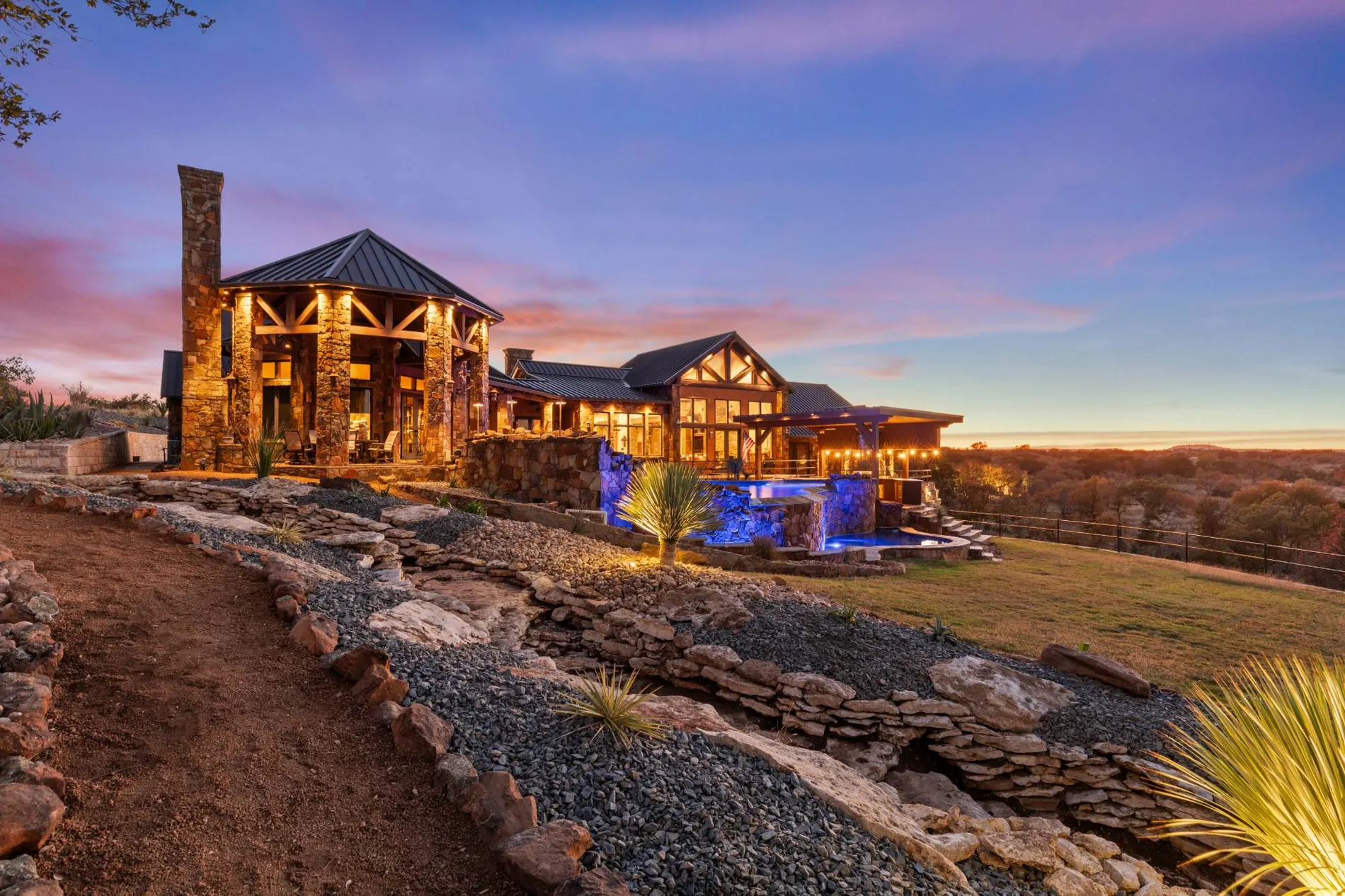
Water is guaranteed to do only one thing: follow the path of least resistance. We evaluate your property’s slopes and elevations to decide where that path is going to be.
Where drainage becomes a design opportunity
Effective drainage is one of the most important and most overlooked parts of landscape construction. Without a plan for it, the best planting in the world still ends in erosion, lost plants and water standing where it should not. Caliche and clay do not absorb, and North Texas rain does not arrive gently — it arrives all at once.
So the first question on any wet site is where the ground falls, not what size pipe to bury. Most drainage problems are a grade problem wearing a pipe problem’s clothes.
What we install
Three things, and we would rather do those three properly than sell a catalogue.
Natural stream runoff
Where the volume wants to be visible, we let it be. Dry creek beds and rock spillways carry real water during a storm and read as part of the landscape the rest of the year — the earth’s own solution, built out of native stone instead of buried plastic. On sloped ground it is usually both the better-looking answer and the more durable one.
French drains
Subsurface drainage to take groundwater away from a foundation or a problem zone, where the water needs to disappear rather than be shown off. Sized and bedded for the soil it sits in, which on caliche is a different job from the same drain on clay.
Custom rainwater management
Everything a particular property needs that is not one of the two above. From French drains to custom solutions that use the earth’s natural elements, our rainwater management systems are chosen for the ground they are built on rather than out of a catalogue — and they are routinely built into irrigation, stone work or a larger xeriscape project so the drainage is not something bolted on afterwards.
Where it has to go
Every system needs a legal, stable outfall. Moving your water onto a neighbour’s ground is not a solution, and a pipe that daylights onto a slope just moves the erosion downhill. On lake lots the fall is usually already there — the problem is what the water does to the bank on the way down.
Foundations, and why we go first
On clay, keeping moisture even around a foundation matters as much as moving water away from it. We look at both, and we would rather be called before the landscape goes in than after. Prevention is cheaper than repair by an order of magnitude, every time.
Schedule a site evaluation
If you are dealing with flooding, erosion or ground that stays soggy for days after it rains, that is the site telling you where the water goes. Get a drainage assessment and we will coax it somewhere better.