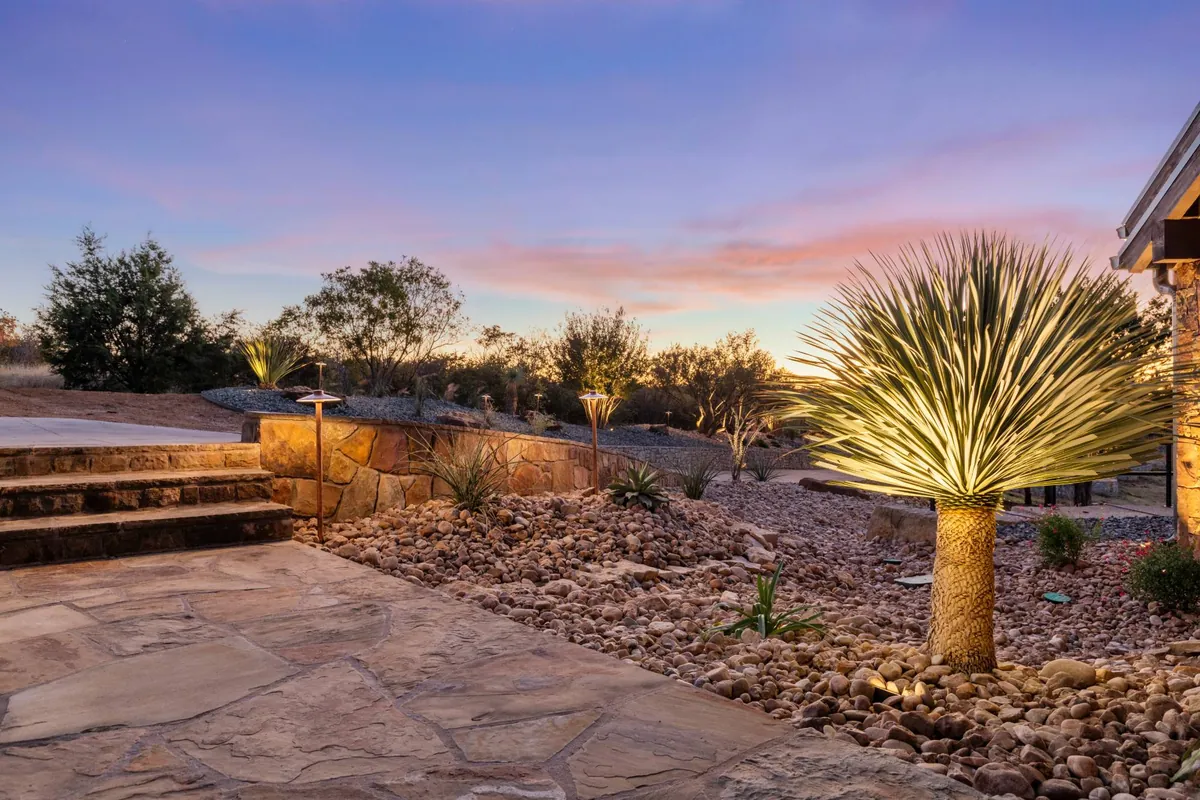
Most landscape companies stop at the house. On a lease, the property is the project. We cut and hold stand lanes, prepare and plant food plots, and seed native range back behind the mulcher — with the same crew and the same equipment that builds a ranch entrance.
Stand and shooting lanes
A lane is only useful if it is cut to the stand, not to the fence line. We walk it with you from the stand seat before anything gets shredded, so the sight line matches the shot you actually take and the prevailing wind is on the right side of it.
Lanes are cut with a shredder or a skid-steer mulcher depending on what is in them. Mulching leaves the material on the ground as a mat, which holds moisture and slows regrowth — worth the extra cost on a lane you intend to keep. Shredding is faster and cheaper where regrowth is light. On heavy brush country we cut senderos: wider lanes that double as access.
Lanes are maintained on a schedule, not a phone call. Left alone, a cut lane in this country closes in two seasons.
Food plot ground prep
Most failed plots in Palo Pinto, Jack and Young counties fail for the same two reasons: nobody tested the soil, and the seed was broadcast onto ground that was never worked. Neither is a seed problem.
We pull a soil sample first. Much of this country runs acidic enough to lock up the fertilizer you are about to pay for, and lime takes months to work — so it goes down early or it does nothing this season. Then the sequence is straightforward: disc, lime, fertilize to the sample, then drill.
We drill rather than broadcast wherever the ground allows. A drill puts seed at a consistent depth with good soil contact. Broadcast seed sits on top waiting on a rain that may not come, and feeds the birds in the meantime. On rocky ground where a drill will not run, we broadcast and cultipack — never broadcast alone.
What goes in the ground, and when
Dates matter more than brand. Planted outside its window, the best seed on the shelf will not produce.
Cool season — drilled August to September
Oats, wheat and cereal rye for fast, reliable tonnage. Arrowleaf and crimson clover to fix nitrogen and carry the plot into spring. Brassicas — turnip and radish — which the deer largely ignore until the first hard frost converts their starches to sugar, then hit hard through late season.
Warm season — drilled February to April
Cowpeas, lablab and soybeans for protein through antler growth and lactation. Milo and sunflower where you want to hold birds as well as deer. Warm-season plots need acreage or an exclusion fence — a one-acre bean plot in high-density country gets grazed to dirt before it establishes, and that is a browse-pressure problem, not a planting mistake.
Native range — February to April
Behind clearing, we seed the range back rather than leaving it to whatever colonises first. Little bluestem, switchgrass, sideoats grama and Indiangrass. This is fawning and nesting cover, it holds soil on a slope, and it does not need replanting every year.
Feeder, blind and water sites
Everything above depends on being able to get to it. We build pads and approach roads that stay usable after a hard rain, set feeder and blind sites with drainage and wind in mind, and clear access to tanks and troughs.
Why a landscape contractor rather than a tractor and a Saturday
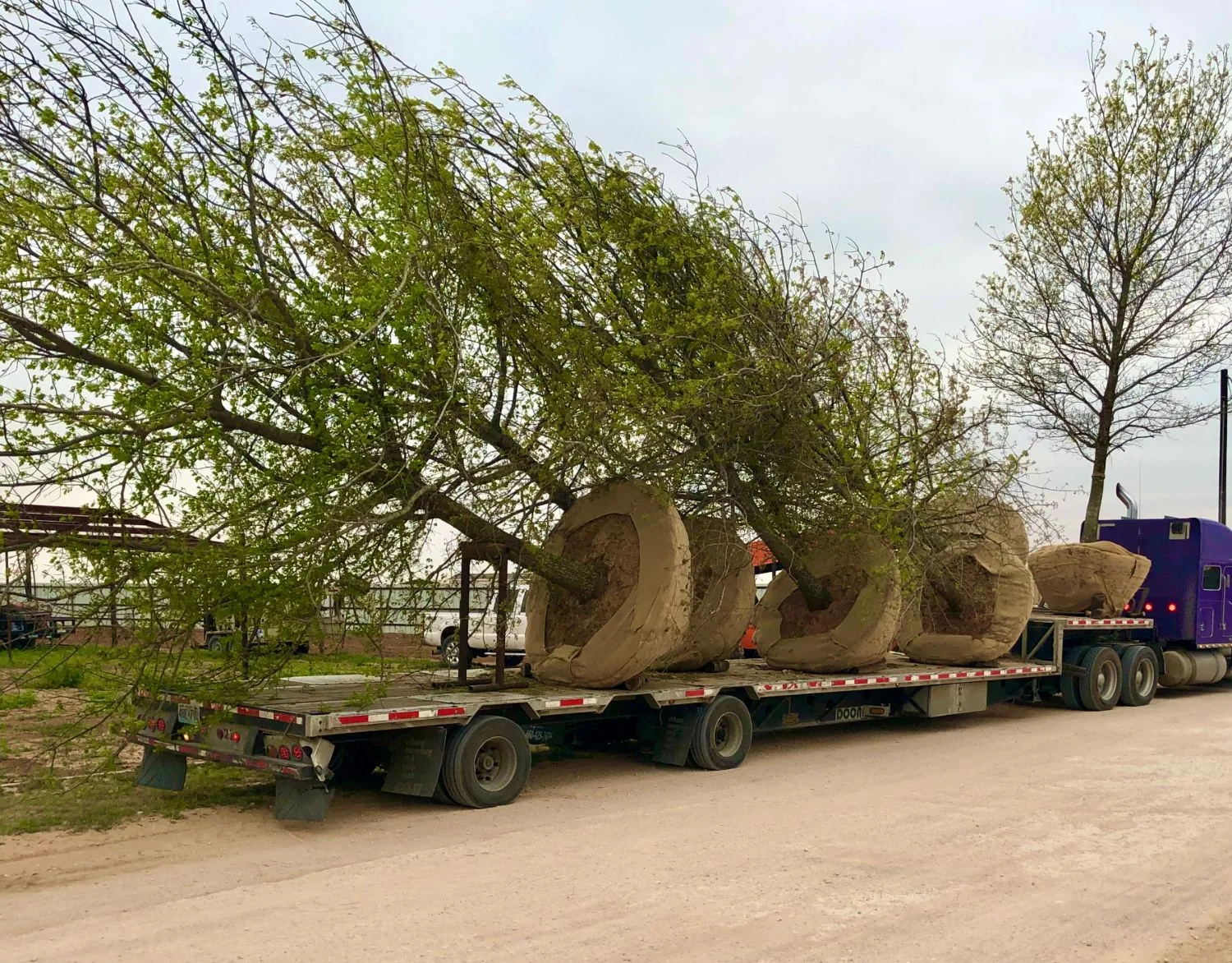
Because the work is the same work. Grading, drainage, soil, seed and irrigation are what we do on a ranch entrance or a lake house — a lease just asks for it on a larger footprint and with wildlife as the client. We are licensed and insured, we have run this country since 2003, and we grow trees and native material at our own nursery in Graford.
It also means one number. The company cutting your lanes is the company that built the entrance, so nothing falls into a gap between two contractors.
Where we work
Leases and ranches across Palo Pinto, Jack, Young, Stephens, Parker, Eastland, Shackelford and Throckmorton counties, from our yard in Graford.
Walk the place with us. The first conversation is a walk of the property, not a price sheet. Call (940) 779-4001.