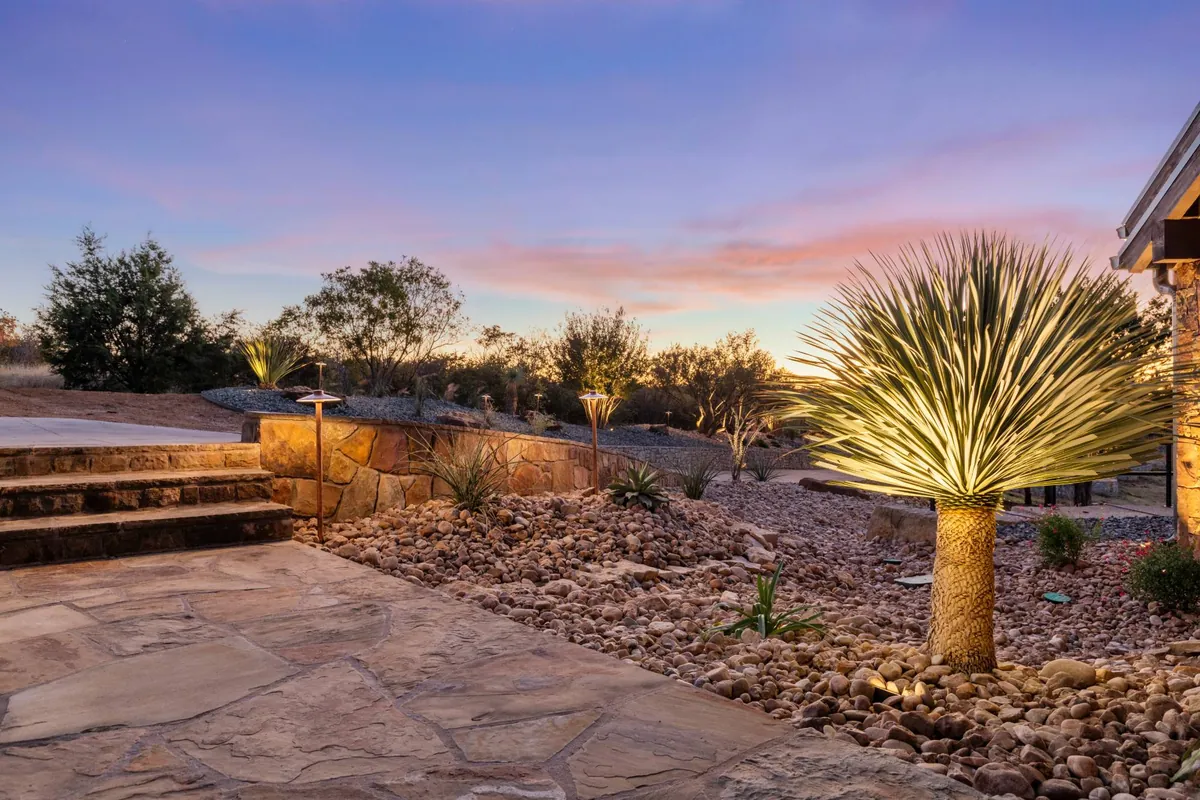
Designed around what your well actually delivers, not a catalogue template.
Start with the water
Out here the supply is usually a well, and a well has a real limit on pressure and gallons per minute. Zones get sized to that limit. Ignore it and you cavitate the pump, starve the far heads, and blame the sprinklers.
Long runs and real pressure loss
Ranch mainlines run hundreds of feet. Pipe gets sized for the run, not for the price list, and pressure-regulating heads keep the far zones matching the near ones.
Zoned for how this country loses water
Separate zones for turf, beds and trees — they do not want the same water and putting them together guarantees one is wrong. Drip in beds, rotors on open turf, and a controller with a real rain sensor.
Testing the well before anything is drawn
A design that has not been tested against the water source is a guess. Before zones are laid out we want two numbers: static pressure, and flow in gallons per minute at that pressure, measured rather than taken from whoever drilled it. Those two numbers set the maximum number of heads in a zone, and every other decision follows from them.
Getting it wrong is not subtle. Over-zoned, the pump short-cycles and the far heads mist instead of throwing; the system appears to run and the turf still browns in a wedge. Pumps are expensive and short-cycling is how they die.
Heads, and matching precipitation rate
Rotors
Open turf, long throw, low precipitation rate. They want longer run times and tolerate slope better than sprays because they put water down slowly enough for it to soak in.
Sprays and rotary nozzles
Tight or awkward areas. A fixed spray applies water several times faster than a rotor, so putting the two on one zone guarantees one of them is wrong — the classic cause of a lawn with a permanently soggy corner and a permanently dry middle.
Drip
Beds, and anything you are trying to establish. Water goes into the root zone rather than onto leaves and gravel, which on a xeriscape is the difference between establishing a planting and evaporating a water bill. Drip needs its own zone, its own pressure regulation and a filter, because emitters block.
Trees are not on the lawn zone
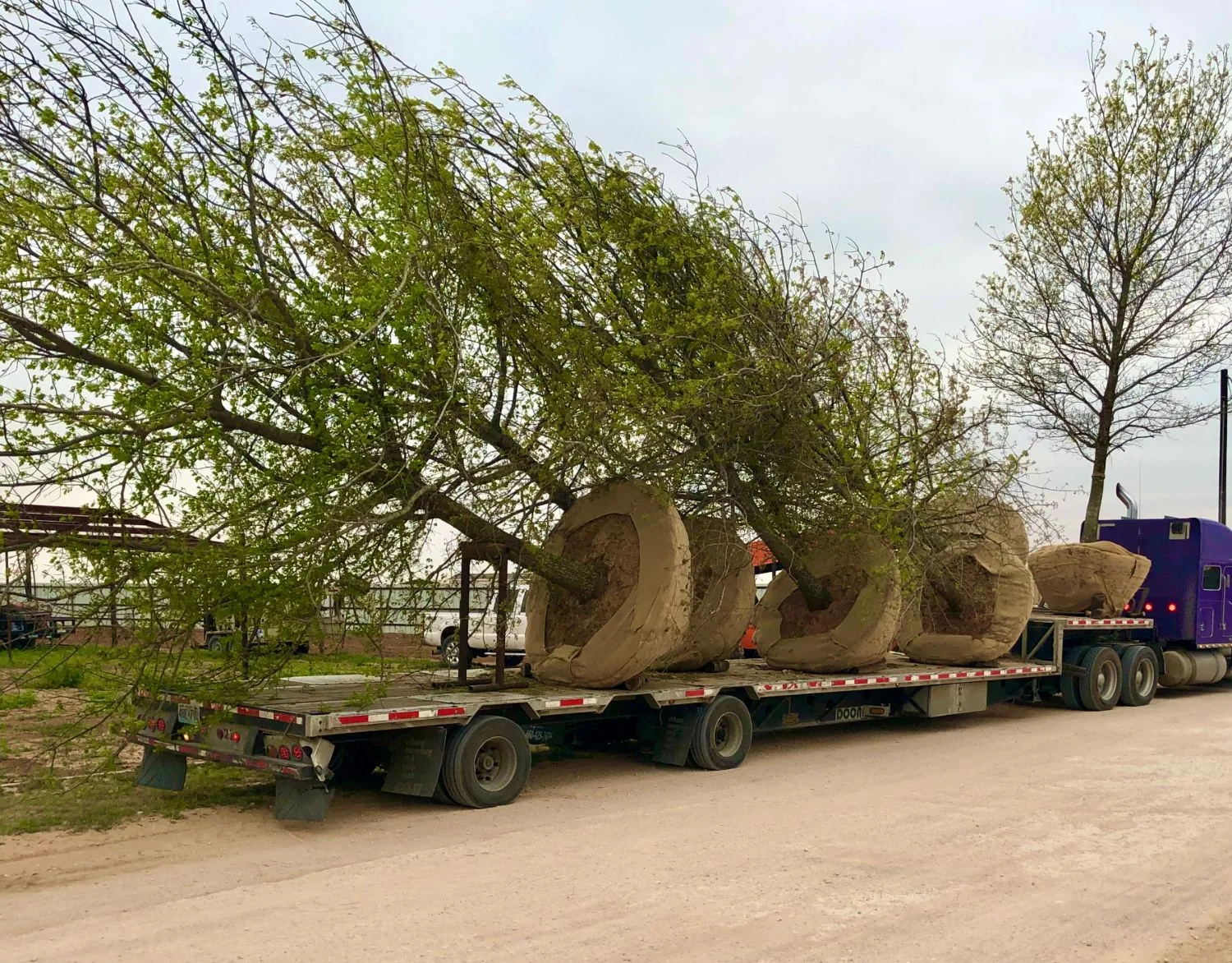
A new specimen tree needs deep, infrequent water at the root ball for its first two summers, and a lawn zone gives it frequent shallow water at the surface instead — which trains roots upward and produces a tree that cannot survive the first season somebody forgets to water it. Trees get their own zone and their own schedule, and on a large specimen that usually means dedicated emitters rather than whatever the turf gets.
Scheduling for this climate
Deep and infrequent beats short and daily in almost every case here. Shallow daily watering keeps the top inch wet, which is where the weed seed is and where the roots then stay. Longer cycles further apart drive roots down to where the moisture lasts.
On clay, the limit is intake rate rather than the plant. Water applied faster than the ground can take it runs off, so a long run split into two or three shorter cycles with a soak between them puts more water in the ground than one long one. Add a rain sensor and the system stops being the thing that runs during a thunderstorm.
Backflow, and who is allowed to do this
An irrigation system connected to a potable supply needs a backflow prevention assembly, and in Texas irrigation installation is licensed work. Ask any contractor for their licence number before they trench your property. Ours is at the foot of this page.
Repairs and audits
We also take over systems someone else installed: leak location, head-to-head coverage audits, controller reprogramming and backflow work.