Breckenridge was built for thirty thousand people and about five and a half thousand live here now. That is the most useful thing to know before designing anything in this town, because the lots, the streets and above all the trees were laid out for a city that did not stay.
The trees are the asset, and they are a century old
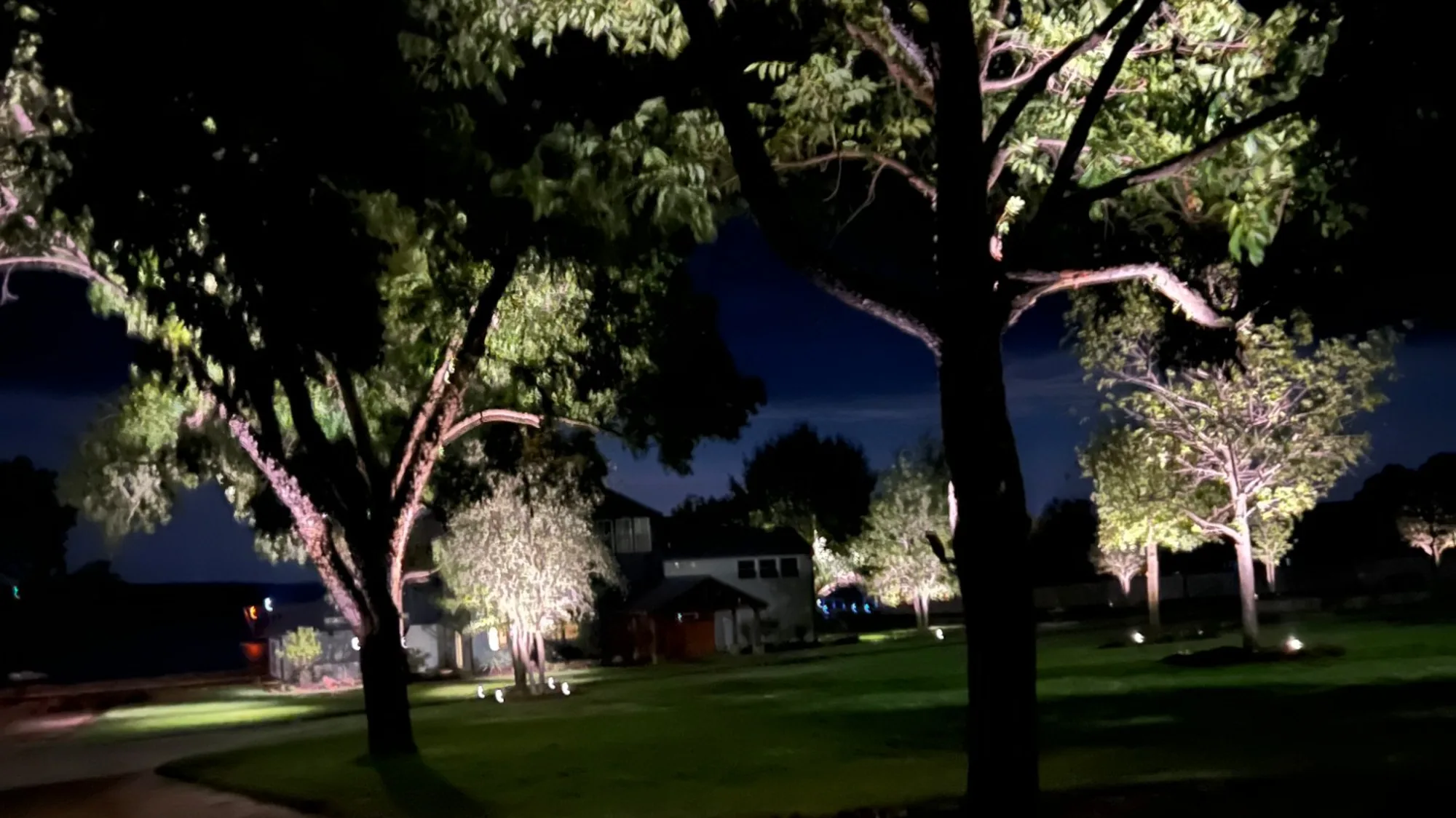
The boom put in generous lots and the people who built on them planted pecans, elms and oaks in the nineteen-twenties. A lot of those trees are still standing, and on many properties here they are worth more than everything else in the yard combined. You cannot buy a hundred-year-old pecan.
So the design goes around them, and the first conversation is usually about keeping them alive rather than about what to add. The things that kill a heritage tree on a renovation are all avoidable: changing the grade over the root plate, trenching irrigation through structural roots, parking a skid steer inside the drip line for a fortnight, and burying the flare under new soil. Each of those kills slowly enough — two to five years — that nobody connects the work to the death.
Where a tree is genuinely finished, we say so. An old pecan dropping limbs over a driveway is a liability, not a heritage feature.
Twenty-six inches, and the driest end of where we work
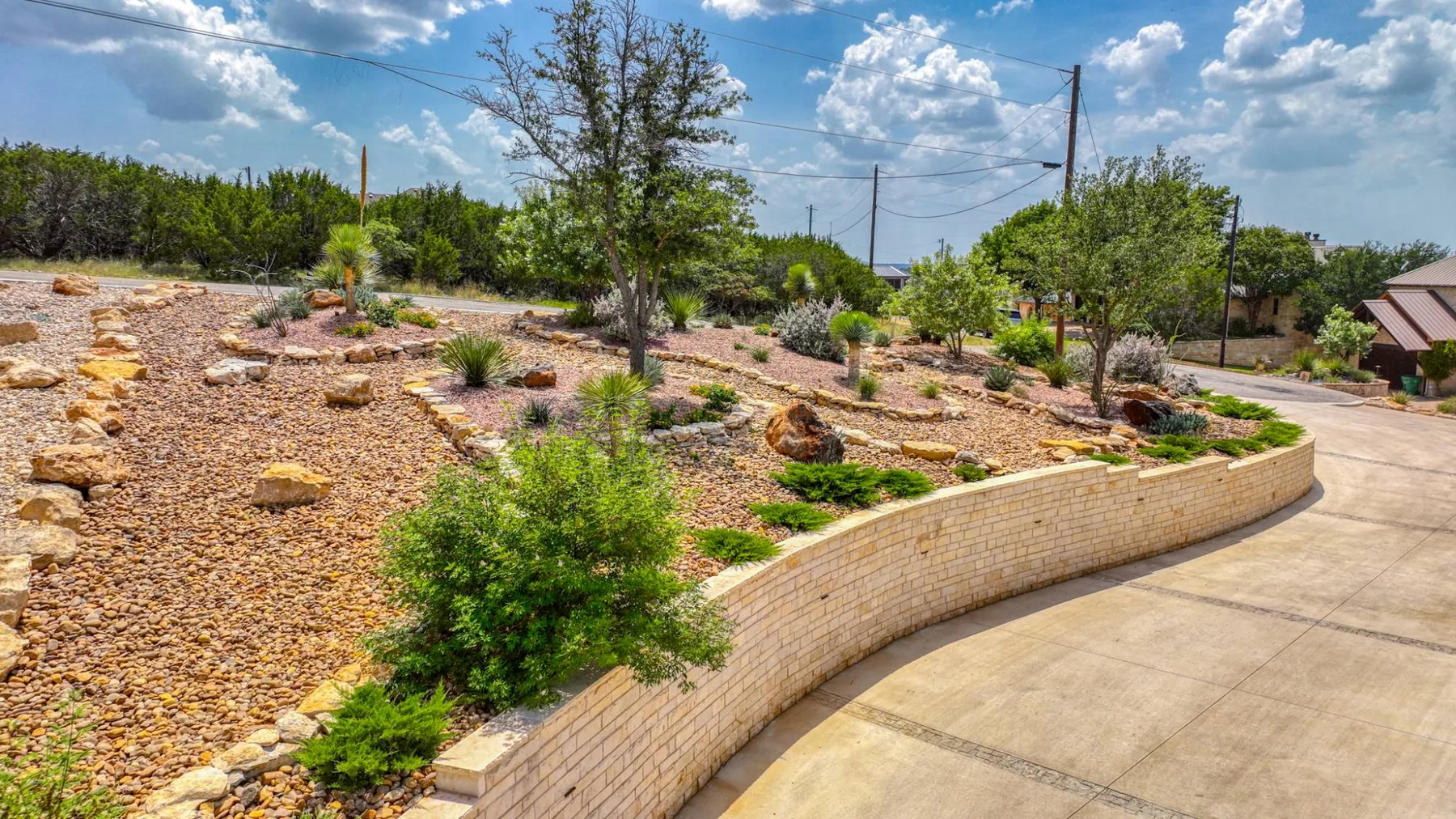
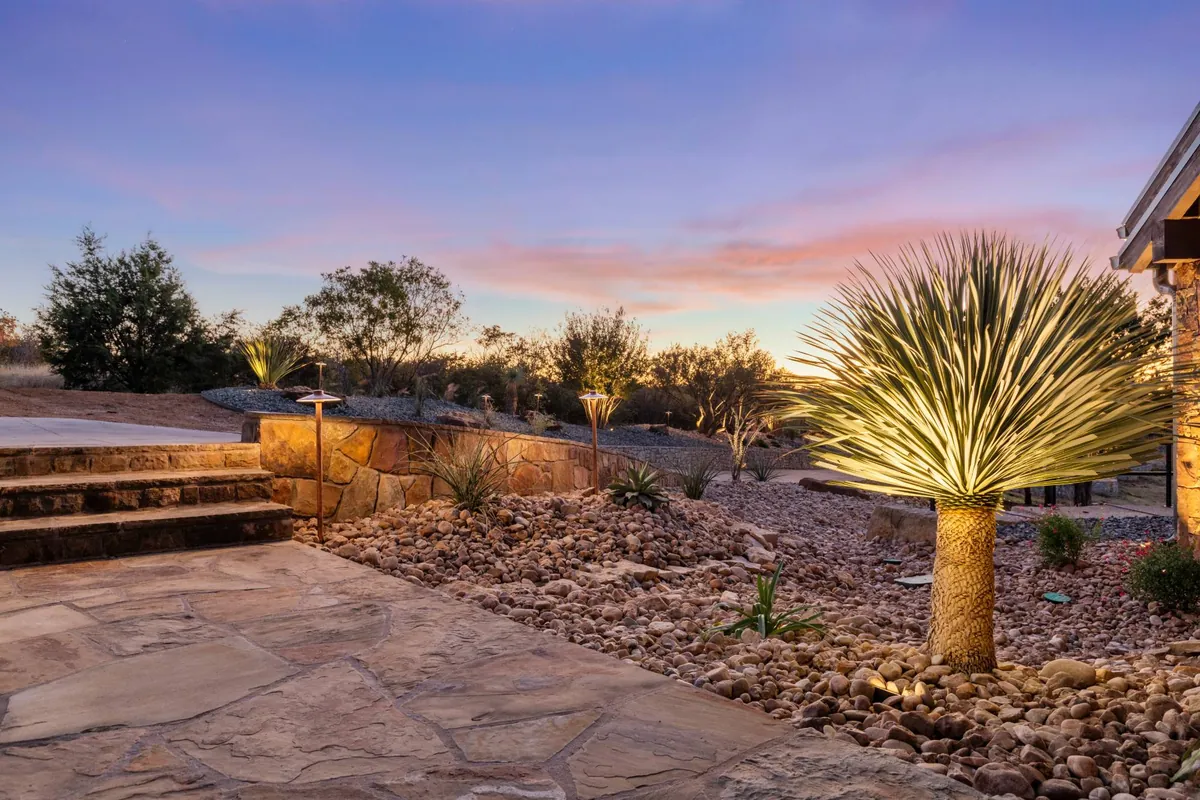
Stephens County is drier than anywhere else on our list — a couple of inches below Palo Pinto and a good six below Parker County. That sounds marginal and is not. It moves the whole plant palette toward the xeriscape end, it makes establishment watering non-negotiable for the first two summers, and it means a lawn here costs real money to keep green in August.
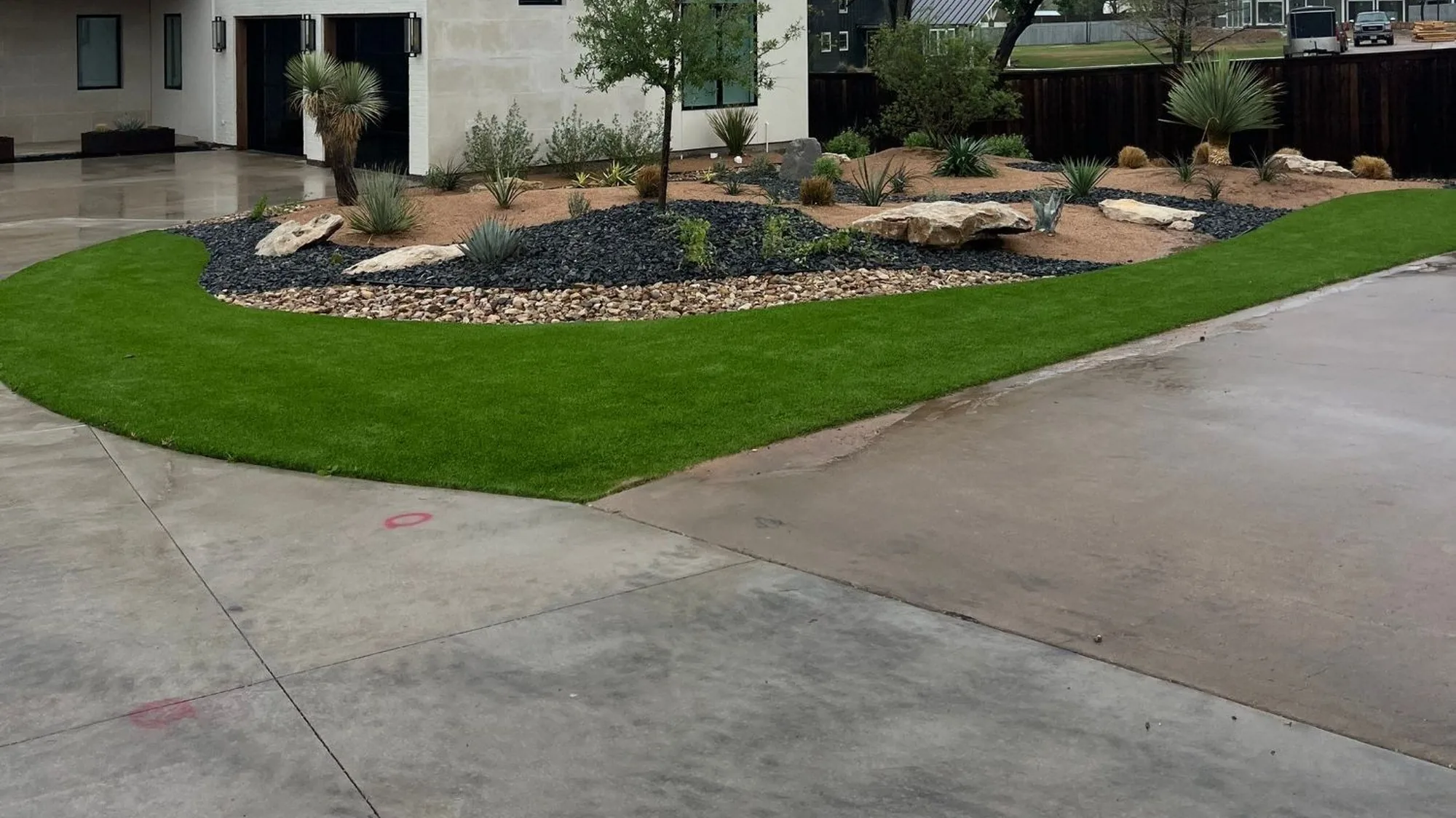
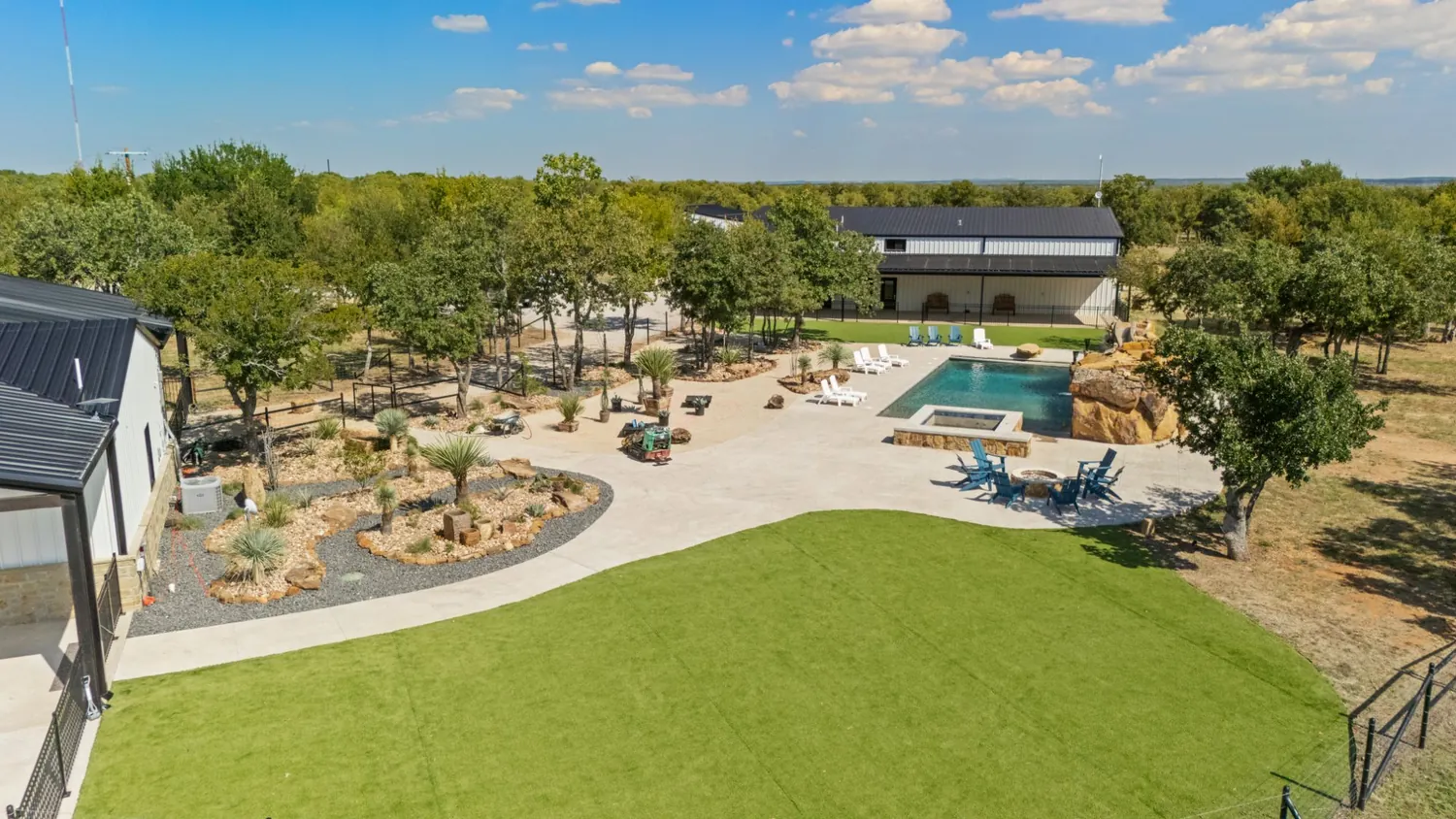
It is the strongest case we make anywhere for xeriscape planting and for synthetic turf in the areas that actually get walked on.
Hubbard Creek is a different lake from Possum Kingdom
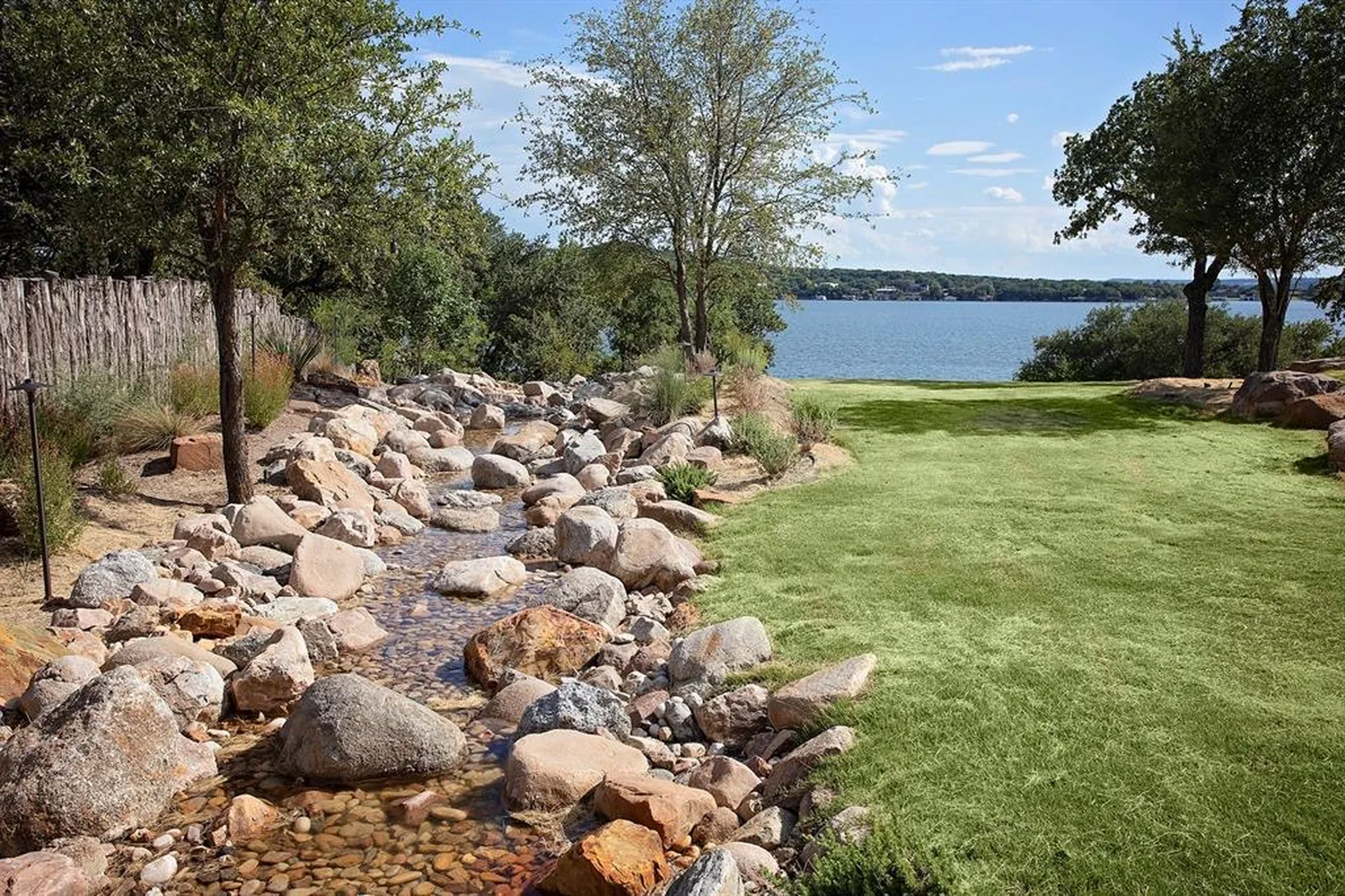
The reservoir northwest of town is shallower, siltier and swings much harder with drought than PK does. A shoreline that was waterfront three years ago can be a long walk to the water now, and it will come back.
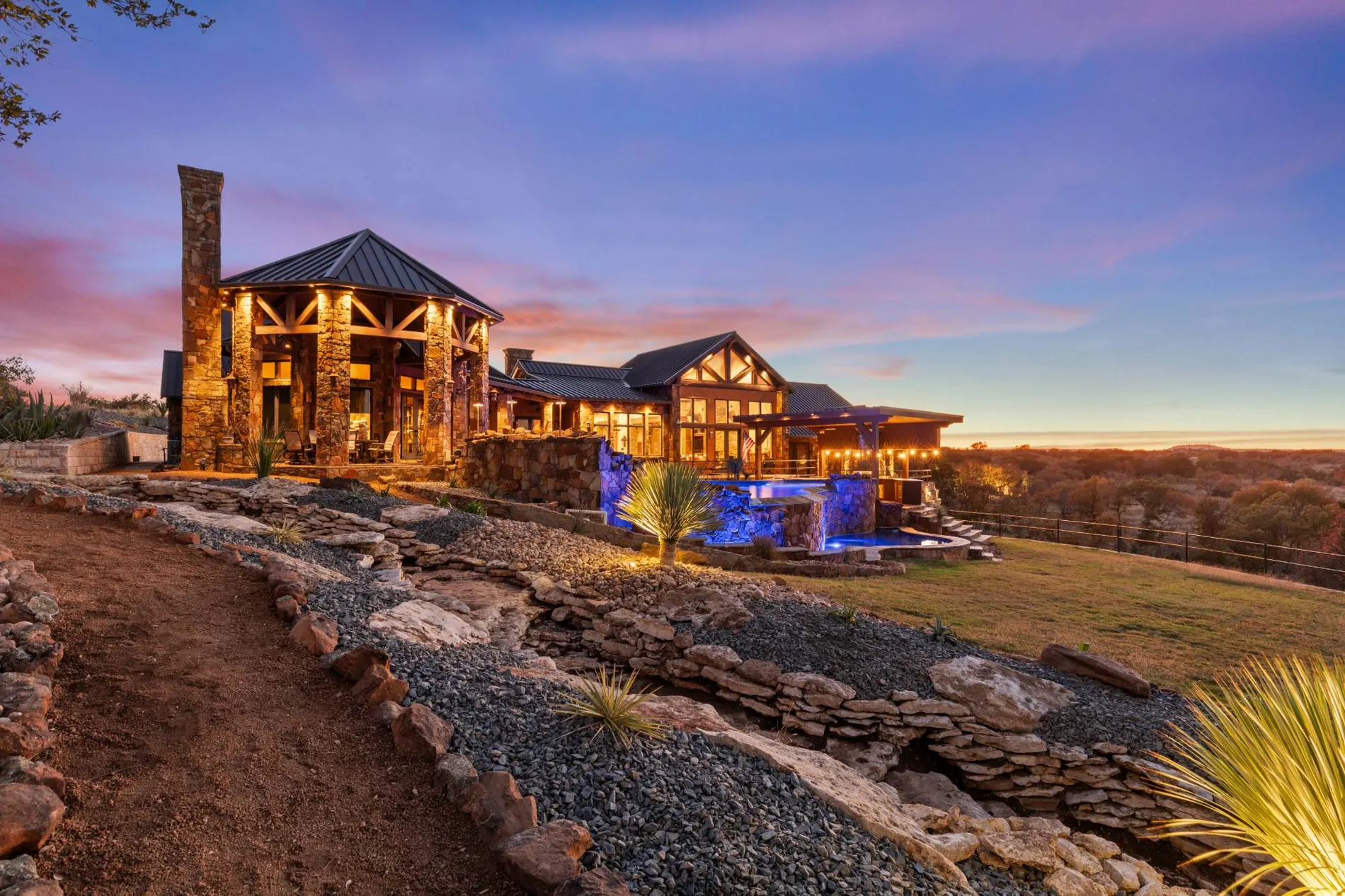
That argues for designing the usable part of a Hubbard Creek property around where you actually sit rather than around a waterline that moves — terraces, fire features and shade placed for the view at its worst rather than its best, and planting that does not depend on the lake being up.
Sandy loam over clay, and mesquite taking the rest
Stephens County is West Cross Timbers — sandy loam at the surface with clay underneath. It drains well until it reaches the clay and then it does not, which shows up as a bed that looks perfect for two years and then drowns in a wet spring. Knowing the depth to that clay before planting is most of the job.
On the acreage, mesquite is steadily taking rangeland that used to be grass. Clearing it around a headquarters or an entrance is a maintenance commitment rather than a one-off, and we would rather say that up front than have it back in three years looking like nothing was done.
An hour west of the yard, and we come out regularly. Call (940) 779-4001.