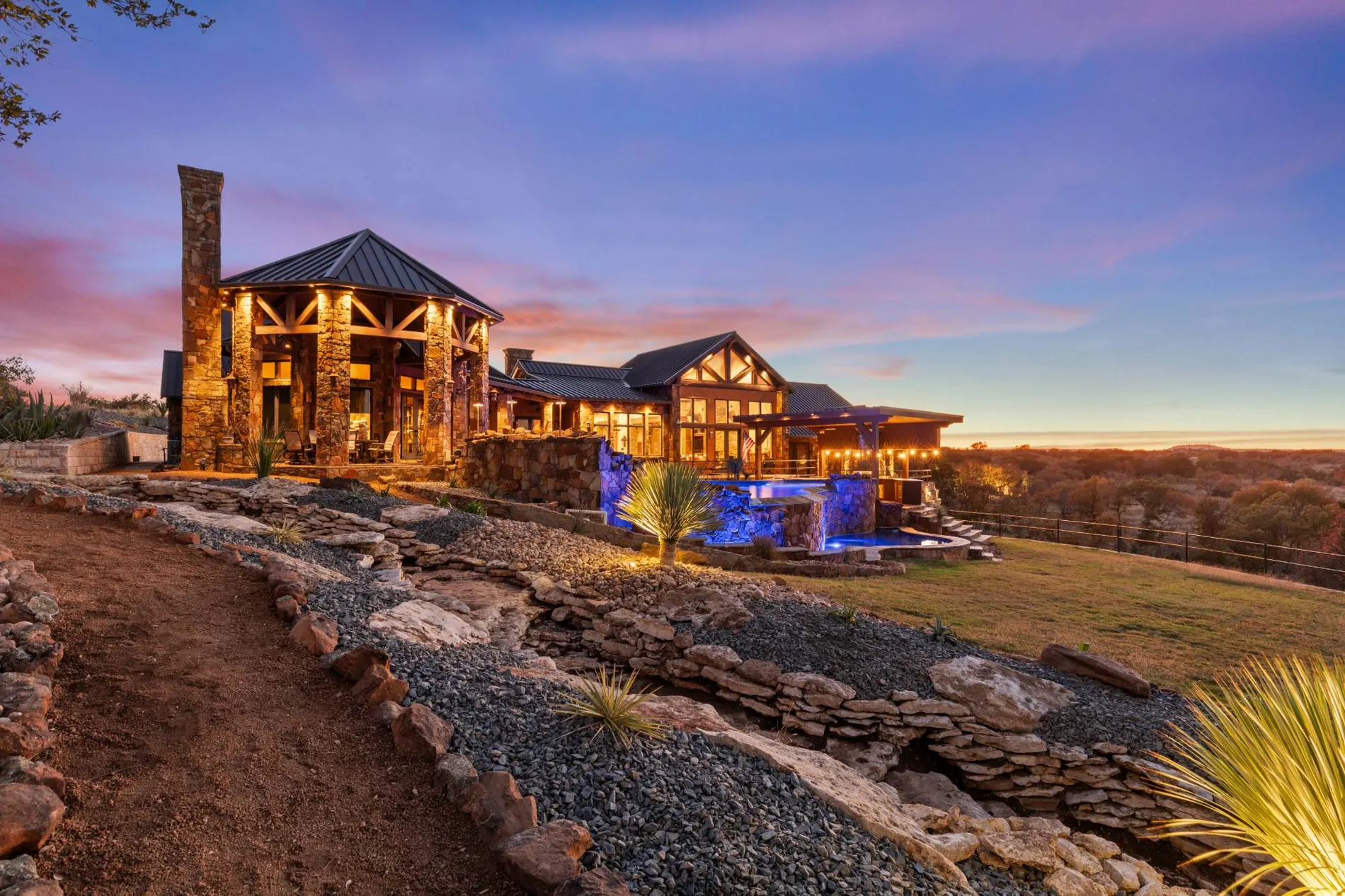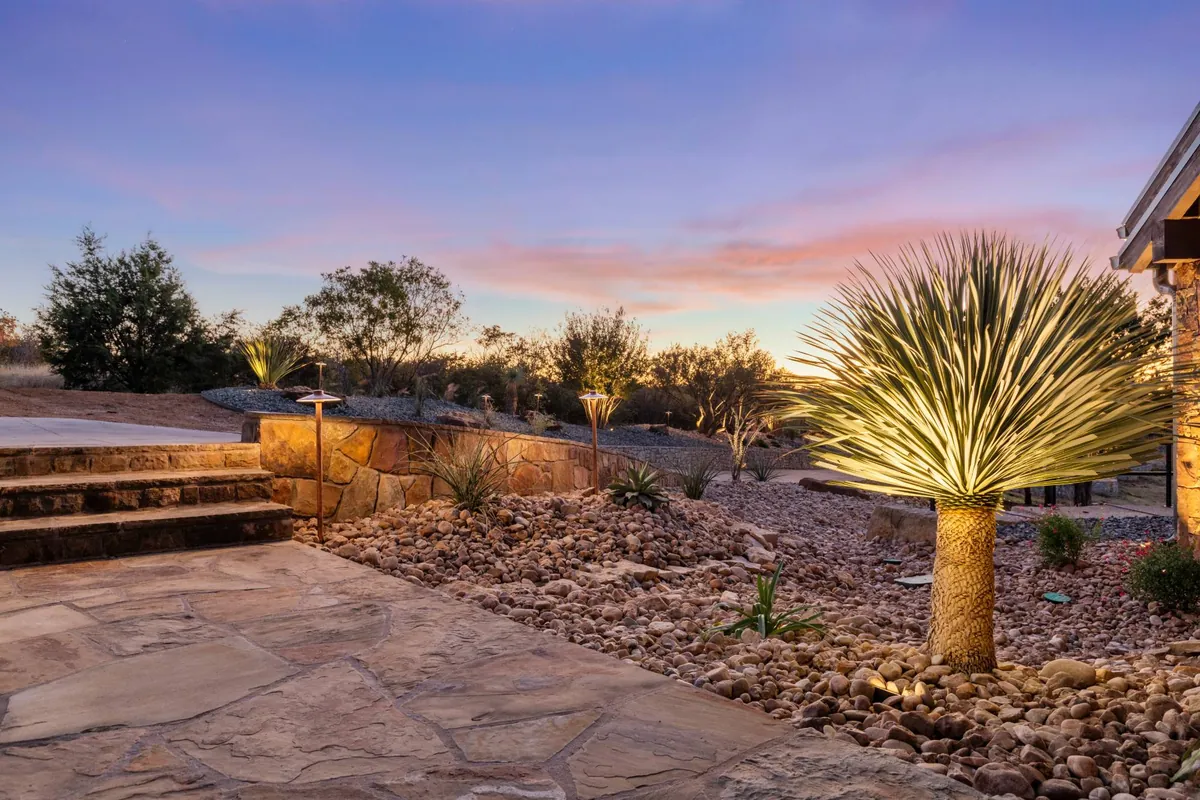
Kitchens, fire features and shade structures for places where the outside is the reason you bought it.
Sited for wind and view
The best view and the prevailing wind are rarely in the same direction, and a fire feature placed for the view alone will smoke you out of it. We site on the ground, in the afternoon, before anything is poured.
What we build
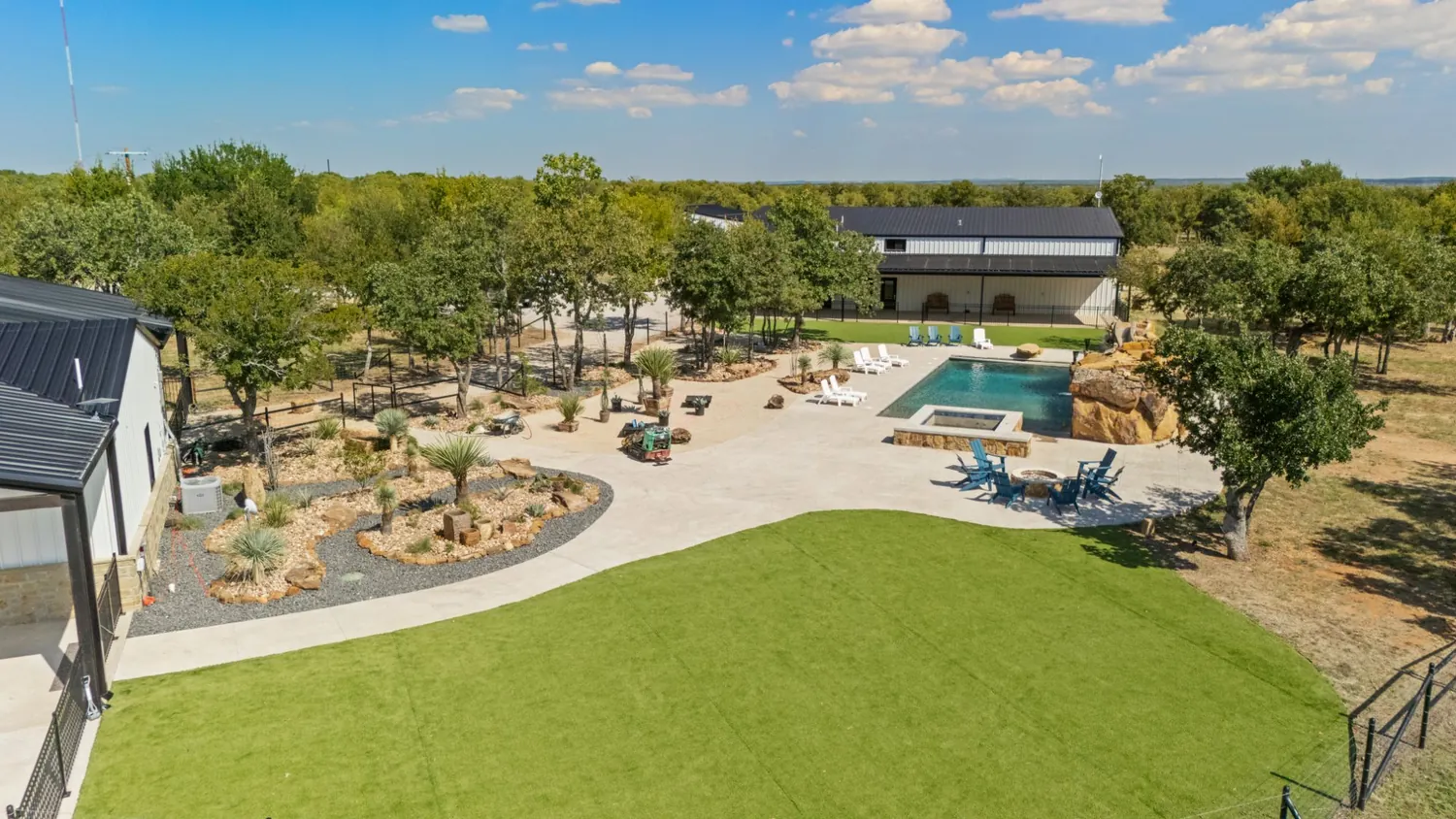
Outdoor kitchens and bars, fire pits and fireplaces, pergolas and shade structures, covered patios, seat walls and stone terraces. Most of it goes in at lake houses and ranch headquarters.
Shade is the whole thing in August
An uncovered patio in North Texas is unusable from June to September. Shade — built or planted — is what decides whether the space gets used, and it is the part most often cut from a budget and regretted.
Shade, and what each kind actually buys you
Built shade
A solid roof is the only thing that makes a space usable in a July afternoon, and it is the most expensive option. A slatted pergola cuts a useful fraction of the sun and moves the shade across the day, which is fine for a morning coffee terrace and not enough for a west-facing kitchen.
Planted shade
A mature shade tree is the best outdoor cooling there is — a canopy is meaningfully cooler beneath than an open patio, and unlike a structure it gets better every year. It is also the reason to plant a large specimen rather than a whip: shade you will use in three years rather than fifteen.
Orientation
West is the problem direction here. A patio open to the west takes the worst of the afternoon in summer, and a structure that shades south but not west solves the wrong half of the day.
Surfaces underfoot
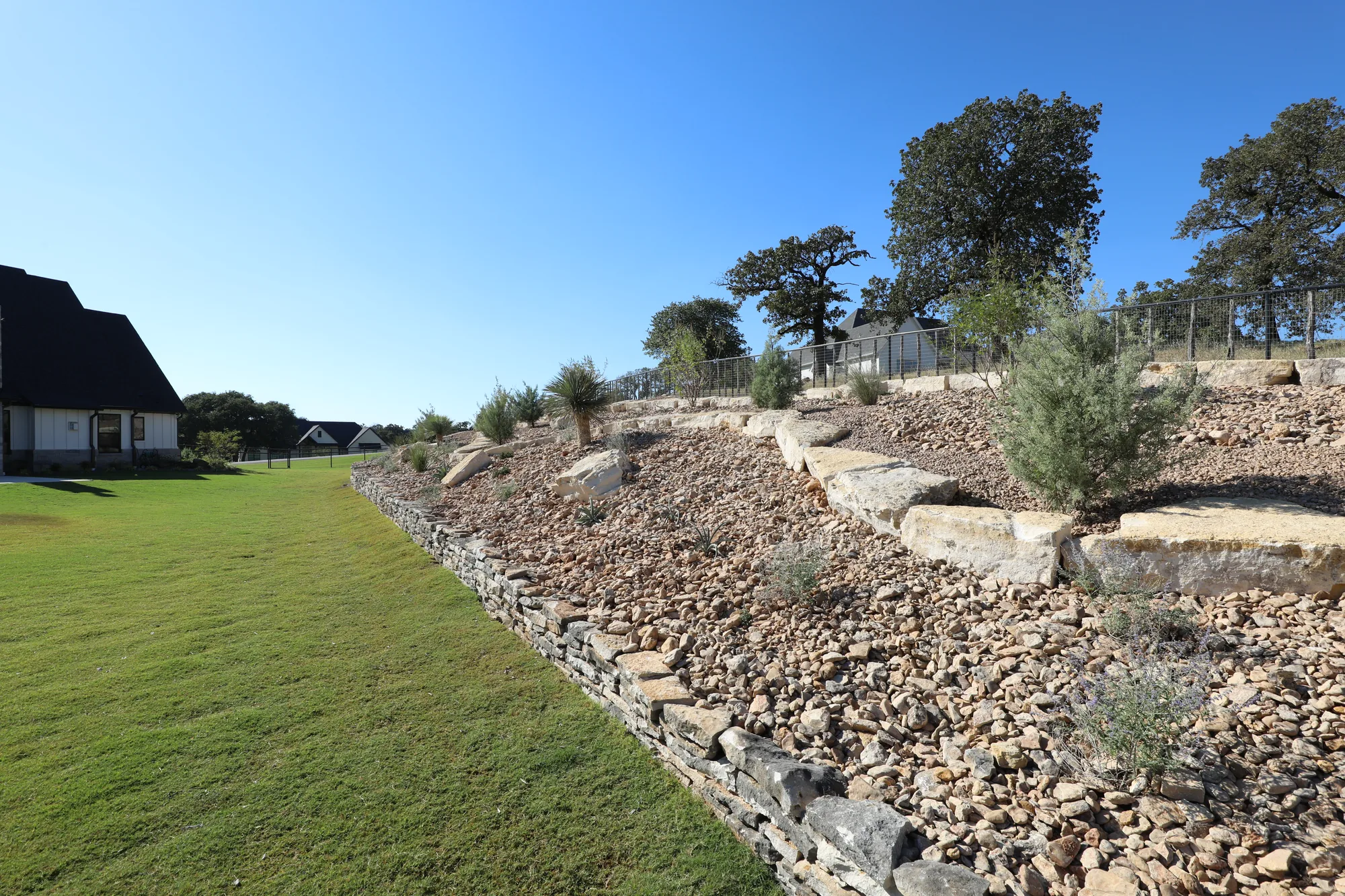
What a terrace is made of decides how hot it is and how it ages. Light-coloured native stone stays noticeably cooler underfoot than dark pavers or stamped concrete in full sun, and it is the difference between barefoot and not. Where a surface will be in sun all afternoon, the colour of it is a comfort decision, not a taste one — see hardscape and stone work for how the base under it is built.
Fire, and the two ways it goes wrong
Wood or gas is a real decision. Wood smells like the thing people imagine and needs somewhere to store and carry it, and smoke follows whoever is downwind. Gas lights instantly, carries no smoke, produces much less heat than people expect on a cold night, and needs a line run before the hardscape closes over.
The second mistake is distance. A fire feature ringed too tightly by seating is unusable at full burn and the seats nobody sits in are the ones closest to it. Set the ring wider than feels right on the plan.
Services before surfaces
Gas, water, waste and low-voltage all get run before anything is poured or paved. Retrofitting a gas line to a fire table under a finished stone terrace means taking up the terrace, and a kitchen without a drain is a bucket. This is the least visible part of an outdoor room and the part that decides whether it can ever be changed.
Built for weather, not for a showroom
Outdoor cabinetry lives in temperature swings, wind-driven grit and the odd hailstorm. Stainless and masonry survive it; furniture-grade materials moved outdoors do not. Appliances want to be rated for outdoor use and sited so the prevailing wind is not blowing across a burner.
Lighting and the rest
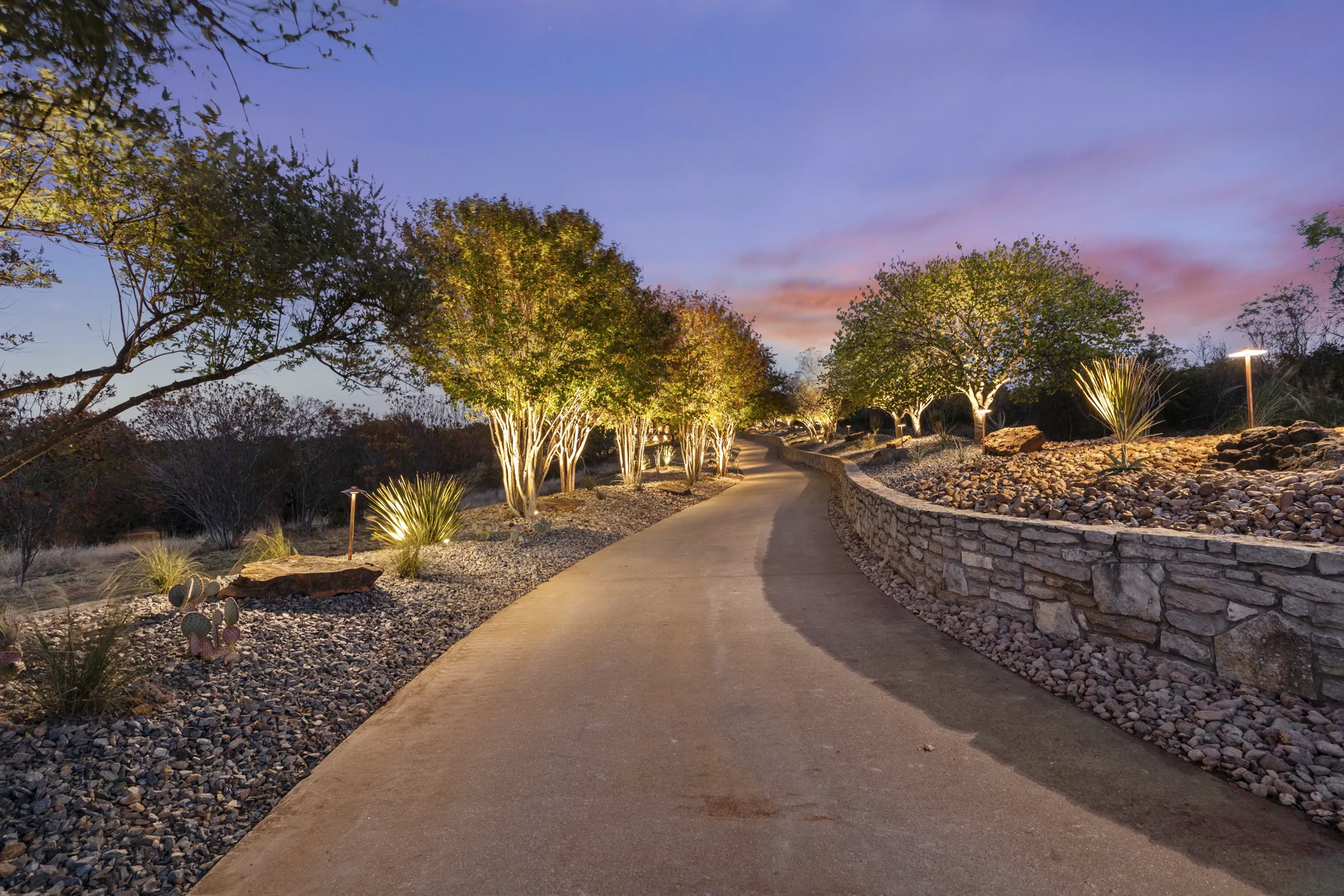
Electrical, gas, water and drainage get planned into the hardscape rather than chased afterward.