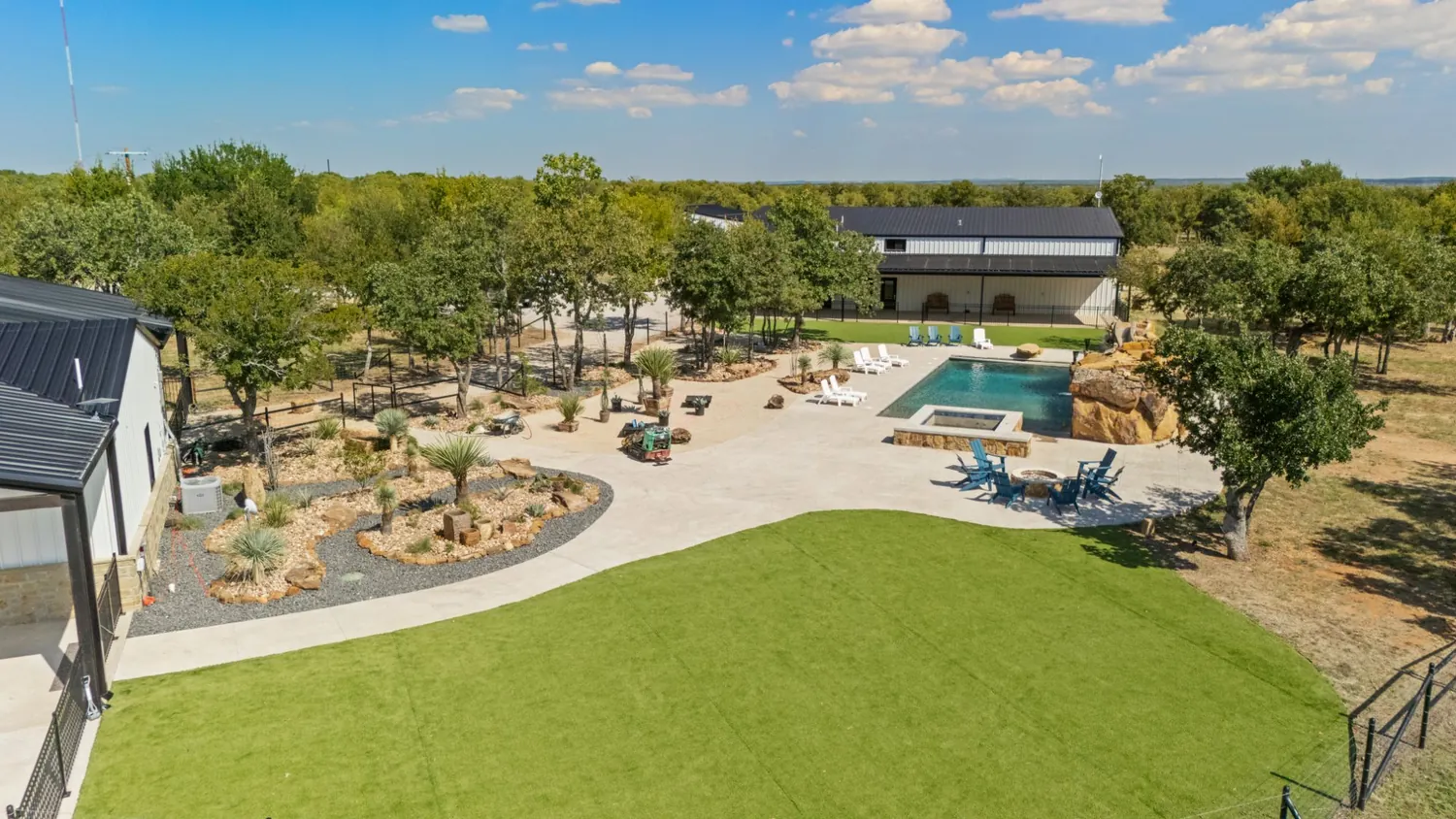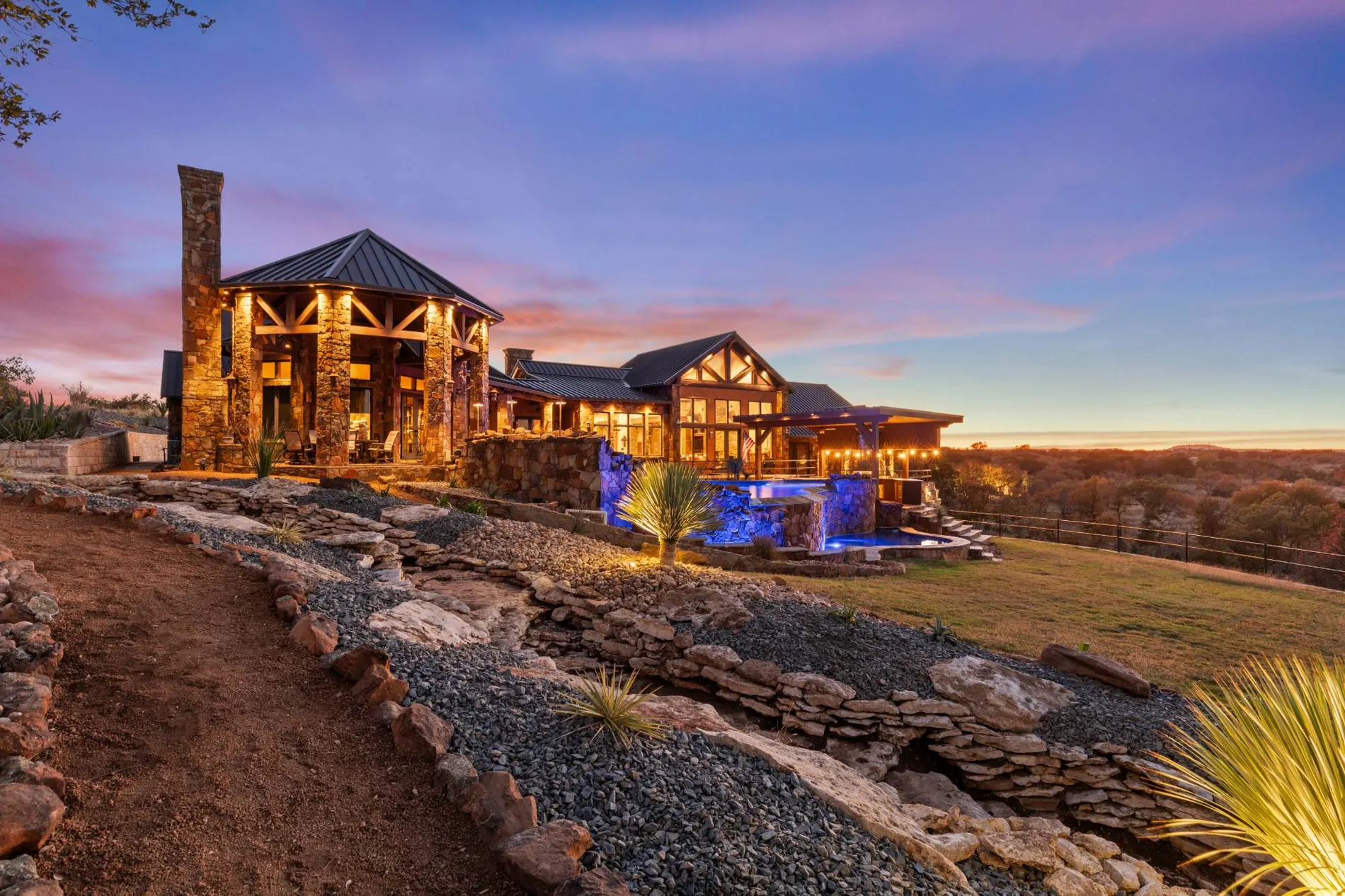
For the places grass will never hold — slopes, deep shade, dog runs and high-traffic lake-house lawns.
Where it is the right answer
Under mature live oaks where nothing will grow, on slopes that wash, in dog runs, on weekend properties nobody is there to mow, and in small courtyards where a mower is more trouble than the grass is worth.
Real to the eye, green every month of the year
The fiber technology moved on from the flat green carpet everyone remembers. Current turf blends two or three shades of green with a tan thatch layer underneath, the way an actual lawn looks up close rather than in a photo — and the colour is built into the fiber and UV-stabilized, not painted on, so a North Texas summer does not fade it out. It does not go dormant and straw-coloured in a dry August either, and it does not thin out where the dog runs the same path every day.
Past no mowing and always green, the savings that add up are the ones that stop showing up on a bill: no irrigation water on a lawn that never needs establishing or reviving after a drought year, no fertilizer or weed killer to buy or apply, and no reseeding a slope after a hard rain washes the new grass out before it roots. On a lake lot or a weekend property in particular, that is the difference between a lawn and a chore nobody is there often enough to do.
Drainage and base decide everything
A turf install is a drainage project with a green surface on top. Compacted base, correct fall, and a permeable backing — otherwise it holds water and smells, which is the complaint behind almost every bad synthetic lawn.
What a proper install is made of, bottom to top
Excavation
Three to four inches out, more where the ground is soft, and the sub-grade compacted. Turf laid over undisturbed clay follows every movement that clay makes.
Base
Crushed aggregate, laid in lifts and compacted, graded to fall. This is the layer that decides whether the lawn is flat in five years, and it is the layer that gets thinned when somebody is bidding low.
Weed barrier and edge
Barrier under the base, and a real edge restraint — bender board, steel or a stone edge. Turf that is only pinned at the perimeter creeps and lifts at exactly the spot people walk on.
Seams and grain
All pieces laid with the grain running the same way, or the join shows as a stripe in every light. Seams glued and stapled on a proper seam tape, not butted and hoped.
Infill
Brushed in to stand the blades up and hold the turf down. Under-infilled turf lies flat and looks like carpet; it is also the reason a cheap lawn goes shiny after one summer.
Drainage is the complaint behind every bad lawn
Permeable backing is necessary and not sufficient. Water has to leave the base too, so the sub-grade is graded to a fall and, on flat sites or dog runs, a drain line goes under it. A turf lawn that smells is a turf lawn that is holding water.
Pets, properly
Dog runs want antimicrobial or zeolite infill, a base that drains fast, and a hose-down plan — urine does not evaporate out of infill on its own. Done that way a run is cleaner than dirt and vastly cleaner than grass. Done without it, it is a smell you cannot fix later.
Lifespan and what actually ends it
Good turf on a good base lasts well over a decade, and what usually ends it is not the fibre but the base settling or the seams opening — both installation faults rather than product faults. Brushing it occasionally, keeping leaf litter off it and topping up infill is most of the maintenance. It is not no-maintenance, it is different maintenance, and no one has to mow it.