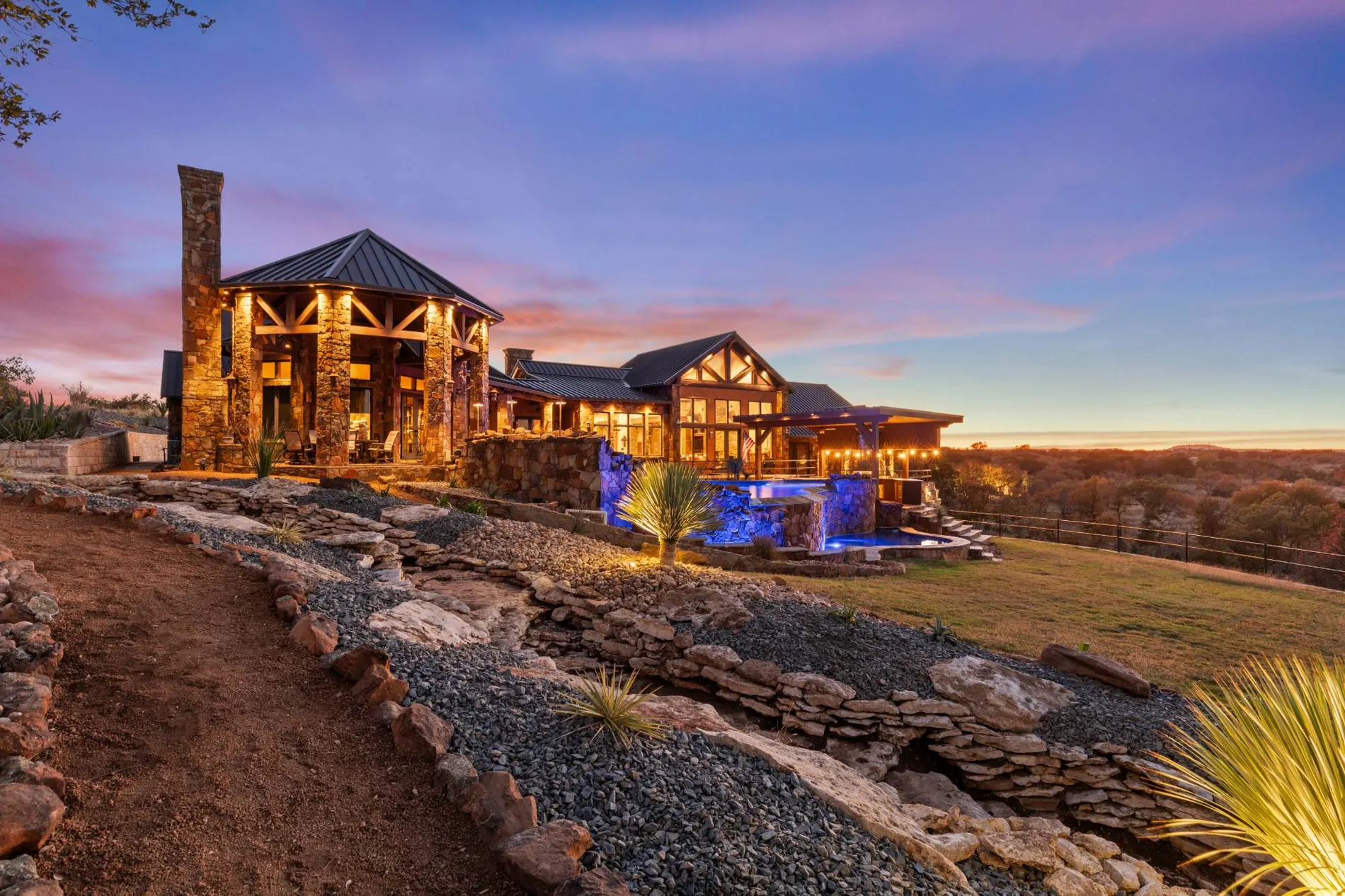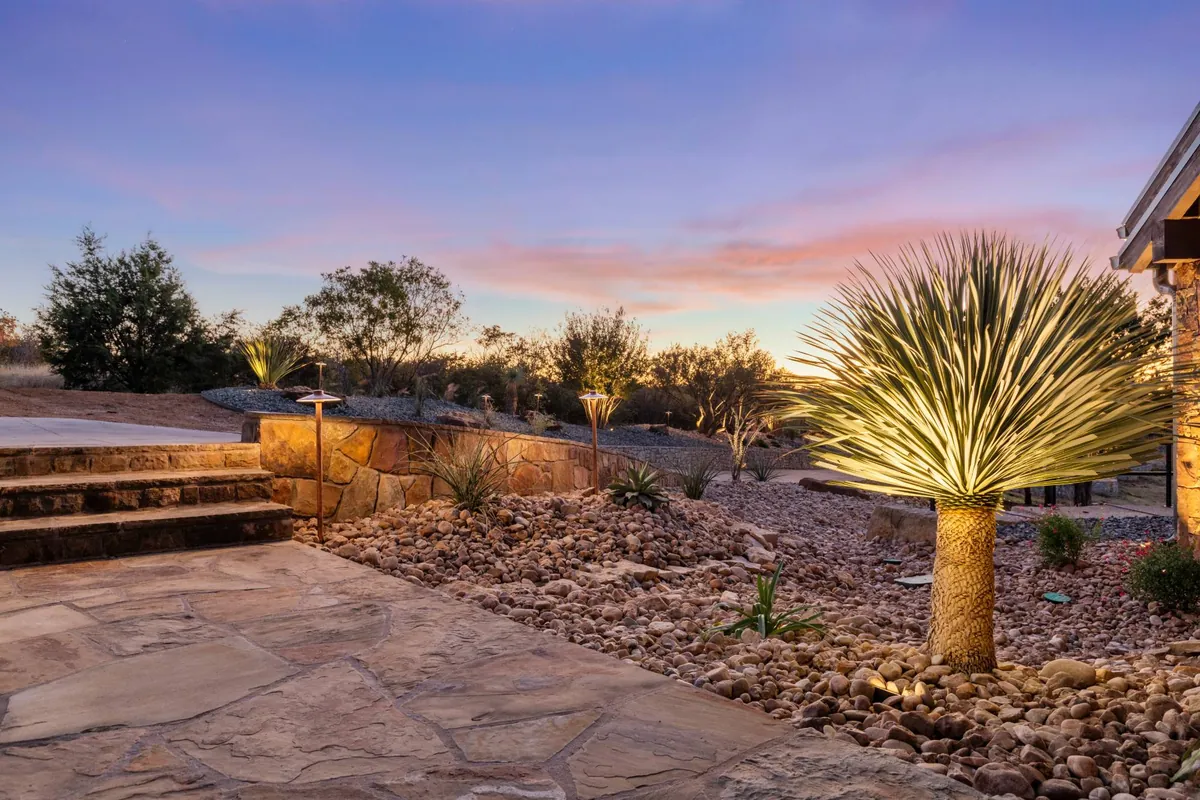
Sustainable planting designed to hold up through a Palo Pinto summer without a water bill behind it.
Xeriscape is not gravel and cactus
Done properly it is a full landscape that happens to need very little supplemental water: layered planting, seasonal colour, structure in winter. Done badly it is a rock yard, which is what most people picture and why they resist it.
The palette that works here
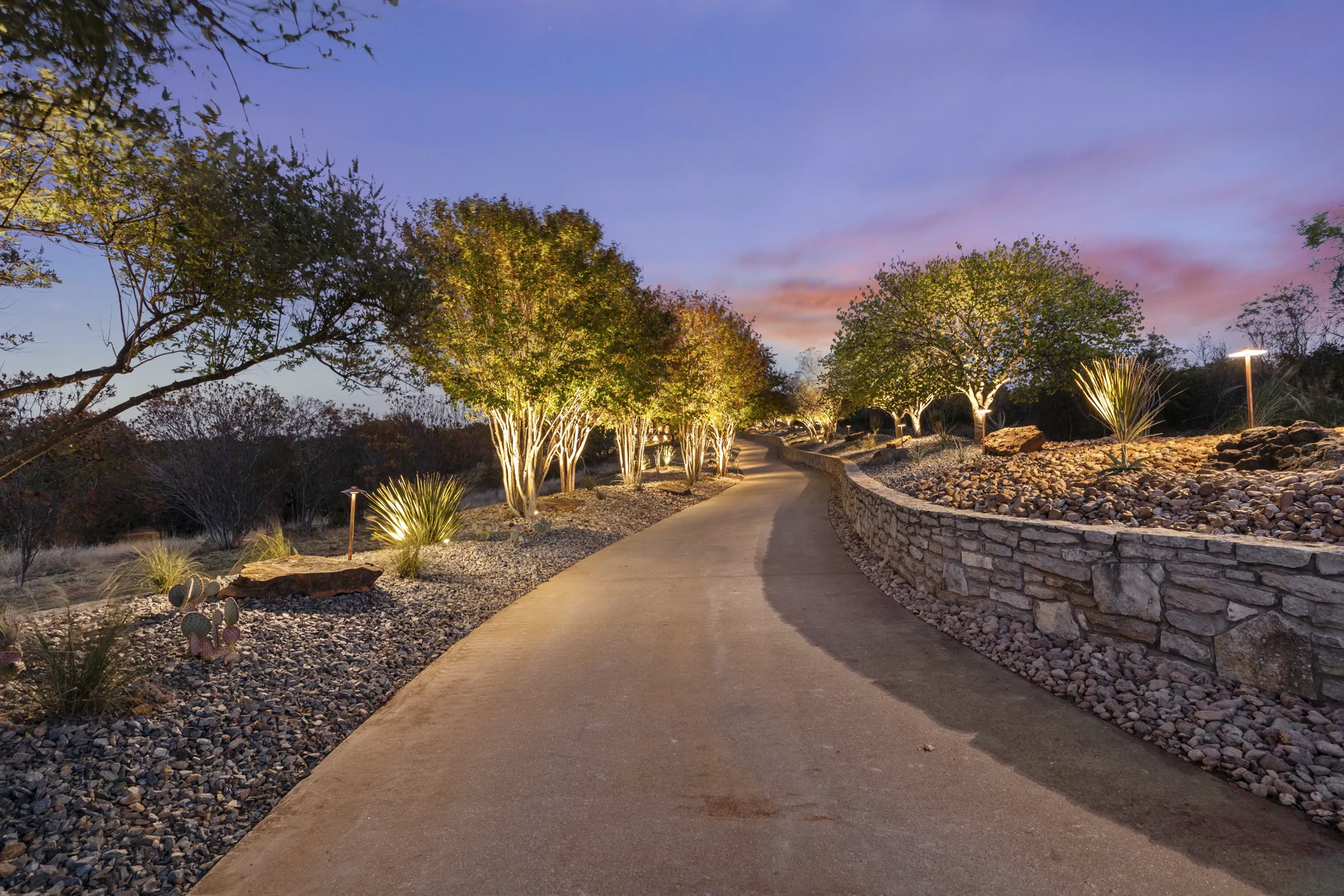
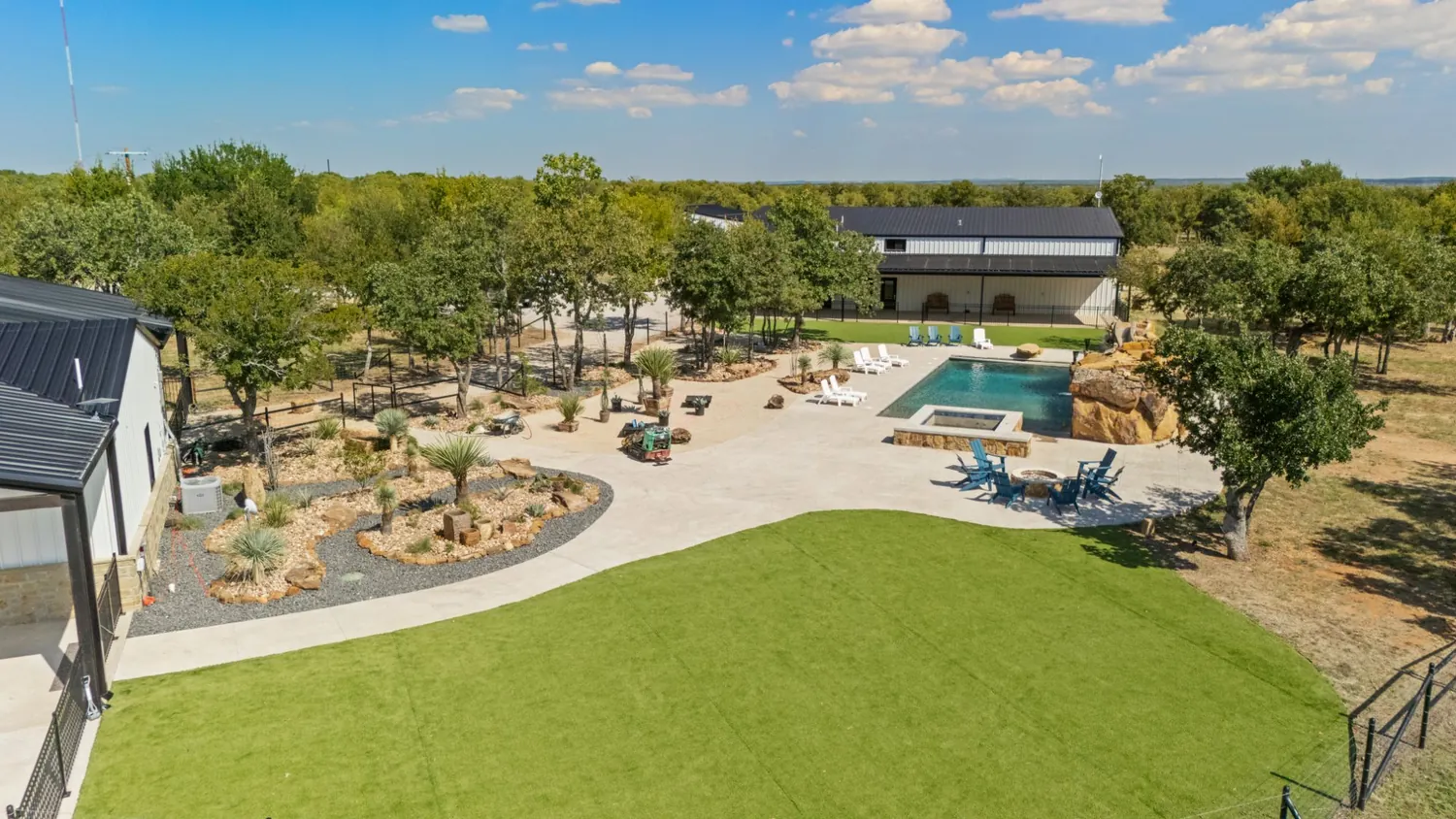
Agave, yucca, sotol and nolina for structure. Texas sage, autumn sage, flame acanthus, blackfoot daisy and damianita for colour. Muhly and little bluestem for movement. Live oak, cedar elm and Texas red oak for canopy. On lake lots, where soil is thin over rock and the afternoon sun comes back off the water, this is usually the only palette that holds.
Soil and mulch do most of the work
Drought tolerance is a root-depth question. Beds get prepared deep enough for roots to go down, and mulched to keep soil temperature and moisture stable — that matters more than the plant list.
Where the water goes on a xeriscape
The point is not to stop watering, it is to stop watering forever. Drip goes in at planting, runs deep and infrequent through two summers to drive roots down, and is then weaned back rather than switched off — see irrigation for how the zones are separated, because a xeriscape bed sharing a zone with turf gets turf’s schedule and dies of kindness.
Once established this planting stands on rainfall in a normal year. In a bad one it wants a deep soak every few weeks, not a sprinkle every few days.
Rock, gravel and the mulch decision
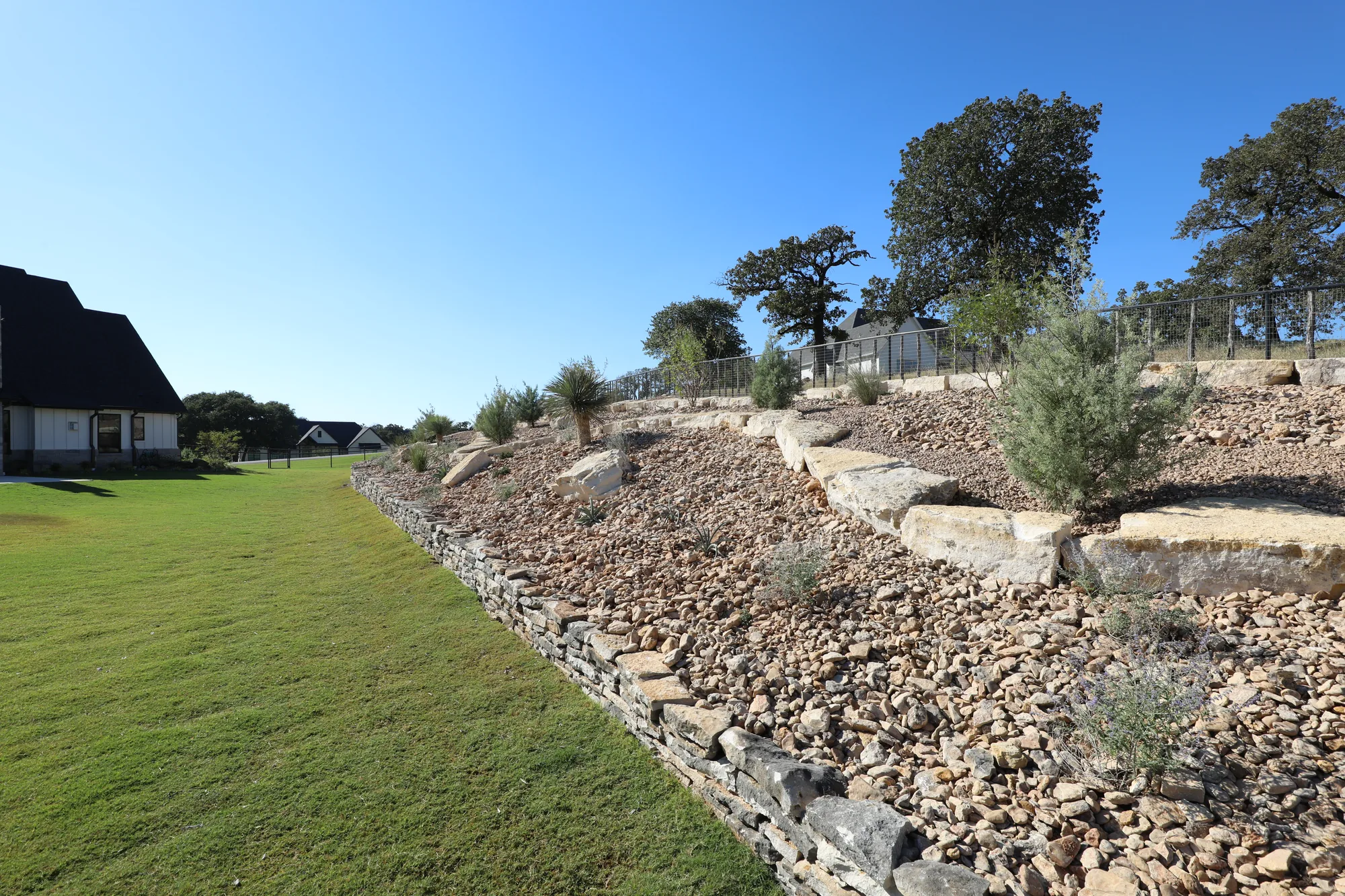
Gravel mulch and organic mulch do different jobs and the choice is not cosmetic. Decomposed granite and rock hold heat and radiate it back at night, which suits agave, yucca, sotol and prickly pear and cooks the roots of anything that wanted shade. Shredded hardwood keeps soil cooler and adds organic matter as it breaks down, which suits the perennials and the grasses.
Most beds here want both, zoned by what is planted in them. A whole property gravelled uniformly is the rock-yard outcome people are afraid of, and it is also horticulturally wrong for half the plants in it.
Grading, so the rain you do get stays
A xeriscape is a rainfall-capture project. Beds shaped slightly low rather than crowned hold what falls instead of shedding it to the drive, and on a slope a series of shallow terraces slows runoff long enough for it to soak in. This country delivers its rain all at once; the difference between a bed that uses a two-inch storm and one that watches it run past is a few inches of grade and some stone work.
What it looks like in winter
This is the honest weakness and the one to plan for. The perennials go down, the grasses go tan, and if structure was not designed in, the bed reads as empty from December to March. Evergreen structure — agave, yucca, sotol, nolina, Texas sage — is what carries the winter, and it needs to be placed as the bones of the planting rather than sprinkled through it.
Irrigation, still
Even xeriscape needs establishment water for the first two summers. We install drip, then wean it back.